- Diet
- 16600 views

Forget about ‘miracle’ diets and temporary fixes. In human physiology, weight loss is governed by an immutable law: thermodynamics.
To start losing body fat, creating a calorie deficit is an absolute prerequisite. Regardless of the quality of your food (“healthy”, “organic” or “gluten-free”), if your calorie intake exceeds your body’s energy expenditure, weight loss is physiologically impossible.
However, applying calorie restriction in an uninformed manner is a sure-fire way to slow down your metabolism and lead to ‘Skinny Fat’ syndrome (a slimmer figure but one lacking tone and definition). How can you calibrate your calorie intake precisely? What is the limit you must not cross to maintain anabolism? We’ll explain all this in this article.
What is a Calorie Deficit? (Physiological Mechanisms)
A calorie deficit refers to a metabolic state in which energy intake is lower than Daily Energy Expenditure (DEE). Faced with this negative energy balance, the body must compensate for this lack of substrates by mobilising its endogenous reserves.
The key challenge of cutting is to direct this mobilisation towards adipose tissue (lipolysis) whilst ensuring that muscle tissue is preserved. Haphazard management of the deficit will inevitably lead to muscle catabolism.
The Energy Balance Equation (CICO)
Many people on a diet believe they are in a calorie deficit without seeing any results. The causes are often methodological:
- Underestimating calorie intake (Calories In): Failing to account for cooking fats, ‘invisible’ snacks or high-calorie drinks.
- Overestimating expenditure (Calories Out): Estimates from smartwatches regarding calorie expenditure during exercise are often inaccurate and overestimated.
The calculator: Determine your actual needs
Don’t rely on generic meal plans. Your calorie deficit must be strictly personalised. Here is the 3-step process.
Step 1: Estimate your Maintenance (TDEE)
This is the maintenance calorie threshold (isocalorie), at which your weight remains stable.
Estimation formula for an active bodybuilder: Body weight (kg) x 33.
Step 2: Apply the ‘Safe’ Calorie Deficit
Drastically reducing your calorie intake (e.g. -1,000 kcal) is a strategic mistake. Your body will react by adapting its metabolism (reduced thermogenesis, a slower thyroid) to slow down weight loss.
Expert recommendation: Aim for a moderate deficit of 300 to 500 kcal maximum below your maintenance level (i.e. approximately 15 to 20 per cent).
Case Study: Thomas, 80kg
Thomas weighs 80kg and trains four times a week for muscle growth.
- His theoretical maintenance level: 80 × 33 = 2,640 kcal/day.
- His target deficit (-20%): 2,640 – 528 = 2,112 kcal/day.
To start his weight-loss programme, Thomas needs to consume around 2,100 kcal. The intake will then be adjusted based on his weekly weight changes.
The Major Risk of a Calorie Deficit: Muscle Catabolism
This is the bodybuilder’s top priority. When in a calorie deficit, the hormonal and metabolic environment is catabolic. If the body has to choose between burning fat (a slow process) or breaking down muscle protein (a readily available source of amino acids) to produce energy, it may opt for the latter if the nutritional strategy is flawed.
Losing 5kg, 2kg of which is muscle, is a technical failure: it impairs the basal metabolic rate and the visual quality of the physique.
Macronutrient Distribution: The Anti-Catabolic Strategy
During periods of calorie restriction, nutritional density is paramount. Here are the clinical recommendations for athletes:
| Macronutrient | Physiological Function During Cutting | Tsunami Recommendation |
|---|---|---|
| Protein | Stimulates protein synthesis, protects lean body mass and has a high satiety effect. | 2.2g to 2.5g per kg of body weight |
| Fats | Maintenance of hormonal homeostasis (testosterone) and absorption of fat-soluble vitamins. | 0.8g to 1g per kg of body weight |
| Carbohydrates | Preferred energy substrate for high-intensity training. Variable for adjusting the diet. | Remaining calorie balance (Priority around training) |
Optimising Adherence and Energy
A calorie deficit naturally leads to regulation of leptin (the satiety hormone) and an increase in ghrelin (the hunger hormone). To maintain performance, several strategies must be implemented:
- Food Density: Significantly increase your intake of fibrous vegetables. These increase the volume of the bolus and promote mechanical satiety without a significant caloric impact.
- Training Intensity: Do not reduce your training loads. Maintaining high mechanical tension is the most powerful signal to force the body to retain its muscle mass.
- Targeted Supplementation: To compensate for reduced food intake, micronutritional support becomes crucial.
The Tsunami Nutrition ‘Cutting’ Range
To help you manage your calorie deficit and support your body without adding unnecessary calories, here are the technical solutions developed by our R&D team:
- Isolate Pure Professional: This protein isolate (certified Isolac CFM® Carbery® raw material) is produced using cross-flow ultra-microfiltration. It offers a protein content of 92% whilst being free from fat and sugar. The formula is enriched with DigeZyme® digestive enzymes and Lactospore® probiotics to optimise absorption and digestion, even during periods of strict dieting.
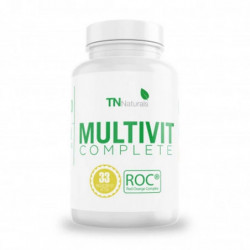
- TN Naturals Multivit Complete: This vitamin and mineral complex has been reformulated to include iron and the patented ROC® (Red Orange Complex), an extract of Sicilian red oranges. It helps ensure an adequate intake of micronutrients, which are naturally reduced when overall food intake is lowered.
- Omega-3: Essential fatty acids (EPA and DHA) are necessary for the body’s normal functioning. During periods of restricted calorie intake where fat intake is controlled, a high-quality supplement (IFOS-certified) helps meet physiological needs without affecting total calorie intake.
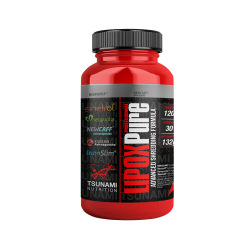
- Lipo X Pure Professional: This supplement combines several patented ingredients: Sinetrol®Xpur, NeOpuntia™ and KSM-66 Ashwagandha®. It also contains micro-encapsulated, sustained-release caffeine (Newcaff®) to support metabolism and maintain alertness during training sessions.
Conclusion
A calorie deficit is not a subjective variable; it is a physiological constant. If you manage your nutritional parameters effectively, maintain an adequate protein intake and train at a high intensity, you will achieve optimal muscle definition.
Discipline, precision and patience are your best allies. Physical transformation is a scientific process that does not tolerate improvisation.
Frequently Asked Questions
Is cardio essential for creating a calorie deficit?
No, the deficit is primarily nutritional. Cardiovascular exercise is a tool for optimisation, allowing you to increase energy expenditure without drastically reducing your food intake. Please note: excessive cardio whilst in a severe calorie deficit can accelerate proteolysis (muscle loss).
What is the optimal duration of a cutting phase?
It is not advisable to maintain a linear calorie deficit indefinitely. After 12 to 16 weeks, metabolic adaptations occur. It is recommended to incorporate maintenance periods (‘Diet Breaks’) to restore hormonal sensitivity.
Can you build muscle whilst in a calorie deficit?
Theoretically, anabolism (muscle building) requires an energy surplus. When in a calorie deficit, muscle gain is compromised, except for complete beginners. The primary objective of a cutting phase is to preserve existing muscle tissue, not to build more.