- Health and wellness
- 56082 views

Why creatine is also beneficial for women
Creatine is one of the most widely studied and commonly used dietary supplements in the world, known for its ability to increase muscle strength and improve physical performance. But its potential is not limited to men. Women can also derive considerable benefits from taking creatine, particularly if they take part in high-intensity sports such as weightlifting, CrossFit or HIIT.
As well as improving performance, creatine can help maintain lean muscle mass, reduce fatigue and promote faster recovery.
But that’s not all: a growing number of studies suggest that creatine has a positive effect on postmenopausal women, particularly in terms of preserving muscle mass and bone density – two very important aspects at this stage of life (which we’ll discuss in more detail below).
The benefits of creatine for women
More specifically, the benefits of creatine for women are as follows:
- Increased muscle strength and endurance, which helps women cope better with intense workouts such as weight training, HIIT or CrossFit
- Support for muscle tone, ideal for those who wish to sculpt their bodies, lose weight without losing lean mass, or tone up
- Improved intracellular hydration, which gives muscles a fuller, firmer appearance and may help reduce the appearance of cellulite
- Positive cognitive effects, with potential improvements in concentration and mental wellbeing, particularly during periods of stress or hormonal changes
Creatine: recommended dosage for women
The creatine dosage for women does not differ greatly from that for men, but it can be adjusted according to body weight and personal goals.
In general, the recommendations are as follows:
- Maintenance phase: 3 to 5 g per day, taken continuously for at least 4 to 6 weeks
- Loading phase (optional): 20 g per day, divided into 4 doses of 5 g, for 5 to 7 days, followed by the maintenance phase
It should be noted, however, that the loading phase is not compulsory and that many women choose to start directly with the standard daily dose.
We always emphasise that, when it comes to creatine and dosing for women, this should always be personalised, avoiding any excessive intake and, where possible, following the advice of a professional.
Creatine and water retention: myth or reality?
One of the most common concerns relates to the supposed link between creatine and bloating, particularly in women. But let’s set the record straight: creatine can increase the amount of intracellular water in the muscles, thereby improving hydration and performance. This effect is very different from the classic subcutaneous ‘water retention’ associated with hormonal or dietary imbalances.
In practice:
- The water retained is functional for performance and is found inside the muscle, not under the skin
- There is no need to worry about looking ‘bloated’ or feeling sluggish if you maintain a balanced diet
If you drink enough water, take the correct doses and lead an active lifestyle, not only does creatine not cause unwanted water retention, but it can actually help improve your body composition.
Creatine and cellulite: what’s the truth?
Another frequently asked question is whether creatine promotes or exacerbates the appearance of cellulite. The answer is no, at least not directly. Creatine is not a hormone; it does not alter lipid metabolism and is not responsible for the accumulation of subcutaneous fat.
On the contrary, in some cases, it can help indirectly:
- It promotes an increase in lean muscle mass, thereby improving tissue tone.
- It can improve performance in the gym by encouraging more intense and regular training, which helps to combat lymphatic retention.
- When combined with a healthy, active lifestyle, it can help reshape body composition.
It is therefore misleading to discuss creatine for women and cellulite in a negative light. Instead, the overall context should be assessed: diet, physical activity, hydration and hormonal status.
Creatine: side effects in women
Creatine is one of the most widely studied dietary supplements in the world and has an excellent safety profile. But are there any side effects for women? Generally speaking, when taken in appropriate doses by healthy individuals, it does not cause any significant adverse effects.
However, there are cases where the following effects may occur:
- A slight initial weight gain due to intracellular fluid retention (not to be confused with swelling or subcutaneous fluid retention)
- Gastrointestinal disturbances if the creatine is not properly dissolved or taken on an empty stomach
- Headaches or mild sleep disturbances if taken in combination with caffeine or stimulants
Does creatine make you put on weight? Let’s set the record straight
One of the most common concerns among women interested in dietary supplements is: ‘Does creatine make you put on weight?’. The short answer is no, but we need to clarify a few points.
When you start taking creatine, you may notice a slight increase in weight on the scales. This isn’t due to an increase in body fat, but to improved muscle hydration and, ultimately, an increase in lean body mass.
Let’s look at the difference:
- Weight gain ≠ increase in fat: the initial increase is linked to water retained within muscle cells, a natural process that promotes performance and recovery;
- Intracellular waterretention vs perceived bloating: this is not water ‘under the skin’ or abdominal bloating, but an improvement in cell volume, often clearly visible on the buttocks and toned legs.
Creatine and the menopause: what is the link?
During the menopause, many women experience a loss of muscle mass, a slower metabolism and greater difficulty in maintaining their strength and energy levels. In this context, creatine can prove to be a valuable ally.
Several studies have shown that creatine supplementation in postmenopausal women can:
- Help maintain lean body mass
- Improve muscle strength
- Promote bone health (through increased mechanical stimulation)
- Help combat feelings of tiredness
Incorporating creatine into the daily routine of postmenopausal women, alongside a balanced diet and regular physical activity, can therefore help them navigate the menopause with greater energy, balance and well-being.
Which creatine should you choose?
When it comes to creatine for women, the most effective form – and the one most strongly supported by scientific literature – remains creatine monohydrate. But not all monohydrates are the same. At Tsunami Nutrition, we wanted to go one step further: to improve this molecule by making it even more effective, easier to digest and better suited to women’s needs.
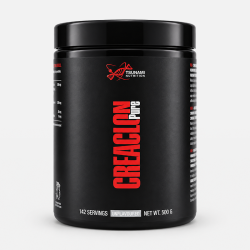
This led to the creation of Creaclon Micro Pure Professional, featuring the Clonapure® patent: an advanced formula that combines three active forms of creatine: 200-mesh micronised monohydrate, phosphocreatine (the energetically active form) and phosphate groups. The result? A strengthened phosphagen system, more energy during training and optimised performance.
One of the benefits most appreciated by those seeking high-quality creatine is the alkaline pH (pH 8) of the Clonapure® formula. This helps to reduce muscle acidification, limits the build-up of lactic acid and does not cause water retention – a factor often feared by women.
For those who prefer an even more convenient solution, Tsunami also offers 3Alkapure Pure Professional in capsule form, which are convenient and quick to take, even when you’re out and about.
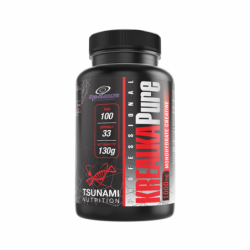
Another option from Tsunami is KREALKA Pure Professional, based on KreAlkalyn® alkaline creatine. This pH-balanced, stabilised form reduces stomach upset, improves absorption and allows you to take 1,000 mg of creatine per tablet without compromising on performance or digestive wellbeing.
To find out more about Tsunami’s creatine-based dietary supplements, visit the Tsunami Nutrition website.