- Training
- 33304 views

There are 20 naturalamino acids, of which our body is only able to produce some in order to build proteins. These are defined as non-essential amino acids. However, it is unable to synthesise others, known as essential amino acids, which must be obtained from our diet. There is also a third category of amino acids known as conditionally essential or semi-essential, which includes glutamine, which we will discuss below.
What is glutamine used for?
It is a conditionally essential amino acid, meaning that whilst it is not essential for survival, it is necessary for the proper functioning of many biochemical processes in our body. It is one of the amino acids which, under certain pathophysiological conditions, cannot be synthesised in sufficient quantities by our bodies and must therefore be obtained through external sources, either via the diet or dietary supplements. Found in large quantities in the body (around 80 g in a 70 kg man), particularly in muscle tissue, it fulfils numerous functions and can, if necessary, be converted into another amino acid as required.
Glutamine and physical activity
During physical activity, glutamine fulfils several functions:
- It reduces muscle catabolism.
- It is used during intense exercise as an alternative source of energy.
- It reduces the sensation of fatigue.
- It promotes muscle recovery.
For athletes undergoing intense daily training, it is recommended to take between 3 and 6 g of glutamine per day, preferably after training.
The role of glutamine in the immune system
It is very important for the health of enterocytes (intestinal cells) as it helps maintain the integrity of the intestinal barrier against dysbiosis and leaky gut (intestinal permeability), preventing the bacteria naturally present in our gut from moving to other areas and causing inflammation, as in the case of Prevotella, which may be responsible for rheumatoid arthritis. Glutamine deficiencies mainly occur during periods of stress, also leading to an increased risk of colds and flu; this situation is particularly common among athletes who experience greater catabolism during their performances, such as in endurance sports.
Glutamine and hormone synthesis
Glutamine is an amino acid that also plays a role in the synthesis of numerous hormones, such as insulin, by facilitating its release by the beta cells of the pancreas and by enhancing its activity and function, thereby improving insulin sensitivity. In this context, it can be said to have an anabolic effect on muscles, but also on adipose tissue, by promoting lipogenesis.
Glutamine stimulates, particularly during catabolic phases, an increase in growth hormone and, consequently, in IGF-1, whilst also reducing cortisol synthesis and thus catabolism itself.
In which foods is glutamine found?
It is found in moderate amounts in protein-rich foods (meat and dairy products) and in smaller quantities in plant-based foods. The richest animal sources of glutamine are red meat, chicken, fish, pork, eggs, milk and dairy products. The richest plant-based sources are cauliflower, beetroot, beans, spinach and peanuts.
Glutamine-based dietary supplements: which one to choose?
Here is a list of dietary supplements containing glutamine from the Tsunami Nutrition range:
GLUTA Gym Tok Line
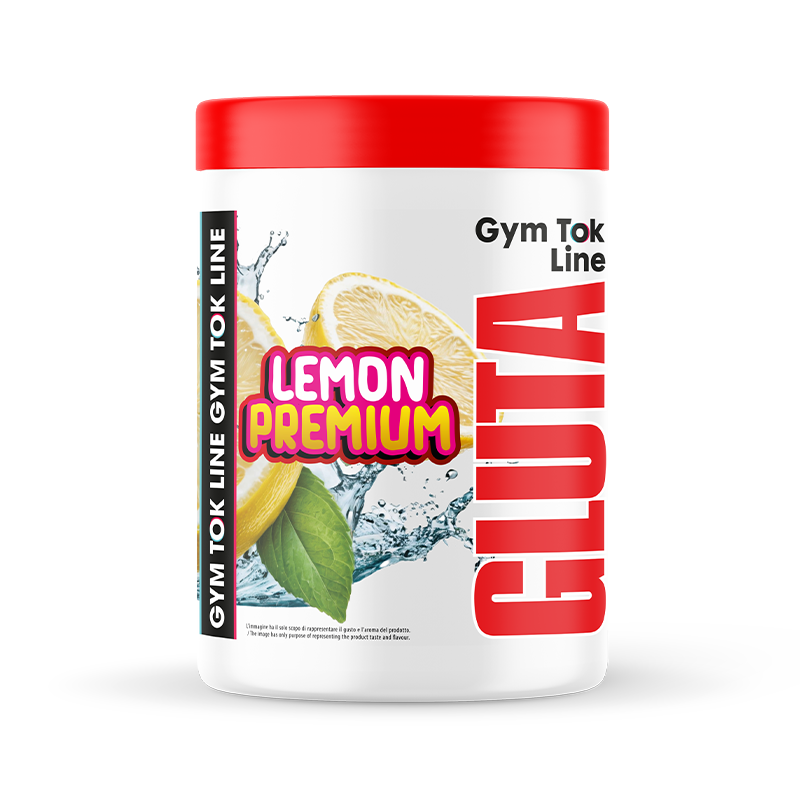
GLUTA Gym Tok Lineis an L-glutamine-based dietary supplement specially formulated to support muscle recovery after training. L-glutamine is an essential amino acid and a precursor to glutamic acid, which plays a key role in protein synthesis and in strengthening the immune system. It is an important source of energy for muscle, brain and intestinal cells. Intense physical activity can lead to a reduction in the body’s natural glutamine stores, which increases fatigue and slows down recovery.
Thanks to its advanced gluten-free and lactose-free formula, GLUTA Gym Tok Line helps to rapidly replenish glycogen stores and promote optimal recovery. Ideal for athletes and fitness enthusiasts who train frequently, this supplement helps reduce muscle soreness, improve endurance and speed up recovery between sessions, thereby ensuring consistent and sustained performance
GLUTAPure PEPTIDE
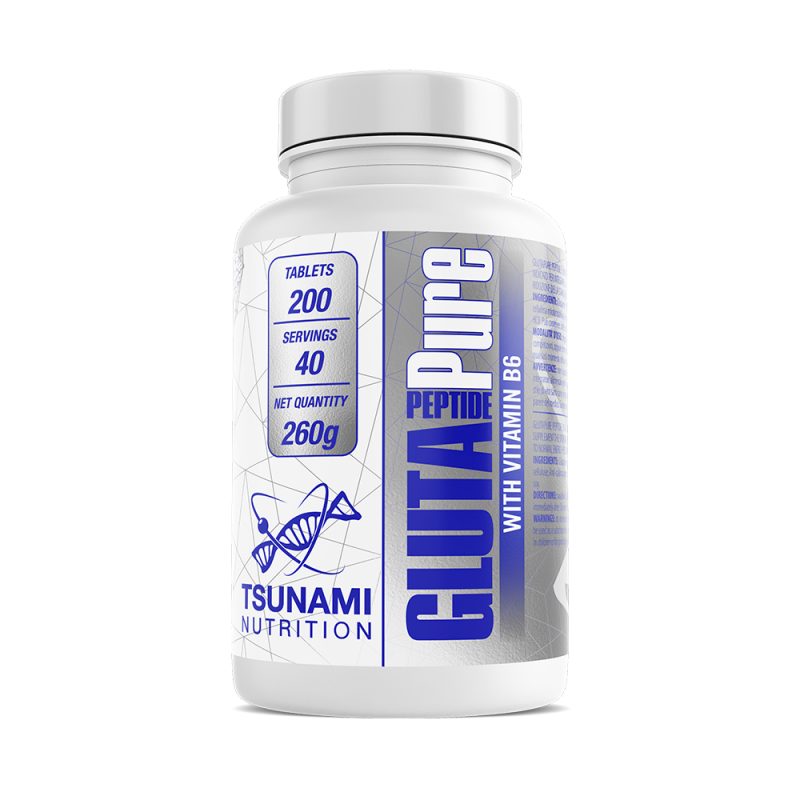
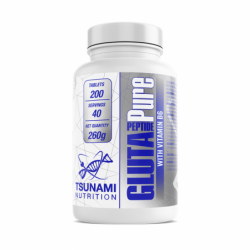
Tsunami Nutrition GLUTAPure Peptideis a glutamine supplement in peptide form, enriched with vitamin B6 to enhance results and support muscle anabolism as well as immune function. The combination of these two elements creates the ideal anabolic environment for promoting protein synthesis and maximising energy levels during training, resulting in explosive strength and greater endurance during workouts.
The decision to use the peptide form – and therefore a glutamine supplement such as GLUTAPure Peptide by Tsunami Nutrition – stems from the fact that the conventional free form of this amino acid is intercepted or broken down by the liver and the gut. This occurs because immune cells utilise this substance as their primary energy source, resulting in reduced absorption of the substance and a marked decrease in its effects. Numerous studies have shown that the peptide form is rapidly absorbed, allowing you to maximise the benefits of glutamine in every respect. It is also worth highlighting its significant anti-catabolic action, which prevents and limits the onset of muscle catabolism. Furthermore, this product has been enriched with vitamin B6, which plays an important role in energy production by supporting muscle energy levels and maximising the product’s absorption to enhance its effectiveness.
What are the characteristics of GLUTAPure Peptide?
GLUTAPure PEPTIDE is the most advanced form of glutamine, as it is characterised by greater stability. Composed of two glutamine dipeptides (L-Alanyl L-Glutamine and Glycyl L-Glutamine) obtained by the hydrolysis of gluten, it is characterised by greater stability in water and at high temperatures. The properties of glutamine dipeptides were first discovered in the clinical setting, where their parenteral administration offers improved pharmacokinetics. This results in more efficient transport of glutamine into the bloodstream and muscle tissue. The use of glutamine dipeptides allows the benefits of this amino acid to be realised more quickly, making it ideal for post-workout use to reduce recovery time and stimulate the growth of lean body mass.
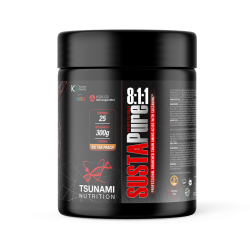
SUSTAPure PROFESSIONAL BCAA 8:1:1 Kyowa Quality® Sustamine™
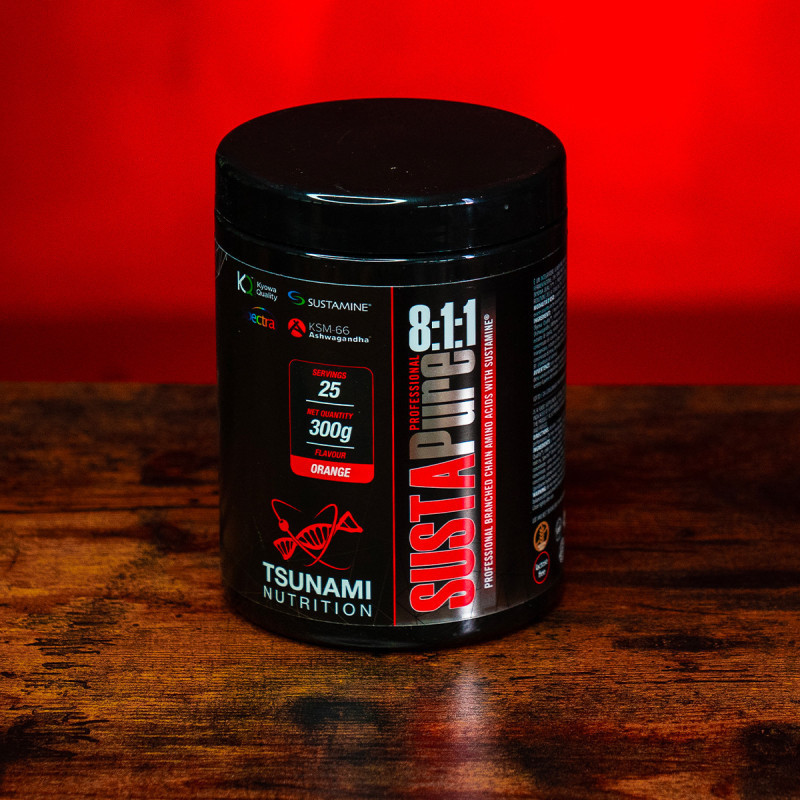
InSUSTAPure PROFESSIONAL BCAA 8:1:1, glutamine is present in the form of Sustamine, a dipeptide that binds glutamine and alanine.
The result is a soluble product that is stable to heat and acidity; once ingested, it undergoes rapid hydrolysis, releasing the individual amino acids. Taking Sustamine provides the body with the most important non-essential amino acid: glutamine. Indeed, during catabolic stress – whether physical or conventional – the intracellular glutamine pool is reduced by 50 per cent. Both amino acids are also involved in intracellular hydration and thus indirectly in protein synthesis. Alanine transports amino groups from the muscle to the liver, where, through conversion to pyruvate, it triggers gluconeogenesis – that is, the formation of new energy substrates (glucose) – whilst glutamine is used in large quantities to buffer the acidity produced by strenuous activity. Ultimately, these two amino acids help to maintain cellular hydration, prevent catabolism and simultaneously increase the synthesis of proteins and glucose.
Glutamine and BCAAs
It has been known for years that BCAAs, or branched-chain amino acids, are capable of reducing training-induced muscle damage and also shortening recovery times. However, numerous studies have shown that the synergistic intake of BCAAs and glutamine provides greater protection for muscle mass than BCAAs alone. Indeed, by acting synergistically, glutamine reduces the oxidation of BCAAs during exercise, particularly that of leucine, which is vital for the activation of mTOR and therefore for protein synthesis. To achieve this, it is essential that muscle cells have adequate glutamine reserves prior to training to enable the absorption of leucine; otherwise, mTOR activation could be reduced and protein synthesis slowed down.