- Alimentation
- 24403 views

What is maltodextrin?
Maltodextrin is a complex carbohydrate obtained by the hydrolysis of starch, usually derived from maize, rice, potatoes or wheat. The chemical process used to produce it involves breaking down the starch into shorter chains of sugars, which are then ground into a fine powder that is easily soluble in water.
Although it is classified as a polysaccharide, maltodextrin has a high glycaemic index, very similar to that of glucose.
This is useful because it means it is absorbed very quickly, making it an excellent source of ‘fast’ energy, particularly during periods of intense metabolic stress, such as during or immediately after a workout.
From a nutritional point of view, maltodextrin has no sweet taste, is colourless and highly soluble, making it perfect for mixing with other supplements such as creatine, amino acids or electrolytes.
What is maltodextrin used for?
As mentioned, maltodextrin is primarily used as a rapid source of energy and is highly valued in the world of sport as it is an easily digestible carbohydrate that does not weigh heavily on the stomach.
If you train frequently and at a very high intensity, maltodextrin helps to:
- Quickly replenish muscle glycogen stores (essential after intense exercise)
- Maintain a stable energy level during endurance sports or long training sessions
- Increase the energy content of a post-workout shake without resorting to simple sugars.
When should you take maltodextrin?
There are three key times when you can take maltodextrin:
- Pre-workout, if you’re training on an empty stomach or with low energy levels. Maltodextrin is a fast-acting fuel; it improves endurance and reduces the risk of hypoglycaemia. You can consume it 20 to 30 minutes before exercise, dissolved in water or mixed with a pre-workout supplement;
- During your workout, if you’re planning long sessions or endurance sports. You can take it diluted in water, sipping it every 10 to 15 minutes
- After training, to replenish your glycogen stores and optimise the absorption of protein and creatine. In this case, you can take it immediately after exercise, combined with a protein shake.
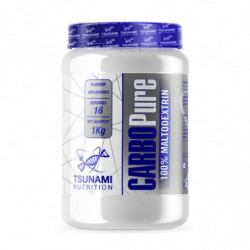
Maltodextrin-based dietary supplements: CARBO Pure
If you’re looking for a sustainable, easily digestible source of energy that’s free from simple sugars, maltodextrin-based dietary supplements are the ideal choice. These products are designed to support performance in endurance sports (such as cycling, running, CrossFit and triathlon), as well as for intensive gym workouts.
Looking for ready-to-use energy? We recommend Tsunami Nutrition. CARBO Pure is formulated using highly pure maltodextrins derived from maize starch via enzymatic hydrolysis, a process that preserves its nutritional qualities and ensures maximum solubility.
CARBO Pure is the ideal choice for you if:
- You practise endurance sports (marathon, cycling, swimming)
- You undertake prolonged or back-to-back training sessions
- You need to maintain high energy levels without putting a strain on your digestive system.
One of CARBO Pure’s key benefits is that it provides sustained energy over the medium to long term: the maltodextrins gradually release ATP over 3 to 4 hours, thereby preventing sudden spikes and drops in energy levels. This allows you to perform at your best for longer, delay fatigue and maintain high muscle concentration.
Is maltodextrin bad for your health?
When it comes to maltodextrin and its contraindications, one of the most frequently asked questions is specifically whether maltodextrin is bad for your health. In reality, if consumed in appropriate quantities and in the right contexts, it does not pose any particular health risks.
However, it is important to bear certain aspects in mind:
- High glycaemic index: maltodextrin is rapidly absorbed and can cause spikes in blood sugar levels. It is therefore not suitable for people with diabetes or insulin resistance, unless under medical supervision
- Amount and timing of intake: if consumed in excess or at inappropriate times of the day (without physical activity), it may promote the accumulation of body fat
- Poor quality: some low-cost formulations may contain undesirable residues or be derived from genetically modified starch sources. Choose only pure maltodextrin from certified sources.
Conclusion: maltodextrin is not harmful in itself, but it must be used with care, especially if your aim is to lose weight, build muscle or maintain your insulin sensitivity.
Maltodextrin and diabetes
If you are familiar with diabetes or blood sugar issues, you should be cautious about maltodextrin. As mentioned earlier, it has a very high glycaemic index and can rapidly raise blood sugar levels after consumption.
It should therefore not be considered ‘neutral’, even though it often appears on labels simply as ‘carbohydrates’. For people with type 1 or type 2 diabetes, or prediabetes, maltodextrin should be assessed with the help of a doctor or nutritionist.
If you do not have these conditions and use it at the right time (before, during or after an intense workout), it can be an excellent source of energy to improve your performance and recovery.