- Alimentation
- 2244 views
In the world of bodybuilding and sports nutrition, the focus is often almost exclusively on total calorie intake or the precise gramme count of protein. Whilst this is certainly necessary, it is an incomplete view of the human body. There is an invisible, often overlooked variable that nevertheless dictates how your body stores energy, manages hunger and burns fat: the rate at which carbohydrates are absorbed.
Why do some athletes manage to consume large amounts of carbohydrates whilst staying lean, whilst others seem to store fat just by looking at a plate of pasta? The answer lies not only in the quantity consumed, but in managingthe glycaemic index.
Understanding this physiological mechanism means regaining control over your insulin, your energy levels during training and, ultimately, your body composition.
Beyond the number: Understanding how insulin works
The glycaemic index isn’t simply an arbitrary score from 0 to 100 assigned to foods to classify them as ‘good’ or ‘bad’. It is a precise physiological measure of the rate at which a carbohydrate is converted into glucose in your blood after consumption.
To visualise this phenomenon, imagine your bloodstream as a motorway. When you eat a food with a high glycaemic index (such as white bread, sticky rice or sweets), it’s like letting hundreds of cars onto that motorway all at once. The traffic becomes gridlocked immediately. Your body detects this sudden spike in blood sugar and the pancreas reacts urgently by releasing a massive dose of insulin.
Insulin is an extremely powerful storage hormone. Its command is simple: “Clear the blood, store the energy in the cells!” The problem? If your muscles aren’t working intensely at that precise moment (as during a workout), they’re ‘closed’ and refuse this excess glucose. The inevitable physiological result: insulin redirects this excess energy straight to the fat cells – in other words, your fat reserves.
Conversely, foods with a low glycaemic index (generally below 55) release their energy very gradually. Blood sugar levels remain stable, and consequently, insulin levels remain low. This is the ideal metabolic state for promoting lipolysis (the use of fat as fuel) throughout the day.
Why athletes should prioritise a low glycaemic index
Adopting a diet centred on a low glycaemic index is not a restrictive ‘diet’; it is a strategy for sustainable performance.
Consistent energy levels
The bodybuilder’s enemy is reactive hypoglycaemia. That infamous ‘energy slump’ and mental fog that set in about an hour after a meal rich in fast-acting sugars. By stabilising your blood sugar levels with slow-release foods, you maintain a constant level of alertness and strength. This helps you avoid an energy crash in the middle of the day or, worse still, at the start of your training session.
Optimising insulin sensitivity
This is the Holy Grail of clean muscle gain. By placing less strain on your pancreas on a daily basis, you improve what is known as insulin sensitivity. This means that on the days when you really need to trigger an anabolic response, your body will react much more effectively and direct nutrients primarily to muscle tissue rather than to fat tissue.
What are the best low-glycaemic index foods?
In practical terms, what should you put on your plate to build muscle without gaining fat? Here are the essentials to include in your diet.
Pulses: The often-overlooked group
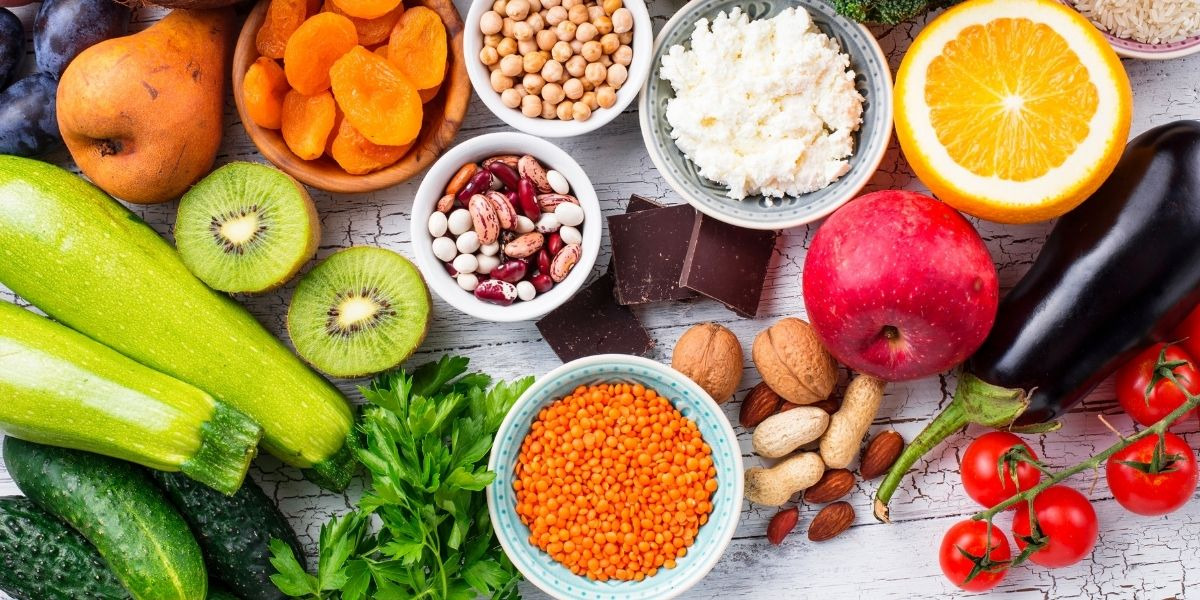
Lentils (green or coral), chickpeas, red or white beans. With a glycaemic index often between 25 and 35, they’re exceptional for athletes. Not only do they provide slow-release carbohydrates, but they’re also a source of plant-based protein and a massive amount of fibre. This fibre slows down digestion, ensuring long-lasting fullness – which is crucial during a cutting phase to help you stick to your diet.
Whole grains and pseudo-grains
Beware of marketing traps. Not all rice is created equal. Quick-cook white rice or overcooked rice has a high glycaemic index. To stay within the performance zone, opt for:
- Basmati rice: Its molecular structure, which is richer in amylose, makes it harder for the body to break down than other white rices, which lowers its glycaemic index.
- Oats: The go-to breakfast food. They contain beta-glucans, soluble fibres that form a gel in the stomach, significantly slowing down the absorption of sugars.
- Quinoa and Buckwheat: Sources of complex carbohydrates rich in micronutrients and minerals essential for muscle contraction.
- Sweet potato: Excellent, but be careful how you cook it! When boiled in water, its glycaemic index remains low (46). When baked, its starch transforms and its glycaemic index shoots up (94).
Stone fruits and berries
Whilst high doses of fructose can be problematic, whole fruits remain excellent allies. Opt for red berries (blueberries, raspberries, strawberries), which have a very low glycaemic load. Apples, pears and grapefruit are also sensible choices, as their fibrous structure slows the release of sugar into the bloodstream.
The expert’s insight: Cooking makes all the difference
It’s important to note that a food with a low glycaemic index can become one with a high glycaemic index depending on how you prepare it.
The most telling example is pasta. Pasta cooked ‘al dente’ retains a complex starch structure that the body takes time to digest. If you overcook the same pasta, the starch gelatinises: it becomes ‘pre-digested’. Once ingested, it behaves almost like a fast-acting sugar. To manage your blood sugar levels, you should therefore always keep an eye on your cooking times.
Similarly, allowing potatoes or rice to cool after cooking creates what is known asresistant starch. This starch acts like fibre and lowers the meal’s glycaemic index, even if you reheat it afterwards.
Conclusion
The glycaemic index shouldn’t become a mathematical obsession, but it should guide your daily nutritional choices.
For athletes, the rule is simple: outside the post-workout window (when the body needs quick energy to recover), always prioritise foods with a low glycaemic index. This is the key to a lean physique, stable energy levels and rock-solid metabolic health in the long term.