- Health and wellness
- 18687 views
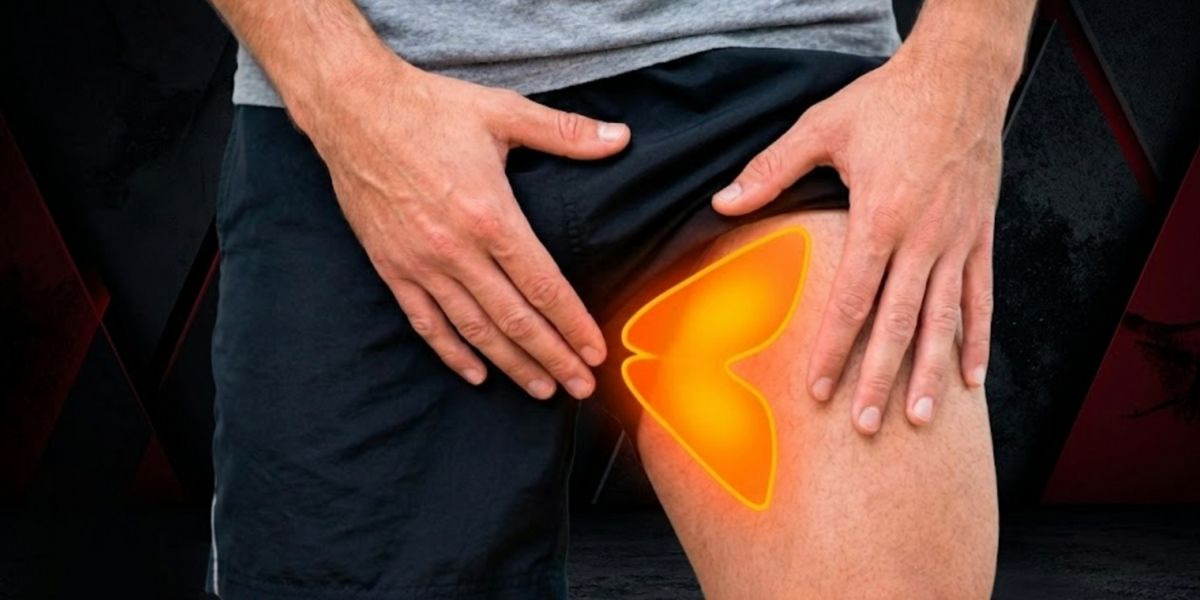
It’s a sensation feared by all sportspeople, from footballers to those who do weight training: a sharp twinge on the inside of the thigh, a dull ache in the groin, or pain that flares up first thing in the morning.
Adductor pain (often referred to as ‘pubalgia’ in its chronic form) is a warning sign that a structure is failing mechanically. Unlike simple muscle soreness, this pain often indicates that your tissues can no longer cope with the tensile forces imposed by changes in your weight-bearing position or the loads you place on them during training.
In this first part, we’ll analyse why this injury occurs and, above all, debunk the myth of ‘complete rest’, which often delays your recovery.
Adductor pain: The ‘pubic junction’ under strain
To understand the injury, you need to understand the mechanics. The adductors (long, short, magnus, pectineus and gracilis) do not merely serve to bring the legs together. Their main role is to stabilise the pelvis when you are bearing weight on a single leg (running, kicking, lunging).
They work in constant synergy with the abdominal muscles (the rectus abdominis and the obliques). Imagine your pelvis as a set of scales:
- The abdominal muscles pull the pelvis upwards.
- The adductors pull the pelvis downwards.
Everything hinges on the pubic symphysis, the point where these forces meet. If the balance is disrupted, injury occurs.
Common causes: Why might the adductors give way?
Pain in the adductors is rarely a coincidence. It often results from a mechanical conflict known as pubic shear.
This phenomenon generally occurs when the adductors are too strong and too tight in relation to a core that is too weak or unstable. During a sudden acceleration or a heavy squat, these opposing forces pull violently on their tendon insertions. The result: the tendon becomes damaged, becomes inflamed (tendinopathy) and eventually suffers micro-tears.
The fatal mistake: the ‘passive rest’ trap
The first instinct when faced with pain is often to stop everything. “It hurts, so I’m not moving for three weeks.” This is a major strategic error for two physiological reasons:
Rapid muscle atrophy (catabolism)
Total immobilisation leads to an extremely rapid loss of muscle mass. By ceasing all activity, you weaken the overall structure. When you resume training, your muscle is smaller, weaker, and the initial imbalance with other muscle groups is even more pronounced.
Poor-quality healing
A muscle or tendon that heals without any mechanical stress produces disorganised scar tissue. Collagen fibres form a disordered ‘clump’ rather than aligning themselves in the direction of the stress. This scar tissue is stiff and brittle, which almost invariably leads to a relapse as soon as you resume training at any intensity.
Towards an active healing strategy for the adductors
As you will have realised, for a lasting recovery, you cannot simply wait for the pain to subside. You need to adopt a ‘Load Management’ strategy and provide your body with the specific nutrients required to rebuild healthy, properly aligned muscle fibres.
In the second part of this article, we’ll reveal the precise rehabilitation protocol (isometric, eccentric exercises) and the clinical nutritional strategy based on patented peptides to halve your recovery time.
It’s time to take action. How can you turn a debilitating injury into an opportunity for strengthening? The answer lies in a two-pronged approach: progressive mechanical rehabilitation combined with targeted clinical nutrition to accelerate tissue regeneration.
Active Rehabilitation Protocol for the Adductors: The 3-phase method
The aim of this protocol is to guide the healing of muscle fibres in the direction of the exertion, whilst restoring pelvic balance.
Phase 1: Isometric Exercises (As soon as the acute pain subsides)
Isometric exercise involves contracting the muscle without creating any joint movement. It is the ideal way to maintain nerve connection and strength without placing dangerous strain on the injured tendon.
- The exercise: Lie on your back with your knees bent, and place a ball (or a firm cushion) between your knees.
- The action: Gently squeeze the ball (using 20–30 per cent of your maximum strength) for 10 to 15 seconds, then release. Repeat 5 times.
- The golden rule: You should not feel any pain, just controlled muscle tension.
Phase 2: Eccentric Training (The Key to Recovery)
Once you can perform the isometric exercise pain-free, move on to eccentric work. This is the type of contraction that strengthens the tendon most effectively and realigns the collagen fibres, preventing the ‘fibrous scar’ effect.
- The exercise: Use an elastic band attached to a fixed point and to your ankle (on the injured side). Step away to put the elastic band under tension.
- The movement: Allow the resistance band to pull your leg outwards very slowly (control the movement over 3 to 4 seconds), then bring your leg back dynamically. It is this controlled phase that heals the tendon.
Phase 3: Dynamic Core Stabilisation (Stabilising the ‘Pubic Cross’)
As we have seen, the adductor often gives way because the abdominal muscles are too weak to counterbalance the forces. You therefore need to strengthen your core.
- The exercise: Side plank (oblique core work).
- Progression: Once you’re comfortable, lift the top leg to increase tension on the glutes and take the strain off the adductors.
The use of supplements: The secret weapon of recovery
Technique isn’t everything. To repair a ‘house’ (your muscle), it’s not enough to have workers (the exercises); you need quality bricks (nutrition). When you’re injured, your needs change radically: you need to combat inflammation whilst maximising protein synthesis in a specific area.
A standard protein powder is excellent for overall muscle building, but it can sometimes lack the specificity needed to manage the cellular signalling involved in repairing complex tissue damage. This is where bioactive peptides come in.
The Tsunami Nutrition Solution: PeptiStrong Pure Professional
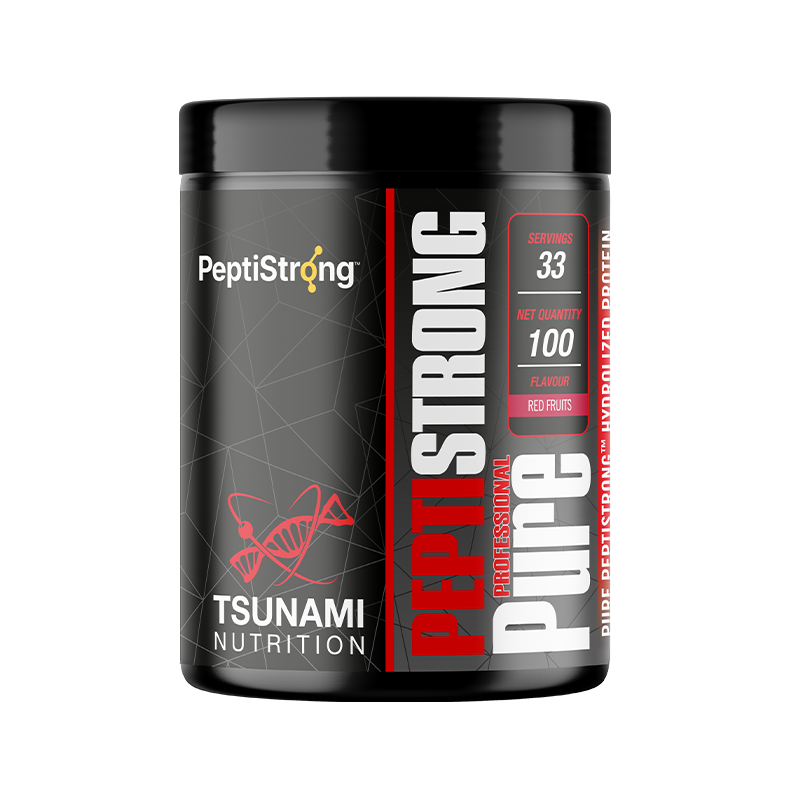
For this critical phase of return to sport, the experts at Tsunami Nutrition have chosen PeptiStrong Pure Professional. This is not just a protein supplement; it is a precision physiological tool developed using artificial intelligence.
Why is it essential in the event of an adductor injury?
It is a patented peptide hydrolysate derived from the broad bean that acts in three key ways:
- Combating immobilisation-induced atrophy: A major clinical study has shown that PeptiStrong™ is capable of preserving muscle mass during a period of forced immobilisation, where other protein sources fail. It’s the lifeline for your muscle mass whilst you’re unable to run.
- Reducing post-traumatic inflammation: It helps reduce inflammatory markers triggered by physical stress. During rehabilitation, this means less residual pain after your physiotherapy sessions.
- Recovery of functional strength: Studies show an increase in strength recovery following muscle damage. This is exactly what you need for a safe return to action.
How to use PeptiStrong Pure Professional?
The product is vegan, gluten-free and lactose-free, ensuring excellent digestibility (a crucial factor in preventing an increase in systemic inflammation caused by difficult digestion).
Recommended dosage: 3 grams per day (1 serving).
Strategic timing:
- Rest days: Take it in the morning to maintain a protective anabolic environment.
- Training days: Take it immediately after your eccentric exercise session to optimise the repair of damaged muscle fibres.
Conclusion: Patience and Discipline
Recovering from an adductor injury requires discipline. Don’t rush the process. Replace impatience with an active strategy: strengthen your pelvis every day using the mechanical protocol and provide your body with the specific peptides it needs with PeptiStrong Pure Professional. This is the safest way to make this injury a distant memory and regain a solid foundation.
Note: This article is not a substitute for medical advice. In the event of sudden, sharp pain (suspected severe tear), consult a healthcare professional immediately for an ultrasound scan.