- Health and wellness
- 1150 views

What is coenzyme Q10?
Coenzyme Q10 is a substance produced naturally by the body and found in every cell. It acts within the mitochondria (the structures that convert food into energy) and its role is to keep the ATP production chain active – ATP being the fuel that powers the muscles, heart and brain.
Without sufficient levels of Q10, energy production slows down. Muscles tire more quickly, recovery takes longer and you begin to feel that underlying fatigue which does not even go away after a good night’s sleep. Furthermore, CoQ10 is also an antioxidant: it protects cells from damage caused by free radicals, which build up as a result of intense physical activity, stress and ageing.
The most ‘critical’ aspect is that the body’s production of Q10 declines with age, from around 30–35 years old, and can be further reduced by certain medications.
For those looking to choose a high-quality supplement, the coenzyme Q10 category in the Tsunami store brings together the most comprehensive formulations.
A comprehensive overview of the benefits, dosages and contraindications is also available in the article ‘Coenzyme Q10: benefits, dosage and contraindications’.
Symptoms of coenzyme Q10 deficiency
CoQ10 deficiency almost never manifests as a single, easily identifiable symptom. It most often presents as a set of vague signs that people tend to attribute to stress, exercise or simply ageing. Among the most common are:
- Persistent fatigue: waking up already exhausted, with energy levels failing to recover even after rest, and days becoming a constant struggle;
- Muscle pain and tension: muscles that ache for no apparent reason, frequent cramps, and slow recovery after training;
- Reduced concentration: a foggy mind, faltering memory, difficulty staying focused;
- Shortness of breath on exertion: cardiovascular endurance decreases and you become short of breath sooner than usual
- Weakened immune system: you fall ill more often and recover more slowly.
Anyone who recognises more than one of these signs and wants to understand what is happening can read more about the subject in the article on coenzyme Q10 deficiency and its symptoms.
Coenzyme Q10 and statin-related muscle pain
Statins are the most commonly prescribed medicines for lowering LDL cholesterol. They work by blocking an enzyme called HMG-CoA reductase, the same enzyme that regulates both cholesterol and CoQ10 production. Technically, by lowering cholesterol, statins also reduce Q10 levels in the body.
It may therefore happen that some patients taking statins develop muscle pain (myalgia), weakness and fatigue – symptoms that are often mistakenly attributed to the underlying condition or to ageing. In reality, in many cases, this is a statin-induced myopathy: a direct consequence of the reduction in CoQ10 within muscle tissue, which no longer has the energy required to function effectively.
For a comprehensive guide on this topic, we recommend reading the article on the link between statins and coenzyme Q10. For those seeking specific relief from muscle and joint pain, the Tsunami shop offers a selection of products designed to address this type of problem.
Remedies for myalgia and cholesterol
The most sensible approach for those taking statins who experience muscle pain is to replenish the CoQ10 levels that the medication has reduced. Obviously, this does not mean stopping the treatment (which must be managed in consultation with your doctor), but rather supplementing it with support to compensate for the resulting deficiency.
By taking CoQ10 supplements at appropriate doses (100–300 mg per day), many patients report a reduction in muscle pain, less fatigue and improved exercise tolerance over the following weeks. The improvement is not immediate: it takes 4 to 8 weeks to see tangible effects. CoQ10 does not interfere with the action of statins on cholesterol, so there are no contraindications to taking them together.
For those who also have high triglycerides or who wish to manage their lipid profile more comprehensively, the guide to the best supplements for high cholesterol and triglycerides provides an overview of the natural strategies available. The fatigue that often accompanies statin-induced myopathy can also be tackled with a broader approach: the article on the best supplements for physical and mental fatigue offers complementary solutions for those who are unable to regain their pre-treatment energy levels.
The effectiveness of coenzyme Q10 for fibromyalgia
Fibromyalgia is a condition characterised by widespread muscle pain, chronic fatigue and non-restorative sleep – a combination that profoundly affects quality of life. Several studies have shown that people with fibromyalgia tend to have significantly lower than average levels of CoQ10, both in the blood and in muscle cells.
This correlation has paved the way forthe use of CoQ10 as a supportive treatment for fibromyalgia. The results of available studies indicate that a daily supplement of 300 mg for at least 3 months may lead to:
- A reduction in the perceived intensity of muscle pain;
- An improvement in sleep quality;
- A reduction in chronic fatigue and increased energy levels throughout the day;
- A reduction in markers of oxidative stress in the blood.
It is not a curative treatment, as fibromyalgia remains a complex condition requiring a multimodal approach, but CoQ10 can be a useful adjunct within a broader treatment programme. The mechanisms involved relate bothto improved musclemitochondrial function and to a reduction in free-radical-mediated inflammation, two aspects that tend to be impaired in fibromyalgia.
Ideal intake and dosage
CoQ10 is not a fast-acting supplement. It must be taken regularly and at the right time to produce the expected results. Two practical rules to bear in mind: always take it with a meal containing fat (as it is fat-soluble) and take it continuously, without missing any days.
Daily dose and duration of treatment
The dosage varies depending on the objective. More specifically:
- Preventative and antioxidant use: 50–100 mg per day is sufficient to maintain adequate levels in a healthy adult under 40
- Athletes and those over 40: 100–200 mg per day, as this is the age at which the body’s own production begins to decline and physical exertion increases the body’s requirements
- Muscle pain associated with statins: 200–300 mg per day, to compensate for drug-induced depletion
- Fibromyalgia and chronic fatigue: 200–300 mg per day, often taken in two doses (morning and evening).
The first noticeable effects become apparent after 4 to 8 weeks. For those using it to support long-term treatment such as statins, supplementation must be maintained for the entire duration of the treatment: stopping it causes levels to drop again. For those using it preventatively or for sporting purposes, a 2–3-month course with a short break is a common approach, or continuous maintenance at a low dose.
How to choose the best supplement
Not all CoQ10 supplements are created equal. The form and manufacturing technology are just as important as the dosage:
- Ubiquinol vs ubiquinone: ubiquinol is the reduced and active form of CoQ10, generally offering higher bioavailability, and is particularly beneficial for people over 50 or those with absorption difficulties;
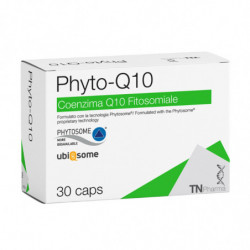
- Delivery technology: formulations using patented systems that improve intestinal solubility ensure much higher plasma levels than simple powder capsules. Phyto Q10 uses a patented phytosomal technology (Ubiqsome®) to improve the absorption of CoQ10, making it available to cells more effectively than conventional formats;
- Dosage form: oily softgels are better absorbed than powder capsules, as CoQ10 is fat-soluble and the fatty base facilitates passage through the gut;
- Clean ingredient list: additives, colourings and artificial flavourings add no nutritional value and make the product less reliable.
Frequently asked questions
Is coenzyme Q10 an anti-inflammatory?
Coenzyme Q10 is not an anti-inflammatory in the traditional sense of the term, as it does not block inflammation in the same way as ibuprofen or other NSAIDs. What it does is reduce cellular oxidative stress, which is often one of the factors that fuels and sustains inflammation over time. By lowering free radical levels, CoQ10 indirectly helps to reduce inflammatory markers, but it does not have an immediate pain-relieving effect.
For those seeking a more direct effect on muscle pain, the anti-inflammatory and pain relief section of the shop offers solutions designed for acute muscle discomfort. CoQ10 works best as a long-term support rather than as an immediate remedy.
What are the contraindications for coenzyme Q10?
The contraindications for coenzyme Q10 are limited, but it is worth being aware of them. The overall safety profile is excellent, but certain situations require caution. Those taking oral anticoagulants such as warfarin should monitor their INR after starting supplementation, as CoQ10 has a structure similar to vitamin K and may reduce its effect. Those taking medication for high blood pressure should keep an eye on their blood pressure levels, as CoQ10 may lower them further. If you are pregnant or breastfeeding, it is best to consult a doctor before starting. During chemotherapy, the antioxidant action of CoQ10 could theoretically interfere with certain medicines that act via oxidative mechanisms: advice from an oncologist is required.
Which vitamin are you lacking if you have muscle pain?
There is no single answer to the question of which vitamin you are lacking when you have muscle pain, as muscles can suffer from various deficiencies. The most common are vitamin D, a deficiency of which is one of the most frequent causes of diffuse muscle pain and weakness, particularly during seasons with little sunshine, and magnesium, which is essential for muscle contraction and relaxation. A vitamin B12 deficiency can cause weakness and pain with a neuropathic component.
CoQ10 is not a vitamin in the strict sense, but a deficiency in it manifests in a similar way to that of a micronutrient essential for muscle function. To understand which deficiency is at play, a blood test is the most useful starting point. In the meantime, the ‘Vitamins, Minerals and Antioxidants’ category offers a comprehensive overview to help address the most common deficiencies in a targeted manner.