- Health and wellness
- 14813 views

In the vast world of sports nutrition and health, few supplements enjoy such widespread scientific consensus as Omega-3s. Yet behind this generic term, which appears on margarine packets and in cardiologists’ recommendations, lies a complex biological reality. The real heroes are not ‘Omega-3s’ in general, but two very specific molecules:EPA (eicosapentaenoic acid) and DHA (docosahexaenoic acid).
The majority of the Western population suffers from a critical imbalance, consuming too many pro-inflammatory omega-6s and not enough of these valuable marine fatty acids. Are they interchangeable? Which should you prioritise if you’re looking to improve your muscle recovery, your concentration at work or your heart health? And why aren’t linseed or walnut oils enough to make up for your deficiencies?
If you want to optimise your metabolism, protect your brain from ageing and reduce chronic inflammation linked to intense training, you need to understand the intricate workings of these nutrients. Tsunami Nutrition breaks down the science behind EPA and DHA for you, so you’ll never choose your supplements at random again.
What exactly are EPA and DHA? (Definitions and Roles)
EPA and DHA belong to the family of long-chain polyunsaturated fatty acids. They are classified as ‘essential’ for one simple, non-negotiable reason: the human body is unable to produce them from scratch. They must therefore be obtained from your diet; otherwise, your cells will function at a reduced capacity.
Although they often work in synergy, they perform distinct biological functions within your body:
EPA (Eicosapentaenoic Acid): The Systemic ‘Firefighter’
EPA specialises in regulation and protection. Its action is primarily functional.
- Combats silent inflammation: It acts as a direct precursor to molecules known as series-3 eicosanoids (prostaglandins), which calm inflammatory processes. This is crucial for countering chronic inflammation caused by stress, pollution or intensive training.
- Cardiovascular and Mental Health: It plays a key role in improving blood flow, reducing triglyceride levels and stabilising atherosclerotic plaque. Recent studies also highlight its major role in regulating mood and combating depressive states.
DHA (Docosahexaenoic Acid): The Cellular ‘Architect’
DHA is a major structural component. It does not merely serve as fuel; it ‘is’ the cell.
- Brain and Eye Structure: It physically makes up your cell membranes. It is ubiquitous in the brain (60 per cent of whose dry weight consists of lipids!) and in the retina of the eye. It ensures membrane fluidity, allowing neurotransmitters (such as dopamine or serotonin) to travel rapidly from one neuron to another.
- Neuroplasticity: It is essential for memory, concentration, learning and the neurological development of the foetus in pregnant women.
The major pitfall of plant-based sources (the ALA problem)
This is undoubtedly the most widespread nutritional misconception. Many people believe they are meeting their needs by consuming nuts, rapeseed oil, linseed or chia seeds. Although these foods are healthy, they do not contain active EPA or DHA.
The scientific reality: Plant-based foods contain a ‘relative’ of omega-3s called ALA (alpha-linolenic acid). To become biologically useful, your body must convert this ALA into EPA, and then into DHA, via a series of complex enzymatic reactions. However, the enzyme responsible for this process (delta-6-desaturase) is often overwhelmed by our excessive consumption of omega-6.
The result is clear:
- Barely 5 to 10 per cent of ALA is converted into EPA.
- Less than 1 per cent is converted into DHA (a rate that is virtually zero in humans).
Put simply: relying solely on plant-based sources to obtain your DHA is mathematically impossible. To achieve real therapeutic and sporting benefits, you need to go directly to the active (marine) source or supplement your diet wisely.
Benefits: Why athletes cannot do without it
Beyond general health (heart and brain), a high intake of EPA/DHA is a real performance enhancer (ergogenic aid) for strength and endurance athletes.
- Faster recovery and management of muscle soreness: Intensive training causes micro-tears in the muscles and localised inflammation. EPA helps to modulate this inflammatory response, reducing the severity of delayed onset muscle soreness (DOMS) and enabling a quicker return to training.
- Lipolysis and insulin sensitivity: Omega-3s integrate into your cell membranes, making them more flexible. A ‘flexible’ cell is more sensitive to insulin, which means it absorbs nutrients (glucose/amino acids) more effectively to build muscle rather than storing them as fat.
- Muscle Anabolism: Recent studies suggest that omega-3s may increase muscle sensitivity to amino acids and activate the mTOR pathway, thereby promoting protein synthesis, particularly in ageing athletes.
The secret to effectiveness: Triglycerides (TG) vs Ethyl Esters (EE)
Have you bought Omega-3s from a chemist’s or supermarket and felt no effect? The problem isn’t with the molecule itself, but with the chemical form of the oil. This is the number one technical factor determining the quality of your investment.
The Ethyl Ester (EE) form: The industry standard
The vast majority of consumer brands sell Omega-3 in the form of ethyl esters. This is a semi-synthetic form obtained by treating fish oil with ethanol to artificially concentrate it. Although cheaper to produce, this form is highly unstable (it oxidises quickly) and your body does not recognise it well, making it difficult to absorb.
The triglyceride (TG) form: Natural excellence
This is the form in which fats occur naturally in fish. Your body possesses the exact enzymes needed to digest it immediately. Comparative clinical studies show that the triglyceride form offers up to 70 per cent greater bioavailability than the ethyl ester form.
Omega 3 Plus by Tsunami Nutrition
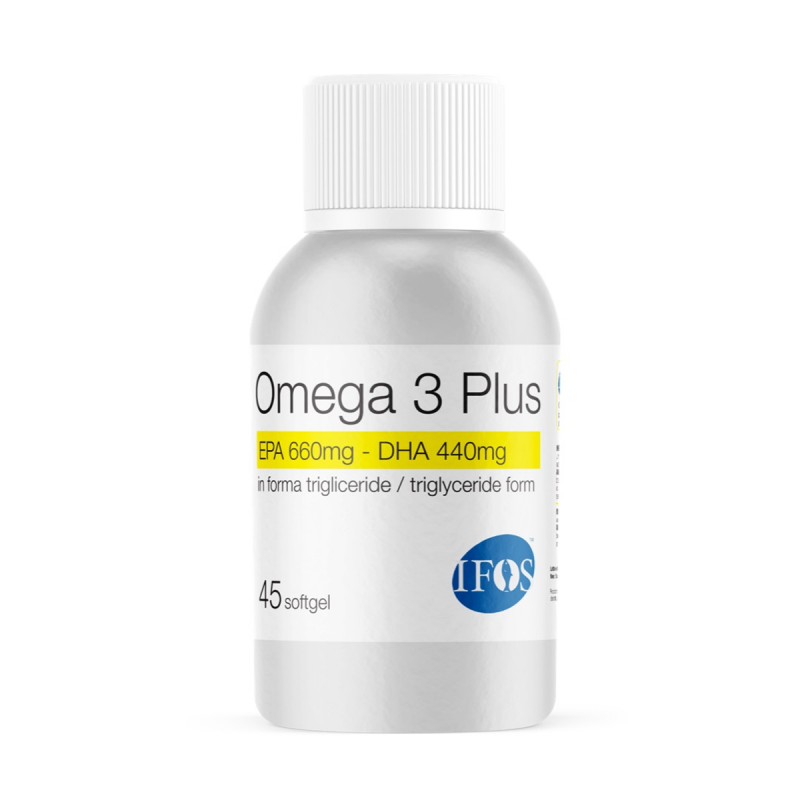
It is precisely to ensure this maximum effectiveness that the R&D team at TN Pharma has developed Omega 3 Plus.
We use cutting-edge technology: Re-esterified Triglycerides (rTG). This means that we purify and concentrate the oil to achieve high EPA/DHA levels, then enzymatically convert it back to its natural triglyceride structure. The result: you get the potency of a pharmaceutical-grade concentrate combined with the perfect absorption of a natural product.
Purity: The vital importance of IFOS certification
Oily fish are excellent for your health, but unfortunately they accumulate pollutants from our oceans (heavy metals, mercury, PCBs, dioxins). Consuming unfiltered, ‘budget’ fish oil supplements can be counterproductive, or even toxic in the long term.
The only guarantee of safety and global transparency is IFOS (International Fish Oil Standards) certification. A 5-star rating, such as that achieved by our Omega 3 Plus, is the absolute guarantee of three criteria:
- Actual concentration: The EPA/DHA content stated on the label is verified to the nearest milligram.
- Total purity: The oil has undergone molecular distillation, which removes all traces of heavy metals and contaminants.
- Freshness (TOTOX Index): The oil is stable and unoxidised. Oxidised oil is pro-inflammatory, which is the opposite of the desired effect.
In practice: Dosage and usage advice for athletes
How much should you take to see results? The official minimum recommended intake (250mg) is far from sufficient to support an athletic physique under stress.
- For general health and brain function: Aim for 1g to 2g of purified fish oil per day (equivalent to approximately 500mg to 1g of combined EPA/DHA). This is sufficient to maintain normal heart function.
- For athletes (inflammation & recovery): You can increase your intake to 2g to 3g of oil per day, particularly during cutting phases or periods of intensive training, to counter systemic inflammation.
- Tip to prevent reflux: Always take your capsules in the middle of a meal containing a small amount of fat (olive oil, avocado, eggs). This stimulates the secretion of bile and digestive enzymes, maximising absorption whilst preventing the unpleasant burping often associated with poor-quality oils.
Conclusion on EPA and DHA
EPA and DHA are much more than just trendy supplements: they are essential physiological building blocks for the proper functioning of the human body. From the clarity of your thoughts to protecting your heart, and including the repair of your muscle fibres after exercise, these fatty acids are ubiquitous.
In today’s world, where our diet is often too high in pro-inflammatory compounds (omega-6), restoring this lipid balance is undoubtedly one of the most powerful things you can do for your long-term vitality.
Whether you’re an athlete looking to optimise your recovery or simply keen to maintain your health, don’t overlook these ‘good fats’. Make sure you regularly eat high-quality oily fish or opt for a supplement that’s certified as pure and bioavailable. Your body cannot produce them; it relies on you to provide them.