- Health and wellness
- 11672 views

What are peptides in bodybuilding?
Peptides are short chains ofamino acids – in other words, ‘mini-proteins’ – which act as signals within the body: they activate receptors, modulate hormones and regulate growth, recovery and inflammation. In the world of bodybuilding, certain synthetic peptides have been developed to mimic or enhance endocrine actions, for example by stimulating the release of GH (growth hormone) or by promoting tissue repair.
Unlike ‘conventional’ dietary proteins, they do not serve so much as fuel or structural building blocks, but rather as ‘chemical messengers’ with specific objectives. It is precisely because of this potency that many of these compounds are experimental, not approved for human use and often banned in sporting competitions.
The difference between peptides, proteins and steroids
Proteins: these are long chains of amino acids (for example, whey or meat proteins) that provide structural material and energy. You consume them through your diet and, once digested, they break down into amino acids that can be used to build muscle, hormones and enzymes.
Peptides: these are shorter chains, often designed in the laboratory to have a targeted effect on specific receptors, such as those for GH or other hormones. They do not primarily serve as ‘nutritional protein’, but as signalling molecules.
Anabolic steroids: these are synthetic derivatives of testosterone that act on androgen receptors and have a very strong impact on protein synthesis, libido, the cardiovascular system, the liver, cholesterol and many other parameters. These are high-risk medicines, strictly regulated and classified as doping substances.
In summary: proteins = nutrition, peptides = targeted signals, steroids = ultra-potent hormones with anabolic effects and significant risks.
How do they work to promote muscle growth?
The peptides used in bodybuilding aim to ‘stimulate’ certain key pathways involved in muscle growth and recovery:
- some mimic or stimulate the release of endogenous anabolic hormones, such as growth hormone (GH) or associated growth factors;
- others target the repair of tendons, ligaments and muscles by modulating inflammation and regeneration processes;
- still others may influence fat metabolism, appetite or sleep – factors indirectly linked to body composition.
We are not talking about ‘protein powders’ but about molecules that act on the same endocrine pathways that regulate the body’s development, recovery and adaptation. It is precisely for this reason that use without medical supervision exposes users to risks that are still poorly understood, as robust studies on many of these substances are limited or still at the preclinical stage.
The benefits of peptides in bodybuilding
Expectations regarding peptides in bodybuilding centre on three main areas: increased lean body mass, faster recovery and reduced body fat. However, it is essential to distinguish between:
- what emerges from clinical or experimental studies
- what is merely anecdotal on forums, social media or in the gym
- what is purely marketing.
Generally speaking, the potential theoretical benefits stem from the fact that certain peptides:
- may increase the release of GH and IGF-1, hormones linked to muscle growth and lipolysis
- may modulate the inflammatory response and tissue repair following trauma or micro-injuries
- may influence insulin sensitivity or fat metabolism.
However, for many compounds used in bodybuilding, robust evidence from human studies is still being gathered, and long-term safety profiles are still being established.
Increasing muscle mass
The basic idea is simple: if you further stimulate endogenous anabolic pathways, you can more easily increase protein synthesis and muscle growth. Certain peptides that act as ‘growth hormone-releasing peptides’ (GHRPs) or ‘growth hormone-releasing factors’ (GHRFs) have been studied for their ability to increase GH and, consequently, to potentially promote muscle hypertrophy and fat reduction.
In practice, however:
- without a serious and progressive training programme, peptides alone will not build muscle;
- without a controlled calorie surplus, the increase in muscle mass is limited;
- the effect on the muscles is often less than the ‘marketing’ claims suggest and is not comparable to that of conventional steroids.
For many natural athletes, the combination of training, diet, sleep and a well-structured legal supplementation programme offers a significantly better risk-benefit ratio compared with the use of experimental peptides.
Improved recovery
Certain peptides are marketed as ‘recovery accelerators’, particularly following injuries or very intense training sessions. The theory is that they can:
- reduce inflammation;
- promote neoangiogenesis (the formation of new blood vessels) and the delivery of nutrients;
- stimulate the synthesis of collagen and other components of connective tissue.
Research in this area is still limited.
Reducing body fat
Certain peptides linked to GH or other metabolic hormones are touted as tools for ‘burning fat’ more quickly, because:
- GH promotes the mobilisation of fatty acids;
- a more anabolic hormonal state may help preserve lean body mass during a calorie deficit.
In practice:
- the real foundation is always a planned calorie deficit
- the additional effect of peptides, where it exists, is difficult to isolate from diet and training
- for many of these compounds, there is a lack of high-quality studies on weight loss in healthy subjects, and the side effects may far outweigh the hypothetical benefits.
Risks, side effects and legality
The main side effects
The side effects of ‘gym’ peptides depend on the type of molecule, the dosage, the route of administration and the quality of the product, but the most commonly cited risks include:
- local reactions: redness, pain, swelling, infections at the injection site
- systemic symptoms: fatigue, dizziness, headaches, nausea, gastrointestinal disturbances
- possible hormonal changes: GH/IGF-1 imbalances, interference with the hypothalamic-pituitary axis, potential impact on blood glucose levels and cortisol
- immunological risks: allergic reactions, formation of antibodies against the peptide or its excipient
- contamination risks: the presence of heavy metals, bacteria, residual solvents or doses differing from those stated in products sold online labelled ‘for research purposes only’.
In the long term, we have no reliable data: anyone using these substances is deliberately subjecting themselves to an uncontrolled experiment on their own body.
Are bodybuilding peptides legal in France?
Here, a distinction must be made:
- peptides approved as medicines: for example, insulin or GLP-1peptides (for diabetes and obesity). These may only be used on medical prescription, for specific indications, following authorisation by the ANSM (French National Medicines Agency) or the EMA.
- unapproved ‘bodybuilding’ peptides (BPC-157, TB-500, many GHRP-s, CJC-1295, etc.): these do not have marketing authorisation (MA) as medicines or supplements. In Europe and France, they may only be distributed as research materials, and not as products intended for human consumption.
- Peptides approved as supplements: for example, collagen peptides, which are legally sold as food/dietary supplements and have well-established safety profiles.
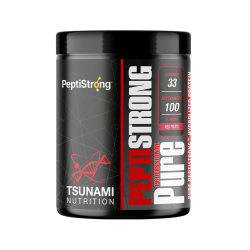
This group includes a unique, certified high-quality product such as Tsunami Nutrition’s Peptistrong Pure Professional, a supplement containing patented PeptiStrong™ peptides for muscle maintenance and growth. Peptistrong is a vegan, gluten-free and lactose-free supplement, for which several scientific studies are available and accessible to all on the product page of the website.
PeptiStrong Pure Professional is a powdered supplement based on patented PeptiStrong™ peptides, of plant origin, vegan, gluten-free and lactose-free. It is designed to stimulate muscle protein synthesis, reduce muscle breakdown and support strength, recovery and the maintenance of lean body mass.
It is suitable for sportspeople, athletes and active individuals, particularly those following a vegetarian or vegan diet who are looking for advanced muscle support. It is a safe supplement as it is made from selected plant-based raw materials, is highly digestible and has a low allergen content.
The effectiveness of Peptistrong Pure Professional is supported by double-blind clinical studies demonstrating its effects on protein synthesis, recovery and performance.
For competitive athletes, many peptides appear on WADA’s Prohibited List (categories S0 and S2), which is also adopted by the AFLD (French Anti-Doping Agency). Their use may therefore result in disqualification and disciplinary sanctions.
From a criminal law perspective, purchasing unauthorised medicines or obtaining them through illegal channels (unauthorised websites, the black market) can entail legal risks in addition to health risks, as the ANSM and French customs authorities regularly highlight in their campaigns against pharmaceutical crime.
Safety and sources of purchase
One of the main problems is that many peptides used for bodybuilding are sold on:
- foreign websites which state that they are ‘for research purposes only, not for human use’
- unregulated marketplaces
- social media, private groups, and ‘gym’ contacts.
This means:
- no real guarantee of purity, dosage or the absence of contaminants
- no health checks, nor authorisation from the ANSM (French National Agency for Medicines and Health Products Safety)
- no protection in the event of harm to health.
Health authorities in several countries have issued specific warnings about unauthorised ‘injectable peptides’, highlighting the risks of serious infections, adverse reactions and even the presence of heavy metals in some analyses.
In practice, if a peptide is not:
- a medicine prescribed by a doctor
- a dietary supplement that has been duly registered or approved
Everything else falls into a grey area or is openly illegal, with a very unfavourable risk-benefit ratio for anyone simply seeking to improve their physique.
Why is it safer to buy your supplements from Tsunami Nutrition?
Unlike peptides or other supplements sold on anonymous websites, the supplements you’ll find on Tsunami Nutrition are products designed and formulated for human use, in compliance with current regulations on food supplements.
The raw materials are carefully selected, the dosages are stated on the label and each product belongs to a traceable batch, so you always know exactly what you’re consuming and in what quantity.
On the official website, you only buy legal supplements (proteins, amino acids, vitamins, pre-workout supplements, etc.), not experimental substances or medicines disguised as ‘research products’. The formulations are developed using a technical approach, but are designed for daily use by athletes and fitness enthusiasts, utilising the finest molecules and the best raw materials and patented ingredients.
What’s more, you can count on detailed product descriptions, customer service and transparent communication – we don’t promise miracles, but results consistent with your training and diet. In short, buying from Tsunami Nutrition means choosing a clear and controlled supply chain, a far cry from the dangerous ‘DIY’ approach of laboratory-grade peptides sold in the seedy corners of the internet.
Practical use in bodybuilding
How to set up a peptide cycle
This is the most sensitive point: ‘setting up a cycle’ of peptides as if they were ordinary supplements is exactly what the safety guidelines advise against. The vast majority of peptides used in bodybuilding:
- are not approved for human use;
- do not have standardised dosage/duration protocols validated by clinical studies;
- are classified as banned substances in sporting competitions.
This is why it is neither responsible nor safe to provide cycle plans, combinations (‘stacks’) or practical advice on how to use them independently. Anyone with genuine clinical indications for the use of specific peptides must consult a specialist (endocrinologist, sports physician, etc.) within a regulated medical setting.
If the aim is to improve muscle mass, strength and body composition, the practical strategy offering the best risk-benefit ratio remains:
- a well-structured training programme (progressive overload, periodisation);
- a diet tailored to actual needs;
- sleepand stress management;
- the use of legal and well-researched supplements (protein, creatine, vitamin D, omega-3, etc.), where necessary.
Dosages and methods of administration
In theory, each peptide should have:
- an effective dosage;
- a frequency of administration;
- a cycle duration;
- any blood parameters to monitor.
The problem is that, for a great many peptides currently popular in bodybuilding, this information does not come from official medical guidelines, but from online ‘bro-science’: forums, videos and unvalidated protocols.
For this reason:
- there is no ‘universally safe dosage’ that you can determine for yourself;
- the injectable route increases the risks (dosage errors, infections, local reactions);
- without medical supervision and regular blood tests, it is impossible to properly assess the impact on hormones, the liver, the kidneys and the heart.
The advice is clear: no improvised dosages and no cycles based on random advice from social media or online discussions.
Frequently Asked Questions
What are peptides used for at the gym?
The use of peptides in bodybuilding is intended to:
- increase muscle mass and strength;
- reduce recovery times;
- promote weight loss whilst maintaining lean body mass.
What happens in the body if I take peptides?
It depends on the peptide, the dose and your state of health, but generally speaking:
- you may alter your hormonal balance (GH, IGF-1, cortisol, insulin)
- you may artificially influence growth and repair processes
- you may experience local side effects (reactions at the injection site) and systemic side effects (nausea, headaches, fatigue, digestive problems)
- by using unauthorised products, you may be at risk of contamination, incorrect dosages and substances other than those stated.
Do peptides really work for muscle growth?
Certain peptides have been shown to:
- increase GH and IGF-1
- promoting anabolic or repairprocesses in animal models and human studies.
This does not mean that they are:
- safe
- necessary
- the best choice for those training at an amateur or semi-professional level.
For the vast majority of non-competitive athletes, the ‘package’ of training + diet + well-managed recovery + legal supplements covers a large part of their growth potential. Experimental peptides may help to achieve greater gains, but the decision to take them should be discussed with a doctor and/or your fitness coach.
Is the use of peptides considered doping?
For competitive athletes, yes, in most cases:
- the WADA list classifies ‘peptide hormones, growth factors and related substances’ as prohibited substances (Category S2)
- unapproved peptides are considered prohibited substances in Category S0.
This means that:
- use in or out of competition may result in disqualification, the loss of titles and sanctions
- even products sold for ‘research’ or ‘wellbeing’ may constitute doping if they contain prohibited peptides.
If you compete in federations that adopt WADA or AFLD regulations, any use of these peptides must be regarded as posing a high disciplinary risk, in addition to the health risk.
How long does it take to see the results of a cycle?
Based on online comments, most users who claim to have used peptides report achieving the following results:
- a better ‘pump’ after a few days;
- perceived faster recovery within a few weeks;
- changes in body composition within 1 to 3 months.
Of course, these accounts are not scientifically verified, and the results reported in users’ online comments are also influenced by diet, training and the possible use of other substances.
In the absence of targeted clinical studies, it is impossible to give precise timeframes and, above all – and this applies not only to peptides – it is misleading to talk of ‘guaranteed results’.