- Training
- 14534 views

You’ve been lifting weights for months, you’re getting enough protein, and yet… your measurements aren’t changing?
It’s probably because you’re training ‘at random’.Muscle hypertrophy (tissue growth) isn’t a matter of luck or some magical genetic trait. It’s a precise biological process, governed by mechanical and chemical laws. If you don’t trigger the right signals, your body won’t build a single gram of extra muscle tissue.
Should you lift heavy or light weights? Should you train to failure or hold back a little? How many times a week? Tsunami Nutrition breaks down the science of muscle gain for you, to turn your efforts into visible results.
What is Muscle Hypertrophy? (Beyond the Basics)
Hypertrophy refers to an increase in the size of muscle cells (fibres). Unlike hyperplasia (an increase in the number of fibres, which is virtually impossible in humans naturally), the aim here is to thicken the existing structure.
? The Duel: Myofibrillar vs Sarcoplasmic
For a well-rounded physique, it is important to understand the difference:
- Myofibrillar Hypertrophy (Density): This is the growth of contractile fibres. The muscle becomes hard and strong.
Method: Heavy loads (1–6 reps). - Sarcoplasmic Hypertrophy (Volume): This is the increase in fluids (water, glycogen) within the muscle. The muscle appears ‘swollen’.
Method: Long sets (8–15 reps) and time under tension.
Tsunami’s Advice: Don’t choose between them. Your programme must include both for maximum results.
The 3 Essential Mechanisms of Muscle Hypertrophy
For a muscle to grow, you must send it a signal to adapt. Brad Schoenfeld, the world’s leading researcher on the subject, has identified three inseparable pillars.
1. Mechanical Tension (The Key Pillar)
This is the force you apply to the muscle. The heavier the load and the more you stretch the muscle under that load, the greater the tension. This is the number one factor in growth.
In practice: This is what you feel during a heavy squat or weighted pull-ups. No tension = no solid growth.
2. Metabolic Stress (The ‘Pump’)
This is the sensation of burning and extreme congestion. The build-up of metabolites (lactate, hydrogen ions) in the muscle triggers an anabolic hormonal cascade.
In practice: This is achieved through short rest periods, long sets or intensification techniques (drop sets, supersets).
3. Muscle Damage (Soreness)
These are the micro-tears created in the fibres during the eccentric phase (lowering the weight). The body repairs these tears by building stronger and larger tissue.
How to train for hypertrophy? (The Protocol)
Forget the classic ‘3 sets of 10’ if you don’t know why you’re doing it. Here are the exact parameters you need to master.
Volume and Frequency: The Ideal Combination
How many sets should you do? Science recommends between 10 and 20 effective sets per muscle group per week. But be careful: training a muscle just once a week is often insufficient. Protein synthesis lasts only 24 to 48 hours.
Progressive Overload: The Path to Results
If you bench press 80kg today, and are still benching 80kg in 6 months’ time, you won’t have gained a single gram of muscle.
? How can you make progress with every session?
Don’t just settle for lifting. At every training session, tick one of these four boxes:
- More Weight: Add 1kg to the bar.
- More Reps: Do 11 reps instead of 10 with the same weight.
- + Better technique: Control the lowering phase better (e.g. 3 seconds).
- - Less Rest: Take a 1-minute 30-second break instead of 2 minutes.
Nutrition & Supplementation: The Fuel for Muscle Growth
You can have the best workout in the world, but if you don’t give your body the building blocks, the wall won’t get built.
1. Energy Balance & Protein
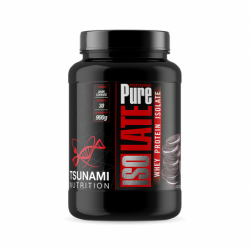
Aim for a slight calorie surplus (+200 to 300 kcal) and ensure a protein intake of 1.8g to 2.2g per kg. For rapid post-workout absorption, opt for Isolate Pure Professional.
2. Optimising Metabolic Stress (The Role of Nitric Oxide)
To maximise muscle volume, blood flow is crucial. This is where technology comes into play.
? The Tsunami Tool: Nitrox Pure Professional
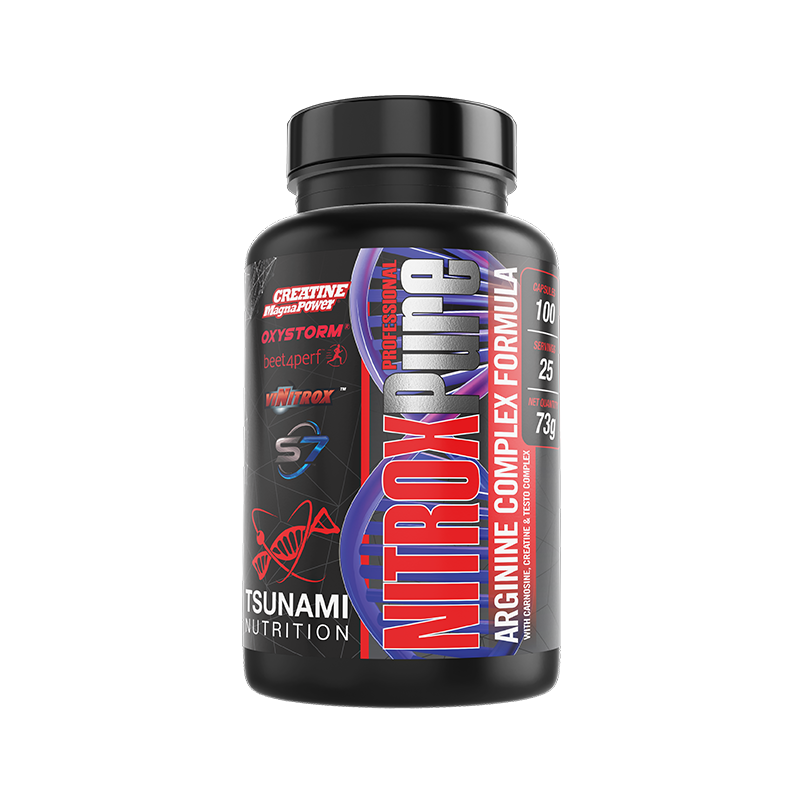
This is not just a simple ‘booster’. Nitrox Pure Professional is a complex designed to stimulate the body’s own production of nitric oxide (NO) and maximise sarcoplasmic hypertrophy thanks to three major patents:
- S7™: A plant-based blend clinically proven to increase NO by 230 per cent.
- ViNitrox™ & Oxystorm®: Ultra-concentrated extracts of natural nitrates for extreme vasodilation.
- Arginine Complex: Optimised with norvaline for complete absorption.
Result: A long-lasting ‘pump’ and enhanced nutrient and oxygen delivery.
The Forgotten Factor: The Nervous System
Muscles don’t grow at the gym. At the gym, you break them down. Growth occurs exclusively during rest, mainly at night.
If you sleep for less than 7 hours, your testosterone levels drop and your cortisol levels rise. It’s a matter of simple maths.
⚠️ Beware of ‘Junk Volume’
More is not better. Doing 30 sets for your chest in a single session is counterproductive. Beyond a certain threshold, you’re no longer stimulating growth; you’re just increasing your nervous system fatigue.
It’s better to do 12 intense, proper sets than 30 ‘average’ sets.
Conclusion
Muscle hypertrophy isn’t just for those with elite genetics. It’s the logical, mechanical response of a body subjected to increasing tension and fed with precision.
Stop looking for the magic exercise or the secret method. Focus on progressive overload, ensure your protein intake, optimise your muscle pump with the right tools, and repeat this process with discipline. This is the only path to a massive and sustainable physique.