- Training
- 13955 views
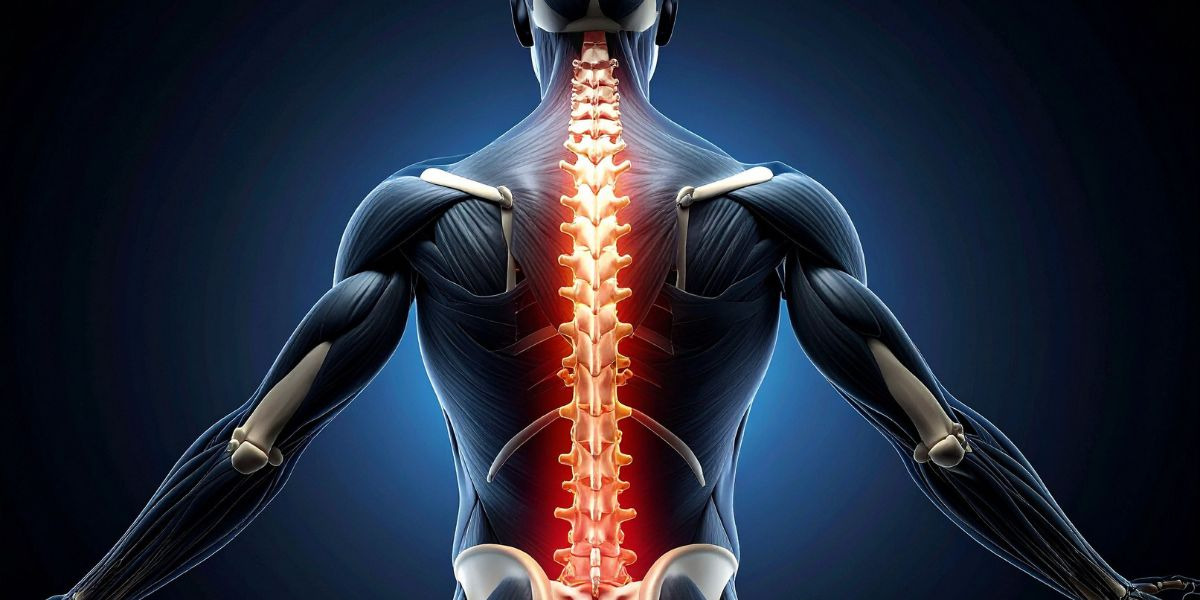
In weight training, the lower back is often caught in a dichotomy: either it is completely neglected in favour of muscles with a high visual impact (chest and abdominal muscles), or it is viewed as a vulnerable area that needs to be spared.
This is a major strategic error. A well-rounded, aesthetically pleasing and functional back is not limited to the latissimus dorsi. Its true strength lies in its base.
The secret to a protected and high-performing spine lies in a simple biomechanical approach: the hypertrophy of the spinal muscles.
What exactly are the ‘lower back’ muscles?
The term ‘lower back’ is a shorthand often used in the gym. It does not refer to a single entity, but to a complex and powerful group known as the erector spinae muscles (or ‘common mass’).
These muscles extend from the sacrum to the base of the skull. For the weightlifter, it is essential to distinguish between the two functional systems that make up this area:
? Functional Anatomy: Muscular Duality
- The Superficial System (Iliocostalis & Longissimus): These are the powerful, visible bundles that run along the spine. These are MOTOR (phasic) muscles. They generate the raw force required for spinal extension and are primarily responsible for muscle volume (the ‘Christmas tree’ appearance).
- The Deep System (Multifidi): These are short muscles, attached directly to the vertebrae. They are STABILISING (tonic) muscles. Their role is to regulate intervertebral micromobility and to ‘lock’ the spine in order to protect the discs.
The Correlation Between Back Pain and Muscles
It is essential to dispel a persistent myth: chronic lower back pain (excluding acute conditions such as a herniated disc) is not necessarily a sign of a ‘worn-out’ back, but very often a sign of a back lacking in strength.
The spine is a mobile bony structure subject to the force of gravity. If the erector spinae muscles are atrophied or hypotonic, the mechanical load is transferred directly to the passive structures: the intervertebral discs and ligaments. It is this excessive strain that causes inflammation and pain.
Muscle as Spinal Armour
Hypertrophy of the lumbar muscles fulfils an active mechanical protective function:
- Stress absorption: Large muscles act as active supports that relieve the load on the vertebrae during vertical compression movements.
- Postural endurance: A strong, enduring muscle is better able to withstand static fatigue (prolonged standing or sitting), delaying the onset of pain.
✅ The Virtuous Circle
Lumbar Hypertrophy = Reduced disc pressure = Reduced pain = Improved performance.
The winning strategy is not passive rest, but intelligent strengthening.
How to build lower back muscle
To build muscle mass in the erector spinae muscles, static core exercises are insufficient. As with any muscle group, it is necessary to apply mechanical tension and progressive overload through dynamic movements.
1. Bench Extensions (Weighted)
This is the go-to isolation exercise for hypertrophy.
Technique for building muscle mass: Hold a weight (disc or dumbbell) pressed against your chest. Perform a controlled forward bend of the upper body, then extend using the strength of your lower back until the segments are aligned.
Target: Directly engages the iliocostalis and longissimus muscles to build thickness.
2. The Rack Pull (Partial Deadlift)
A variation of the deadlift where the bar rests on supports (just above or below the knees). This allows you to handle supramaximal loads whilst limiting the range of motion.
Biomechanical benefits: The lower back must withstand extreme isometric tension to maintain spinal neutrality. This is the ultimate exercise for muscle density and raw strength.
3. The Good Morning
A multi-joint exercise targeting the entire posterior chain. With the bar resting on the trapezius muscles, perform a hip flexion whilst keeping the back rigid.
Caution: Perfect technical control is essential. It is the stretching of the erector spinae muscles under load that strengthens the structure.
⚠️ The Golden Rule of Execution
Unlike arm exercises, you should not aim for total muscle failure in the lower back, as the risk of compromising your technique is too high.
Always maintain your natural curve (lumbar lordosis) or a neutral position. If your back rounds involuntarily, it means the load exceeds your muscular capacity. Stop the set.
How often should you include lower back exercises in your routine?
The spinal muscles consist mainly of slow-twitch (endurance) fibres; they therefore recover fairly quickly metabolically, but they can experience significant neuromuscular fatigue.
- Ideal frequency: 1 to 2 dedicated sessions per week.
- Strategic placement: Always at the end of a session (Back or Legs). Never train them before a heavy exercise (such as the squat), as pre-fatigued lower back muscles would no longer be able to fulfil their stabilising role, increasing the risk of injury.
Supporting Tissue Regeneration?
The lower back is a dense area subject to significant inflammatory stress. To optimise recovery:
Conclusion
A strong back goes hand in hand with a muscular back. Don’t be afraid to work your lower back; on the contrary, make it a priority in your training.
By shifting from a‘passive protection’ approach (support belts, rest) to an ‘active strengthening’ approach (hypertrophy), you’ll eliminate niggling aches and pains and unlock your strength potential across all multi-joint exercises.