- Training
- 31596 views

In recent times, there has been a considerable increase in the amount of time people spend being sedentary, and as our homes are the only place where we can spend our days, the demand for home-based exercise has risen sharply. Indeed, the desire to tone up, firm up and build muscle has remained unchanged and is now accompanied by another goal: achieving these objectives ‘without gaining weight’. To offer some advice on how to approach home training, let’s start by clarifying this point. Toning, firming and defining are three synonyms for the same concept: hypertrophy. What does hypertrophy mean? It means increasing muscle size by reducing the percentage of body fat and increasing that of lean body mass.
It is therefore a genuine body recomposition. But how do you achieve and trigger hypertrophy? Body recomposition depends 80 per cent on diet, but if you want to tone and firm up your body, it’s important to incorporate physical training – in other words, muscle activation. Training is nothing more than a form of stress, which can be positive or negative for our bodies depending on the methods used. Just like with medication, if the ‘dosage’ is correct, it’s easy to see positive effects, whereas if it’s incorrect, there may be no benefits, or even negative consequences.
That is why the first piece of advice to follow before doing exercises at home is to listen to your body and not overdo it. To start by listening to your body, we must first be aware of what is happening inside our bodies when we train.
What happens in the body when we exercise?
Normally, our body is in a state of rest or homeostasis. When we start training, this state of rest is disrupted and there is a reduction in nutrients and oxygen. When the training stimulus ceases, the body works to replenish everything it has used up during training and, if everything is functioning as it should, the body restores everything to a better state than before. For this process to take place correctly, it is essential to rest, eat properly and stay properly hydrated. Indeed, if the training stimulus is reintroduced too soon, at best you’ll find yourself in a state of stagnation; at worst, your condition will worsen.
It’s important to bear this process in mind because people often make the mistake of combining intensive training with a diet that isn’t suited to the body’s needs. An example? We hear a lot about low-calorie diets, but not all bodies need to be fuelled by very few carbohydrates and a lot of protein. Whilst it is true that muscle mass is supported by protein, the fuel that powers our body and brain comes from carbohydrates and sugars. Before embarking on a low-calorie diet, it is therefore important to consult a nutritionist first. It is worth noting that our bodies operate in energy-saving mode.
Consequently, if we have tissue such as muscle that consumes a great deal of energy and we do not provide it with sufficient nutrients, our body will trigger a process of muscle breakdown, or catabolism. In this case, an inflammatory process is triggered, leading to significant water retention which causes swelling and results in water retention. This breakdown process affects lean body mass and, if this decreases, the basal metabolic rate drops. When training with home-based exercises, it is therefore particularly useful to always bear in mind certain questions that should accompany physical exercise in order to monitor performance and, consequently, results. You should ask yourself:
- Am I getting enough rest?
- Am I drinking enough?
- Am I eating properly?
There is no objective method for answering these questions, as both quantity and quality are important. It is advisable to note down your physical and emotional sensations so that you can learn to listen to your body and thus provide it with the best possible care in terms of diet, training, hydration and rest.
Exercises to do at home
Having said that, we can now move on to exercises to do at home by giving you some training tips and a brief example of a training plan. At this stage, however, you may have several doubts about which exercises to do at home, which should be clarified straight away so that you can find the right motivation to take action.
The biggest challenge when training at home is staying consistent. Indeed, whilst on the one hand you avoid the travel time that can be off-putting and cause even the most enthusiastic of us to give up on going to the gym on a lazy day, at home the effort required is to set aside a space and time to train. Whilst, in the first scenario, your workout has a clearly defined time and place in your diary and forms part of your daily routine, training at home carries the risk that you’ll take advantage of the flexibility to skip it or put it off time and time again. The advice, therefore, is to set aside specific time slots during the week for physical exercise and to stick to them, as this is, in fact, a commitment you must make first and foremost to yourself.
Exercises to do at home: here’s a short workout guide for exercises you can do at home.
- 5-minute warm-up: 20 step touches with a resistance band; 10 shoulder raises; 10 mountain climbers against resistance
- 5-minute core workout: 3 sets of 10 mountain climbers against the wall; 5 flour rotations
- 10 minutes of strength training: 10 hip thrusts; 10 reverse criss-crosses
- 5 minutes of stretching
Another very effective exercise for working the upper body is the military press. This is a very important exercise to learn as it is a multi-joint exercise that engages several muscles at the same time. When you do the military press, you engage the upper chest, the clavicle, the anterior deltoid, the upper trapezius and the triceps. This exercise should be performed with a barbell, gripping it with your hands slightly wider than shoulder-width apart; your elbows should remain under the bar to avoid putting excessive strain on your back. The bar should pass close to your nose, then rise above your head to complete a correct repetition of the military press.
Bodyweight exercises
People often make the mistake of thinking that to train, you need sophisticated equipment and complex machines. In reality, our bodies already have everything we need to challenge ourselves and push our limits. To start training, all you need to do is begin with a few simple bodyweight exercises, performed as circuit training. Whether done at home or outdoors, bodyweight exercises are an excellent starting point for achieving the results you’re aiming for.
Here’s a short workout plan for exercises to do at home or in the garden, to be repeated three times:
- 5 minutes of running
- 10 push-ups
- 20 mountain climbers
- 10 cross-body lunges
- 10 jump lunges
- 8 squats
- 5 jump squats
Leg exercises
The legs are one of the parts of the body that most need to be trained, for both men and women. Lower-body strength training can be beneficial both for general fitness – to achieve stronger, more toned legs – and for rehabilitation, that is, if the aim is to alleviate knee problems, such as degenerative or post-traumatic inflammation. As you might expect, these kinds of problems often limit training, and certain leg exercises can also have a preventative effect by building a stronger, more responsive muscular foundation, thereby helping to prevent future problems in the lower limbs.
Before looking at leg exercises, it is important to note that a healthy habit for strengthening the legs – and one that should be incorporated into your daily routine – is brisk walking. This type of exercise allows you to work out without putting too much strain on your joints and to give your heart a good workout without causing excessive stress. To get the most out of walking, it is important to do a few ankle mobility exercises before you start and, whilst walking, to pay attention to your stride, trying to really feel the heel striking the ground and the toes pushing off, whilst keeping your core engaged and pushing with your glutes. It goes without saying that walking on its own does not strengthen the muscles, which is why it is a good idea to combine it with a series of specific leg exercises. When training your lower limbs, it is advisable to alternate between a strengthening exercise and a stretching exercise. Here are some examples of leg exercises that follow this pattern:
- Leg extensions on the floor – Psoas stretches
- Straight-leg raises – Dynamic hamstring stretches
Nutritional supplements, hydration, diet and recovery
As we’ve said, when training with exercises to do at home, to achieve results, it’s important to bear in mind that training also involves other aspects such as dietary supplements, proper hydration and a balanced diet, as well as recovery. We know that, just like physical exercise itself, these other aspects must necessarily be tailored to the body’s specific needs, but let’s nevertheless try to provide some useful general guidance for those new to training.
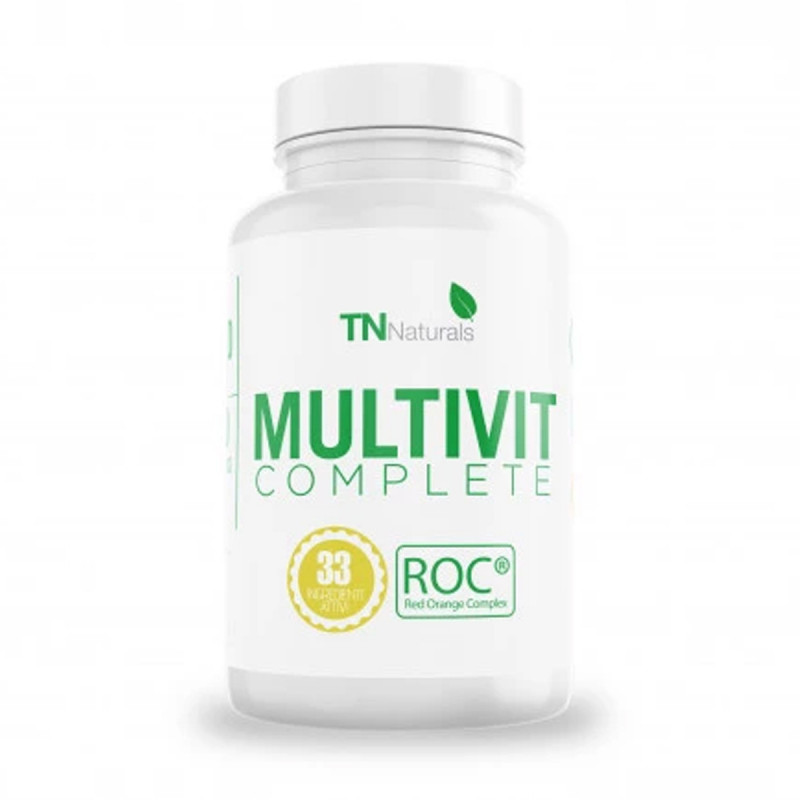
When it comes to dietary supplements, one supplement that can always be beneficial is undoubtedly a high-quality multivitamin such as Multivit Complete 100 tabletsfrom Tsunami Nutrition. Its highly complex formula was developed over several months of research by Tsunami Nutrition’s Research & Development team. Every ingredient in the formulation has been carefully selected, seeking the highest degree of purity available on the international dietary supplement market. The dosage used also complies with the precise guidelines set by the Ministry of Health, adhering to optimal quantities and seeking an overall balance capable of providing the greatest possible benefit to the body. For all these reasons, it stands out as the best multivitamin supplement and one of the most comprehensive available.
As regards hydration, it is recommended to drink between two and three litres of water a day, whilst for rest, the general advice remains to listen to your body and not to subject it to excessive strain.