- Training
- 15874 views
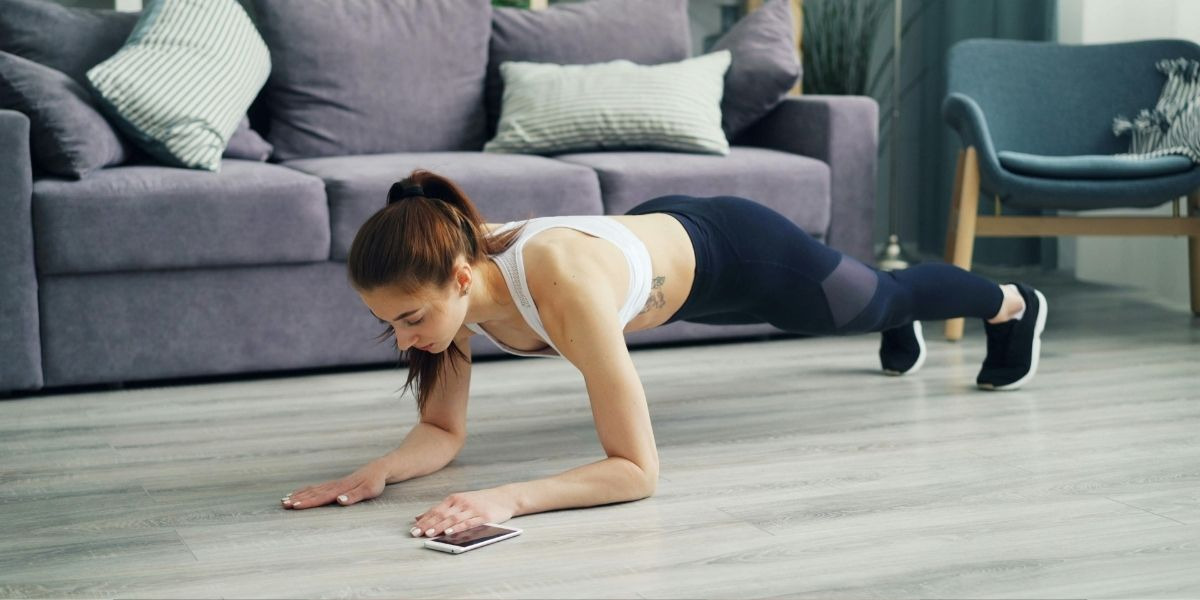
It’s the most popular exercise in gyms, but it’s also the one that gives rise to the most misunderstandings. Theplank is often seen as nothing more than a test of mental endurance: you rest on your elbows, you shake, and you wait for the timer to run out.
However, when performed with surgical precision, the plank is much more than just a static hold. It’s a fundamental tool for overall muscle strengthening. It builds a protective framework around your spine, stabilises your shoulders and transfers your strength to complex movements such as the squat or the deadlift.
But be careful: holding a plank for 5 minutes with an arched back is pointless for the muscles and dangerous for the skeleton. How can you turn this static exercise into a real strength-builder? Tsunami Nutrition brings you the technical guide.
Core Training: A cornerstone of muscle strengthening, not just abs
It’s important to distinguish between‘doing abs’ (crunches) and ‘core training’. Crunches target the superficial muscle (the six-pack) through a flexion movement. Core training, on the other hand, is an isometric strength exercise. Its aim is not to create movement, butto prevent movement (anti-extension, anti-rotation).
Why is it a comprehensive strength-building tool?
- Deep Abdominal Band: It targets the transverse abdominis, that natural corset which protects your organs and your back.
- Posterior and Anterior Chains: Good core stability places significant demands on the quadriceps, glutes and anterior deltoids to maintain posture. It is a ‘full-body’ workout.
- Force Transfer: A strong core prevents energy loss when lifting heavy loads.
Good or Bad Exercise? The Expert’s Verdict
Is the plank the be-all and end-all of strength training? Yes and no. It all depends on how you perform it.
The Benefits: It’s the safest exercise for the spine if done correctly. It strengthens the deep muscles without placing repeated flexion stress on the intervertebral discs (unlike sit-ups, which can be harmful when done in excess). It forms the basis of athletic posture.
The Pitfall (Collapse): The problem with traditional core exercises is the deterioration in technique caused by fatigue. After a minute, the transverse abdominis often gives way. The hips drop, the back arches excessively (hyperlordosis) and all the tension is transferred to the lumbar vertebrae. You’re no longer strengthening your abs; you’re ‘pinching’ your discs.
How to do a perfect plank: The Tsunami technique
To turn core work into an effective strength-training exercise, forget about the timer and focus on maximum tension (RKC Plank).
1. Positioning
Get down on the floor, resting on your forearms and toes. Your elbows should be aligned directly beneath your shoulders (at 90 degrees). Place your feet hip-width apart.
2. The secret: Pelvic retroversion
This is the detail that makes all the difference to muscle activation. Don’t let your bottom stick up in the air or sag towards the floor.
The key action: Consciously and firmly contract your glutes. Imagine you’re trying to tuck your tailbone between your legs. As you do this, your pelvis will tilt forwards (retroversion) and your lower back will flatten. It’s at this moment that your abs really engage.
3. Full-Body Tension
Don’t be passive. Push against the floor with your elbows. Tighten your thighs (quadriceps) to lock your knees. Clench your fists. You must be like an unyielding steel beam. If you aren’t shaking after 30 seconds, you’re not putting in enough effort.
The ‘Pro’ Alternative: The Hollow Body Hold
To add variety to your routine and target deep muscle strengthening with even greater safety, there’s a variation derived from gymnastics: the Hollow Body (or ‘Spoon’).
This is a reverse core exercise (on your back) which is often more effective than the plank for experienced athletes.
- Lie on your back.
- Golden rule: Press your lower back firmly against the floor. There mustn’t be the slightest gap to slip a sheet of paper under your back.
- Lift your straight legs and shoulders a few centimetres off the floor, with your arms stretched out behind your head.
- Your body should form a banana shape. Hold this position.
This exercise requires a sudden, deliberate contraction of the anterior abdominal muscles, without the risk of arching the back.
Variations to build strength
To ensure continued muscle strengthening, you must apply the principle of progressive overload. Don’t get stuck doing the same plank for 6 months.
Level 1: The Knee Plank (Beginner)
Ideal for mastering pelvic retroversion without the strain of your legs’ weight.
Level 2: Side Plank (Obliques)
Essential for slimming the waist and strengthening the lateral core. Actively push your pelvis towards the ceiling to engage the quadratus lumborum muscle.
Level 3: Dynamic Core Work (Commando)
Move from the elbow plank position to the hand plank position (arms straight), then lower yourself back down, keeping your pelvis perfectly still. This adds a highly effective anti-rotation component for combat or team sports.
Level 4: Instability (Swiss Ball)
Performing a plank with your forearms on a Swiss Ball forces your nervous system to manage constant micro-imbalances. This maximises the recruitment of deep muscle fibres.
Integration and Routine
For optimal muscle strengthening without compromising your performance, save core exercises for the end of your session.
The ‘Armoured’ Strength Circuit:
- 30 to 45 seconds of Hollow Body (or Active Plank)
- 30 seconds of Right-Side Side Plank
- 30 seconds of left-side core stabilisation
- Recovery: 1 minute. Repeat 3 times.
The pros and cons of core training
The question often arises: is core training the be-all and end-all of abdominal exercises, or is it a waste of time? The answer is nuanced. As with any strength training exercise, it is not the exercise itself that is dangerous, but how it is performed.
The Benefits: Why it’s essential
It is the ultimate exercise for spinal stability. Unlike crunches, which involve repeated flexion of the spine, core training strengthens the transverse abdominis (your natural corset) isometrically. It creates intra-abdominal pressure that acts like an airbag for your spinal discs.
What’s more, it’s the king of power transfer: without a strong core, you lose power (‘energy leakage’) during your squats, bench presses and sprints. Finally, from an aesthetic point of view, it is the only physiological method for achieving a permanently flat stomach, by pulling the internal organs inwards.
The Downsides: The trap of ego and the stopwatch
Core training has only one real drawback: it doesn’t tolerate fatigue. The danger lies in chasing a record time. Once a certain threshold is passed (often one minute for an intermediate trainee), the deep muscles seize up and give way.
The immediate consequence? The pelvis tilts forwards, the back curves into hyperlordosis, and all the tension shifts from the abdominals to the lumbar vertebrae. In this specific scenario, core training becomes harmful to the back. If you feel a pinching sensation in your lower back rather than a burning sensation in your stomach, the exercise has become harmful: stop immediately and correct your posture.
Conclusion
Core training is your back’s lifeline and the foundation of your physical strength. But remember: quality takes precedence over duration. A 30-second plank held at maximum tension with your pelvis tilted back will always be more beneficial for building muscle strength than a 3-minute passive plank with an arched back.