- Training
- 59485 views
In this article, we’ll be looking at the effects of one of the most popular supplements and its impact on strength sports. But before we begin, let’s first clarify what creatine is used for. Creatine is a molecule naturally synthesised by our bodies from three amino acids (S-adenosylmethionine, arginine and glycine). To explain what creatine is used for, we could say that its role in the body, particularly in muscle tissue, is to regenerate ATP, an energy molecule that is essential for the body. Among the many functions of ATP, one of the most important is to support the mechanism of muscle contraction. Depending on the type of muscular effort, different energy systems are utilised as a priority (never all at once).
In strength sports, which involve short, intense bursts of effort, the energy system most heavily involved is the ATP/CP system. This system utilises energy derived from the hydrolysis of ATP, which, unfortunately, is quickly depleted. This is where creatine comes in; put simply, it enables faster energy production within the muscle cell. This is why creatine has been one of the most widely used supplements in the world of sport for over 15 years.
Creatine: what role does it play during training sessions?
The scientific literature contains numerous interesting studies on creatine, particularly regarding its role in building muscle mass, increasing muscle strength and improving sporting performance.
Creatine supplementation has also proved to be a promising short-term solution, as several studies have confirmed its ability to increase power and strength during both single and repeated efforts. It follows that greater muscular effort can be sustained in this way, resulting in greater performance gains.In the long term, however, creatine has proven to be a valuable aid in gaining muscle mass. Strategic creatine supplementation to improve performance in strength sports is certainly a good idea.
Strategic supplementation involves knowing how to take creatine at the right time and in the right way. Given the wide range of products on the market, it is also necessary to understand the different forms of creatine. Firstly, it should be noted that not all creatine is the same; there are different forms of creatine, some of which are more bioavailable. The simplest and most widely used form is creatine monohydrate. Indeed, as is always the case in the world of supplements, it is the quality of the raw material that makes the difference. One of the best raw materials on the market is Creapure, produced in Germany to standards that ensure a very high level of purity. As well as creatine monohydrate, there are many other forms, and among the best and most bioavailable is certainly buffered creatine – that is, creatine bound to a molecule that significantly raises its pH, thereby ensuring greater bioavailability. Athletes involved in strength sports such as boxing, tennis, wrestling, football and weightlifting should certainly consider incorporating creatine supplementation into their programmes to improve their performance.
Creatine: what is it used for and how should it be taken?
It is important to dispel the belief that creatine can be harmful to the liver and kidneys. There are no studies in the literature on this subject, particularly when considering moderate and cyclical creatine intake. What is meant by ‘moderate intake’? The recommended daily intake ranges from 2 to 10 g, depending on the individual in question, taking into account gender, age, body weight, daily activity levels and muscle mass.
We often hear about a ‘creatine loading phase’ over a 5-day period, but this theory has not been confirmed by the scientific community. A good rule of thumb is to take the daily dose of creatine, either split between before and after training, or immediately after training. As the uptake of creatine into muscle cells is insulin-dependent, it is advisable to combine creatine intake with an insulinogenic food, such as simple carbohydrates or hydrolysed whey protein. It is also recommended to take creatine with a meal rather than on an empty stomach.
It is this concept that prompts me to digress briefly on creatine and water retention. Even on this topic, we often hear theories that are not supported by scientific research. It is true that creatine increases cellular water retention, but it does so WITHIN THE CELL. This means that it increases intracellular water levels, which is nothing but a very positive effect. Increased intracellular water levels can even reduce extracellular water (ECW) levels. Taking creatine can therefore lead to weight gain, but in a positive way, by increasing muscle mass and intracellular water (ICW).
It is often claimed that creatine should not be taken at the same time as caffeine, but even this theory is not supported by the scientific literature. It is also worth mentioning other positive effects of creatine, the most significant of which is its ‘nootropic’ effect, which is associated with improved cognitive function. Do not underestimate this aspect, especially if you practise strength sports where reflexes and responsiveness make all the difference (more on this in a future article).
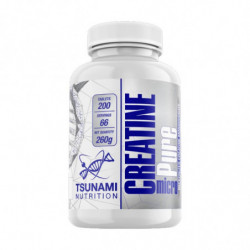
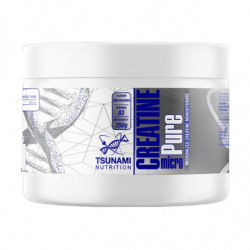
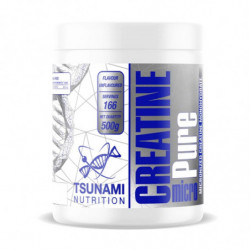
In conclusion, we can say that all athletes involved in strength sports should consider including creatine in their ‘supplement regimen’, as the benefits can be considerable. However, do remember to follow the recommended dosages and take it correctly to ensure maximum absorption. Finally, make sure you choose high-quality creatine made from certified raw materials. If you’re taking creatine monohydrate, you might want to opt for ‘Creatine Micro Pure’, which provides pure, micronised Creapure creatine. If, on the other hand, you opt for buffered forms of creatine, I recommend ‘2-Alka Pure Professional’, a truly innovative formula with two buffering systems that guarantee maximum bioavailability.
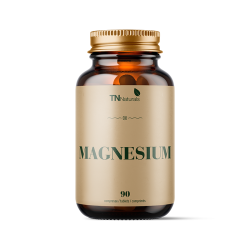
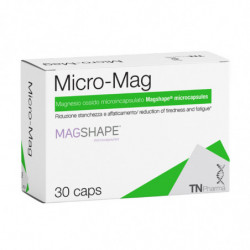
Magnesium plays a fundamental role as a catalyst for the reaction. You may therefore also wish to consider taking a magnesium supplement, using a high-quality product such as‘Micro-Mag’, a completely innovative form of magnesium developed by TN PHARMA’s research and development team. Microencapsulation ensures high bioavailability and allows you to fully benefit from the advantages of magnesium, which plays a part in over 300 processes in the human body.