- Training
- 60579 views

Tennis and padel are two different sports, yet they are often grouped together because they share many similarities: from being racket sports to the use of a dividing net, from having courts of the same size to the use of rackets, and everything else that goes with it. Even when it comes to training, nutrition and supplementation, the same energy systems and substrates are utilised.
That is why, despite the differences between the two sports, we will today examine ways to improve performance in both by drawing a hypothetical comparison between them and addressing the question of which are the best dietary supplements for tennis and padel. This is also due to the fact that there are very few clinical studies in this field.
Energy variables
Tennis (and padel) is considered an intermittent sport, comprising short periods of activity (4–10 seconds) interspersed with periods of active recovery (10–20 seconds) and passive recovery (60–90 seconds). Although matches can last several hours, only 15–20 per cent of that time is actually spent playing actively.
The biggest challenge in determining a player’s energy requirements is that these depend on technique, playing style, height, and the environment (e.g. temperature, humidity, etc.). For example, players who play from the baseline are more likely to have longer rallies than those who prefer to serve and volley. Furthermore, clay courts result in longer service periods than concrete courts (around 25 per cent versus 21 per cent respectively).
The best supplements for tennis and padel
In the professional world, every athlete has their own preferences when it comes to tennis and dietary supplements, but these preferences are almost always kept from the public. Just think of Nadal or Federer, who tend to avoid revealing the products they use as supplements. Nutritional biologists and dietitians agree that the supplements useful for tennis (and padel) are essentially the same as those used in other similar sports, with a few exceptions. Indeed, every type of sport that utilises a particular energy system and performance model has virtually the same requirements: to repair muscle damage, replenish energy stores, fluids and electrolytes, and to try to delay the onset of fatigue. As previously mentioned, there are few studies on the effects of food and dietary supplements on performance in tennis and padel.
It is therefore difficult to provide specific advice due to the number of variables involved and the lack of valid, standardised performance protocols capable of detecting significant changes in performance. However, by analysing the performance patterns and energy demands of both sports, it is possible to identify substances that may help improve performance. Based on the studies carried out to date, the substances most commonly used in tennis and padel are analysed below.
Amino acids
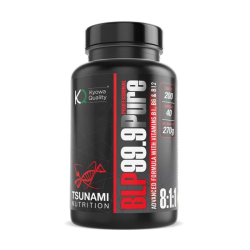
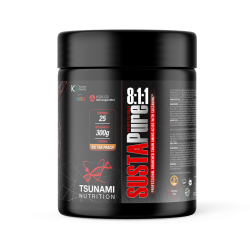
With regard to supplementation, amino acids can be obtained either from protein powders or from specific supplements such as BCAAs (branched-chain) or EAAs (essential). Although there are not many studies specific to tennis and padel, it has been shown that BCAA supplementation before training reduces muscle damage and promotes recovery, whilst supplementation after training promotes protein synthesis. Furthermore, Taiwanese researchers assessed the effects of BCAAs on the perceptual-motor abilities of national-level tennis players, observing that during long matches (>2 hours), BCAA intake resulted in greater accuracy (94%) in shots. BLP99.9 8:1:1 PURE PROFESSIONAL and SUSTAPURE PROFESSIONAL BCAA 8:1:1, both containing Sustamine, which promotes hydration of the body – which is often dehydrated during long matches – as well as the restoration of muscle glycogen (i.e. energy reserves), are excellent solutions for these sports.
Carbohydrates
Used in almost all endurance sports and for ergogenic performance, carbohydrates are almost always consumed in liquid form for faster absorption. It is well established that this nutrient delays fatigue during prolonged exercise and improves performance. The American College of Sports Medicine (ACSM), Dietitians of Canada (DOC) and the American Dietetic Association (ADA) recommend an intake of approximately 30 to 60 g/h of carbohydrates to improve performance. In the specific case of tennis, studies are few and far between and sometimes contradictory, but this is also due to the fact that studies are not always conducted properly. To name but a few, Burke and Ekblom found that consuming a carbohydrate-containing drink during a tennis match was associated with improved accuracy and jumping ability. Several other studies, the most recent of which dates from 2012, have also highlighted the beneficial effects of consuming liquid carbohydrates during and after matches. Although further research is needed to confirm that consuming carbohydrates during tennis matches can improve performance, an analysis of the clinical studies carried out to date suggests that the guidelines issued by the organisations mentioned above are well-founded.
Caffeine
Caffeine is the ergogenic supplement par excellence. Used since its discovery to enhance performance in virtually all sports, it is also used in work and study settings to maintain a high level of concentration. Its action is due to its stimulating effects on the central nervous system, as well as its role in the mobilisation of free fatty acids and the conservation of muscle glycogen. In tennis and padel, the use of caffeine could therefore reduce the sensation of fatigue and delay its onset. The few studies carried out have almost always shown positive effects. This applies both to accuracy and concentration during the match and to the speed of the serve. These studies therefore support the conclusion that caffeine supplementation at doses of 3 mg/kg can improve tennis performance during prolonged matches (>2 hours).
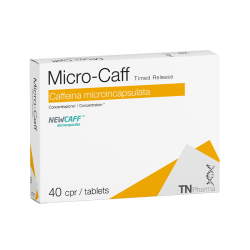
The TN Pharma range includes one of the best sources of caffeine on the market, NewCaff™. Its molecules are coated with a thin lipid layer, which allows them to be transported to the liver, where digestive enzymes break down the lipids, slowly releasing the caffeine. This process takes around 3 hours, compared with the usual 15 minutes. The benefits of this slow release include greater concentration at both low and high doses, with a reduction in side effects (such as tachycardia), the absence of the rebound effect that often occurs with the consumption of sugary drinks, which increase caffeine absorption, a longer duration of action, and a reduced likelihood of developing tolerance.
Conclusion
Although tennis is extremely popular, and padel has been growing in popularity in recent times, there is very little scientific literature on the subject. However, by analysing the available studies on tennis and other racket sports, and taking into account the physiological factors involved in these disciplines, it can be concluded that tennis players may benefit from supplementation with amino acids to promote muscle recovery, carbohydrates to restore energy stores, electrolytes to maintain fluid balance, and caffeine to improve concentration.
References
- Fernandez J. et al. Intensity of tennis matches. British Journal of Sports Medicine (2006).
- Morante S.M., Brotherhood J.R. Thermoregulatory responses during competitive singles tennis. British Journal of Sports Medicine (2008).
- Smekal G. et al. A physiological profile of tennis match play. Medicine and Science in Sports and Exercise (2001).
- Christmass M.A. et al. Exercise intensity and metabolic response in singles tennis. Journal of Sports Sciences (1998).
- Fernandez-Fernandez J. et al. Match activity and physiological responses during a junior women’s singles tennis tournament. British Journal of Sports Medicine (2007).
- Fernandez-Fernandez J. et al. A review of the activity profile and physiological demands of tennis match play. Strength and Conditioning Journal (2009)
- Martin C. et al. Effects of playing surface (hard and clay courts) on heart rate and blood lactate during tennis matches played by high-level players. Journal of Strength and Conditioning Research (2011).
- Melvin Williams. Dietary Supplements and Sports Performance: Amino Acids. J Int Soc Sports Nutr (2005)
- Eva Blomstrand et al. Branched-chain amino acids activate key enzymes in protein synthesis after physical exercise. J Nutr (2006)
- Yang, C. et al. Prevention of perceptual-motor decline by branched-chain amino acids, arginine and citrulline following a tennis match. Scandinavian Journal of Medicine and Science in Sports (2016).
- Coggan A.R., Coyle E.F. Carbohydrate ingestion during prolonged exercise: effects on metabolism and performance. Exercise and Sport Sciences Reviews (1991).
- Coyle E.F. Fluid and fuel intake during exercise. Journal of Sports Sciences (2004).
- American Dietetic Association, Dietitians of Canada, American College of Sports Medicine. Position statement from the American College of Sports Medicine. Nutrition and athletic performance. Medicine and Science in Sports and Exercise (2009).
- Ekblom B. Influence of fluid intake and dehydration on precision and endurance performance in tennis. Athletic Training Winter (1982).
- Ferrauti A. et al. Metabolic and ergogenic effects of carbohydrate and caffeine beverages in tennis. The Journal of Sports Medicine and Physical Fitness (1997).
- Vergauwen L. et al. Carbohydrate supplementation improves stroke performance in tennis. Medicine and Science in Sports and Exercise (1998).
- McRae K.A., Galloway S.D. Carbohydrate-electrolyte drink ingestion and skill performance during and after a 2-hour indoor tennis match. International Journal of Sport Nutrition and Exercise Metabolism (2012).
- Davis J.K., Green J.M. Caffeine and anaerobic performance: ergogenic value and mechanisms of action. Sports Medicine (2009).