- Alimentation
- 31975 views
Fenugreek to support male hormones
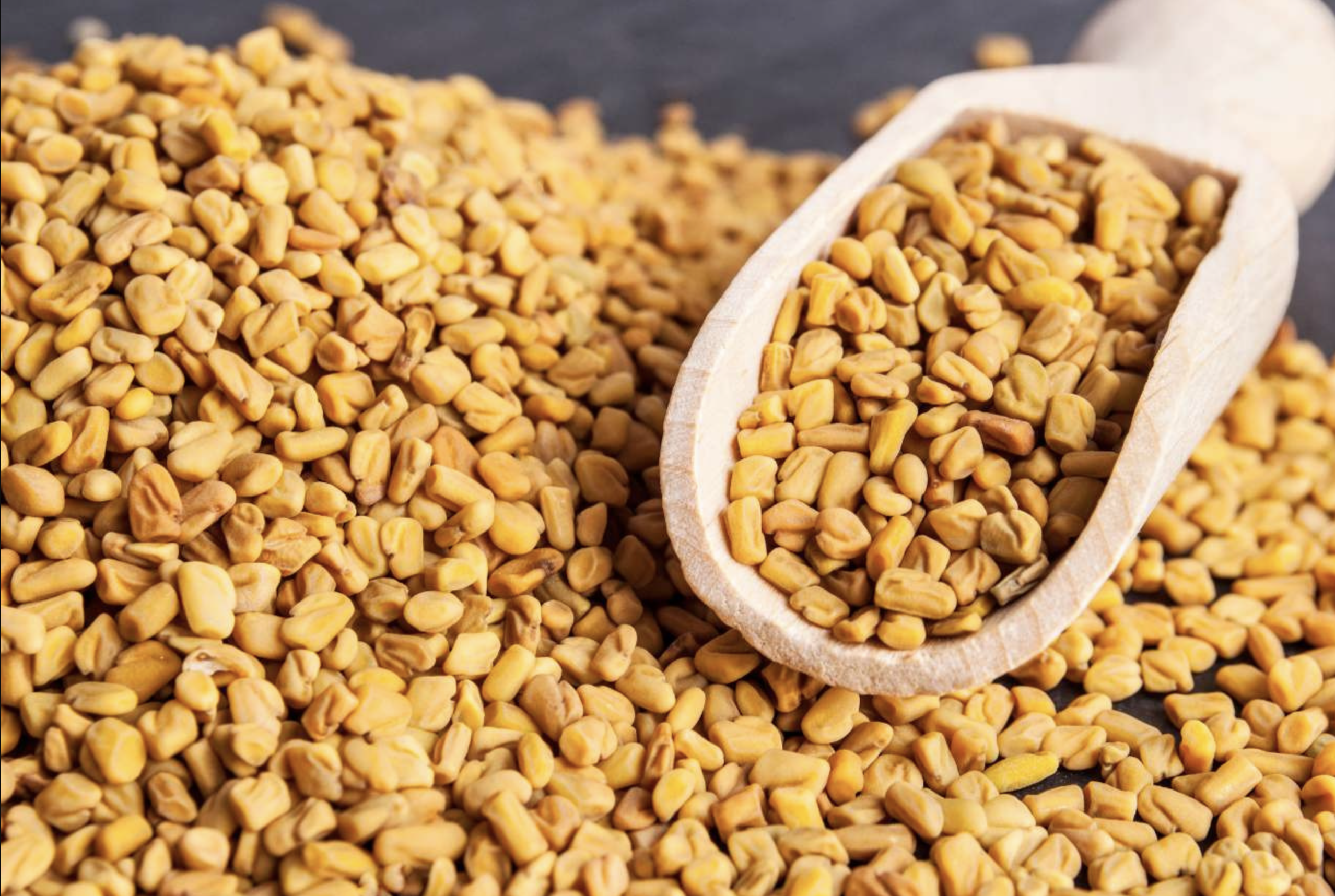
Fenugreek, known as Trigonella foenum-graecum, is a plant whose seeds are used; it is particularly popular in Arabia and India for its libido-boosting and invigorating properties. It has also been known since ancient times as an anti-inflammatory herb, capable of stimulating milk production, lowering blood sugar levels and, as mentioned, acting as an aphrodisiac.
With regard to male hormones, studies have shown positive results on testosterone levels (free and total), muscle strength, anabolism, body fat percentage and libido in subjects with problems associated with these hormones. However, it is not known with certainty whether the mechanism of action directly stimulates testosterone production or whether it acts by inhibiting its aromatisation into oestrogens; in any case, some studies have shown that there are positive effects on the percentage increase in the testosterone fraction.
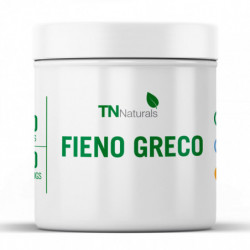
The new fenugreek-based product from Tn Naturals is a single-ingredient supplement, concentrated exclusively from purified dry fenugreek extract, which, as mentioned previously and as we shall see in more detail below, possesses various properties ranging from improving libido to enhancing carbohydrate metabolism, as well as offering interesting benefits for athletes, particularly those seeking to improve their body composition.
Fenugreek for loss of appetite and hyperglycaemia
Fenugreek is also used to combat loss of appetite due to its interaction with the hormone insulin and the mucilage present in its seeds, which, amongst other things, also have soothing and emollient properties for the skin when applied topically.
Much has been said about fenugreek’s insulin-stimulating capabilities, which also give it hypoglycaemic properties attributable both to its direct action on insulin secretion and to its indirect action in inhibiting alpha-amylases, a class of enzymes involved in the metabolism and digestion of dietary carbohydrates, thereby reducing the absorption of glucose in the gut.
Fenugreek and glycogen resynthesis
Finally, the effect of fenugreek extract on glycogen resynthesis has also been studied. In particular, some researchers have hypothesised that the addition of fenugreek could increase glucose uptake in the muscles and thus improve glycogen resynthesis after exercise.
A small study involving eight men showed that supplementation with creatine and fenugreek (500 mg twice daily) improves body composition compared with a placebo or creatine combined with dextrose, thereby significantly improving strength and body mass.
How much fenugreek should you take?
The dose of fenugreek may vary depending on the purpose of supplementation. For ‘new mothers’ seeking to increase milk production, it is recommended to take between 500 and 1,000 mg per day.
Conversely, for men wishing to take fenugreek to boost their libido and/or natural testosterone production, it is recommended to take around 500 to 600 mg of fenugreek per day.
Among the most widely studied and recommended raw materials is the Testofen® patent (found in Tsunami Nutrition’s PTL Pure Professional), which contains 50 per cent fenosides – the specific component that acts on the mechanisms governing libido. In all cases, it is recommended to take it, if possible, at the start of the day, as soon as you wake up, and just before going to bed, in order to align with the circadian rhythms of endogenous testosterone production.
Further information and interesting facts
Before the advent of dietary supplements, fenugreek was widely used by men seeking to improve their sexual wellbeing. It was consumed in the form of seeds in herbal teas or simply ground to extract its properties and create oils for daily consumption as part of the diet.
Fenugreek: scientific references
Fenugreek and libido
In men, sexual dysfunction is often associated with difficulties in achieving an erection and/or problems relating to ejaculation. Sexual dysfunction is complex and often multifactorial. Diet, physical exercise and psychological factors often play a major role, as do other significant factors, but it appears that aspartic acid may, as mentioned, have a positive effect on libido and testosterone, according to the following studies:
- Physiological aspects of male libido enhanced by standardised Trigonella foenum-graecum extract and a mineral formulation
- Effects of a putative aromatase and 5α-reductase inhibitor on hormonal profiles in men of university age
Fenugreek and glycogen synthesis
As fenugreek is a plant rich in phytosterols, it is also capable of promoting insulin secretion and, consequently, stimulating protein synthesis and increasing muscle glycogen stores. It has indeed been shown to be useful in speeding up recovery by positively influencing the mechanisms involved in glycogen synthesis and, consequently, muscle recovery.
- The addition of fenugreek extract (Trigonella foenum-graecum) to a glucose-rich diet increases the resynthesis of muscle glycogen after exercise.
- Glycogen resynthesis and physical performance with the addition of fenugreek extract (4-hydroxyisoleucine) to a high-carbohydrate diet after exercise.
Fenugreek and breastfeeding
An increase in milk production has been demonstrated by some studies, with significant results compared with placebo or control groups. Although further confirmation is needed, the current findings provide us with interesting insights.