- Health and wellness
- 689 views
Venous insufficiency
Venous insufficiency (or stasis) is a condition in which blood flow in the veins is slowed down, leading to the development of oedema as the cells suffer from a lack of oxygen and nutrients. This occurs because fibrinogen (a glycoprotein) is deposited near the capillaries, forming fibrin barriers that prevent the exchange of substances.
Have you ever felt your legs getting heavy and aching, even without having done any particular physical exertion? You are probably suffering from venous insufficiency. This can be caused by a number of factors: a lack of physical activity (insufficient exercise, a sedentary lifestyle, etc.), as well as poor habits – both behavioural (spending too much time sitting, etc.) and dietary (a diet high in sodium, etc.). This problem develops gradually and varies with the seasons. Indeed, with the high temperatures of the summer months, venous stasis tends to worsen, particularly if you suffer from fragile capillaries and varicose veins.
Causes of venous insufficiency
Venous flow is slowed down by various factors:
- Increased levels of free radicals: these can form as a result of very intense activities carried out frequently, but also simply from remaining in an upright position (standing) for too long. The theory of a correlation between free radicals and venous problems is also supported by a recent Italian study.
- Flow vector: that is, the direction in which blood flows more or less easily. This varies depending on the position adopted during exercise; just think of performing a squat (legs moving downwards) or a 45° leg press (legs moving upwards). This variation in blood flow results in different pressures, which exert forces on the blood vessels; over time, these can lead to problems.
- Obstacles to blood flow: starting with peripheral resistance (such as pressure differences), the effectiveness of swallowtail valves, muscle trauma, external pressure (sitting for long periods) and many other factors.
Several studies show that the use of flavonoids and elastic compression garments (compression stockings) improves skin oxygenation, enhancing local fibrinolytic activity whilst reducing pericapillary fibrin deposition. This helps to reduce endothelial permeability by restoring the intercellular space.
Lymphoedema
The lymphatic system comprises the lymph nodes and lymphatic vessels, which are responsible for the exchange and transport of lymph. It therefore plays a key role in the body’s immune defence. Through the lymph, the body collects fluids and waste products from the periphery and then transports them to the filtering organs such as the liver, kidneys, lungs and lymph nodes.
Sometimes, things do not go as planned and an extravascular accumulation of lymph occurs, known as lymphoedema. This involves a build-up of fluid and glycoproteins, which mainly affects the lower limbs (but can also affect the upper limbs).
Stages of lymphoedema
There are three stages used to classify the condition:
- Stage I: occasional cramps, particularly at night, tingling and/or itching.
- Stage II: a feeling of heaviness, more frequent cramps and itching, particularly in the evening.
- Stage III: a feeling of heaviness, severe tingling, very frequent cramps, intense itching, hard and tight skin, and sometimes even difficulty moving.
In reality, it is very unlikely that the lymphatic system is the direct cause of oedema; it is often the result of other underlying issues. The lymphatic system is highly efficient; just consider that at rest it works very little, whereas following a workout or in pathological conditions, it is capable of increasing its flow rate up to 15 times.
It is therefore the view of scientists and experts in the fitness sector that the term ‘lymphatic insufficiency’ should only be used in cases of serious medical conditions and not to describe a simple case of extracellular oedema, which may have other causes, as we shall see below.
Causes of lymphatic stasis
The lymphatic load consists of lymph, a liquid substance composed mainly of water and glycoproteins. If the composition of the lymph is altered, it struggles to flow properly through the lymphatic channels. Good hydration is essential for the flow of this fluid and to prevent stagnation.
Following a weight-training session, it is normal to feel swelling in the legs. This is because when there is an increase in waste products (metabolites) and protein macromolecules that thicken the extracellular matrix, this increases fluid retention and makes lymphatic drainage more difficult.
The solution is to structure a training programme so that there are training days for the lower limbs and rest days. In particular, if the intensity and muscular effort are very high, up to 4–5 days’ recovery may be needed between sessions. Alternatively, sessions can be organised at a high frequency (even daily) but with reduced intensity, so that the body requires little time to recover and reabsorb the oedema.
In more serious cases, for example in the event of overtraining or during the premenstrual phase when swelling can be bothersome and painful, it may be helpful to temporarily adjust the training programme for a few days. Incorporating localised, single-joint exercises, particularly for the gluteal region, is an excellent solution, alongside the use of elastic compression garments (but only on ‘recovery’ training days), carrying out active post-workout drainage (described below) and taking drainage supplements.
Overuse of drainage supplements
In this regard, excessive use of drainage supplements can be counterproductive. Indeed, taking these supplements stimulates the lymphatic capillaries to reabsorb the water component but not the cellular component, which remains in the extracellular matrix, making it denser. Furthermore, in trained individuals, there is a high level of extracellular protein, meaning that stagnant proteins attract water molecules, thereby increasing water retention.
Telangiectasias
Telangiectasias are skin imperfections of venous origin which, in most cases, affect the lower limbs. They are defined as a chronic dilation of the capillaries and superficial venules.
There are many causes for their appearance: hormonal fluctuations, a sedentary lifestyle, being overweight, heredity, pregnancy and others. They are also often one of the first signs of venous insufficiency, as also reported by the CEAP (Classification of Chronic Venous Disease). When telangiectasias increase in size, become more pronounced (turning blue), the legs feel heavy and swollen as if full of water (and/or painful), and at the same time the veins on the top of the foot are more visible (particularly in the evening), this is likely to be the first stage of venous insufficiency.
Causes of swelling
This may be caused by posture, mainly due to a sedentary lifestyle and poor posture such as sitting with your legs crossed: in this case, swelling often occurs in the popliteal fossa (behind the knee). Sometimes, it occurs as a result of repeatedly performing exercises incorrectly at the gym, which hinders normal blood flow, forcing the blood to flow through ‘shunt pathways’ to other veins, thereby forming telangiectasias.
Swelling
Swelling of the legs can occur at different times of the day, depending on one’s lifestyle and how the body reacts to unhealthy habits. For example, in women who suffer significantly from orthostatic hypotension, there is an alteration in the dynamics of venous and lymphatic flow which, particularly towards the evening, leads to swelling of the lower limbs with a daily weight gain of up to 1.5 kg. For these individuals, training should be avoided after 6.00 pm; however, if this is the only free slot in the day, appropriate supplementation is essential to prevent the situation from worsening.
Corrective approach at the gym
To resolve and/or improve the problem, it is advisable to take action as early as possible by adjusting your gym training routine, in addition to modifying both your dietary and behavioural habits.
- Plantar pump
One of the most useful things is to focus on the most powerful venous pump of all: the muscular pump. Before considering the exercise itself, it is important to say a few words about the plantar pump. This is a structure located in the sole of the foot which, like a pressure pump, is the main driving force behind the upward flow of venous blood. Poor foot placement, shoes with heels that are too high, or simply running do not allow for correct plantar support, and the system’s efficiency is therefore reduced by almost half. The advice isto perform the exercises barefoot, possibly wearing non-slip socks, including (and I would even say especially) when walking on a treadmill, ensuring that you roll your foot correctly, from heel to toe.
- Muscle pump
Muscle contraction helps push blood from the periphery back to the heart, but for this to happen, the muscles must be well-nourished and efficient. Consequently, an untrained person who goes to the gym to improve their fitness can sometimes make the situation worse because their muscle contractions are ineffective. This often happens with untrained women with venous problems who are put on a training programme based on leg bends such as squats, lunges, deadlifts and their variations, which excessively increase vascular pressure by overloading the blood flow.
On the contrary, it may be helpful to incorporate open-kinetic-chain exercises to retrain the local muscle pump, and only then introduce closed-kinetic-chain exercises. Personally, I prefer to perform the exercises in ascending order:
- Calf exercises for the calf pump: preferably on a vertical or 45° press, so that the legs are pointing upwards, allowing for a better blood flow vector (for this exercise).
- Leg curl for the femoral muscle pump: if performed whilst seated, take care not to press the popliteal fossa against the seat.
- Leg extension for the quadriceps: take care not to press the back of your knee against the seat.
- Quadruped extensions for the glutes: focus on contracting the glutes rather than on lifting the leg.
Once the function of the muscles has been partially restored and the trophic zones have been developed, it is possible to introduce exercises such as squats and their variations, but this should be done gradually and, above all, by avoiding (during the initial stages) sub-maximal loads so as not to excessively increase transcutaneous oxygen pressure or overload the vascular walls.
Active drainage
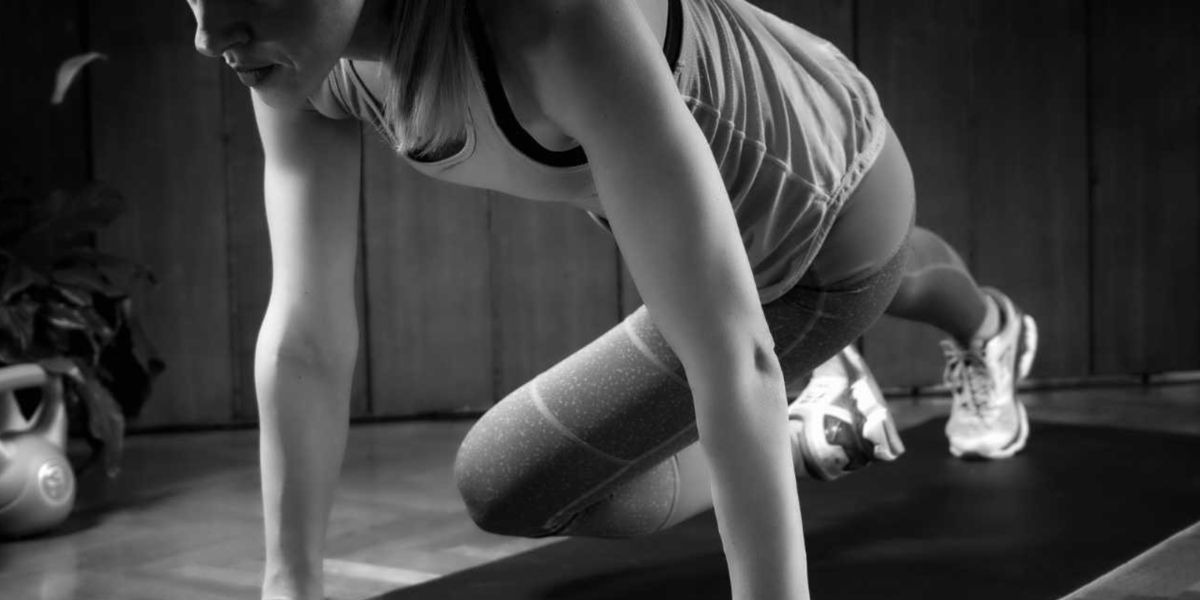
One useful method is undoubtedly active drainage, i.e. promoting the flow of fluids and waste products from the periphery towards the heart and the structures designed to eliminate waste, such as the lymph nodes. To achieve this, incorporating exercises to stimulate the ‘twin pump’ whilst lying on your back and walking barefoot at the end of a training session can alter local post-workout blood flow.
An example of active drainage for post-workout is suggested below:
- Calf raises on a vertical press or 45° press, without training to failure and holding the contraction for 2 seconds.
- 10 mins of walking barefoot on a treadmill set to a slight incline, focusing on the foot strike.
- 1 minute of cycling whilst lying on your back with your legs raised.
- 1 minute of foot flexion and extension whilst lying on your back (with your legs in the air).
- 3 mins lying on your back with your legs in the air, resting against the wall, without feeling any ‘tightness’ in the hamstrings to prevent vasoconstriction.
- 5 mins on a recumbent exercise bike.
Supplementation
There are few studies in the fields of haemodynamics and fitness; however, the same cannot be said for supplementation. Fortunately for all women, there are products available that can significantly improve circulation-related issues. Whilst it is understood that exercise, lifestyle and diet play a key role, certain substances can make a real difference.
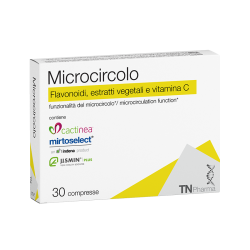
Microcircolo
Microcircolo is an innovative dietary supplement formulated by the TN Pharma Research & Development team using a selection of the finest patented natural extracts, flavonoids and vitamin C, designed to improve microcirculation and reduce the sensation of swollen legs and ankles.
This condition is essentially determined by microcirculation, that is, by the entire complex system of small blood vessels, such as capillaries, venules, arterioles and metarterioles, which supply oxygen, hormones and nutrients to the tissues.
Thanks to the complex blend of raw materials used in this supplement, it is possible to have a positive effect on microcirculation. Let’s take a look at the ingredients.
Cactinea™ is a patented prickly pear extract which possesses:
- High antioxidant power
- Exceptional draining properties
- Proven benefits for the figure
Mirtoselect® is a patented blueberry extract that is extremely rich in anthocyanins, which support healthy blood circulation.
Lymphaselect® is a standardised dry extract of sweet clover for the treatment of venous-lymphatic insufficiency.
To complement this powerful effect on microcirculation, the TN Pharma team has added diosmin, hesperidin and vitamin C!
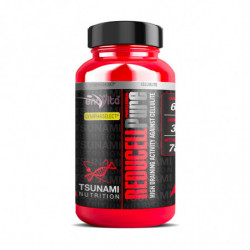
Reducell
Reducell is Tsunami’s flagship supplement for combating the unsightly appearance of cellulite, which also plays a significant role in haemodynamics. It fulfils these functions in particular thanks to the ENOVITA® patent. This is a proprietary OPC (proanthocyanidin), i.e. a concentrated extract of grape seeds that provides very pure oligomeric proanthocyanidins (95 per cent). Thanks to its polyphenols, particularly bioflavonoids (anthocyanidins and proanthocyanidins), it supports circulatory and cardiovascular health by nourishing the walls of blood vessels, positively influencing vascular permeability, and preventing oedema and swelling.
In addition, the LYMPHASELECT® patent (concentrated sweet clover extract), not only improves microcirculation, venous circulation and fluid drainage thanks to its flavonoids and tannins, but also exerts a vasoprotective effect on the walls of the veins, increasing their permeability and thus acting in a similar way to aescin.
Furthermore, Centella asiatica purifies the lymphatic system and strengthens blood vessels; bromelain helps to ‘reabsorb’ water retention, particularly when this is associated with an inability of the lymphatic system to eliminate toxins effectively; butcher’s broom has vasoprotective and anti-inflammatory properties by acting on the peripheral circulatory system, whilst burdock and hawkweed provide significant drainage benefits.
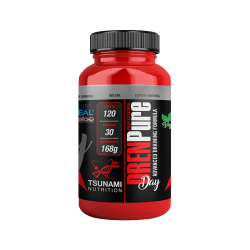
Dren Pure
Tsunami’s drainage supplements, Dren Pure Day and Dren Pure Night, are formulated with phytoactive substances capable of supporting the lymphatic system by draining fluids and waste products from the tissues. This diuretic and draining action is exerted by bioflavonoids and polyphenols (green tea, dandelion, nettle, red vine and hawkweed), which help the body increase urine output, thereby directing water towards the kidneys to cleanse and purify them. Black bilberry, hesperidin and diosmin promote the circulation of bodily fluids, particularly in the peripheral areas (lower limbs), by reducing lymphatic stasis (oedema) and improving tissue oxygenation, which helps alleviate the sensation of heavy legs, swelling, tiredness or exhaustion.
To reduce stress, one of the causes of water retention,lemon balm extract has been included for its calming and muscle-relaxing properties, as well as melatonin for its benefits to the immune system, but above all for its role in regulating the circadian rhythm – that is, the cyclical variation in our natural and biological activities.
Conclusion
The field of haemodynamics in relation to fitness is still largely unexplored. Empirical evidence suggests that training, lifestyle, diet and supplementation can make a difference in both sedentary individuals and athletes.
Conditions such as venous insufficiency or lymphoedema can be resolved through an appropriate multifactorial approach, but in the case of more serious conditions, it is always advisable to consult a vascular surgeon, as these issues can worsen to the point of requiring surgical intervention.
For the general public, it is advisable to ensure that:
- The foot pump is utilised to its full potential
- In the case of venous disorders, muscle perfusion is adequate before performing closed-kinetic-chain exercises and/or exercises with sub-maximal loads
- Post-workout drainage is always provided, particularly in the presence of lymphoedema.