- Health and wellness
- 42402 views
What is the role of creatine?
Creatine is an organic compound found naturally in the human body, mainly in the muscles and the brain. It is produced by the liver, kidneys and pancreas from the amino acids arginine, glycine and methionine. Around 95 per cent of the body’s creatine is stored in the skeletal muscles in the form of phosphocreatine, whilst the remaining 5 per cent is found in the brain, heart and other tissues.
Creatine is widely used as a dietary supplement to enhance sporting performance, particularly in short-duration, high-intensity activities such as weightlifting and sprinting. It increases phosphocreatine levels in the muscles, facilitating the rapid regeneration of ATP (adenosine triphosphate), the main source of energy for muscle contractions
It is worth noting that creatine supplementation may promote muscle recovery, reduce inflammation and improve muscle strength and mass. Creatine is also being studied for its potential benefits in neurodegenerative diseases and muscular disorders, as well as for its cognitive support, improving memory and brain function under conditions of mental stress or sleep deprivation.
The role of creatine in the body
Creatine plays a crucial role in the body’s energy metabolism, particularly in skeletal muscles. Most of the creatine in the body is stored in the muscles in the form of phosphocreatine.
During intense physical exercise, phosphocreatine is used to rapidly regenerate ATP (adenosine triphosphate), the main source of energy for muscle contractions. This process helps maintain the intensity and duration of short-term, high-intensity physical activities. In addition to its role in the muscles, creatine is also important for brain health, where it contributes to the production of energy required for cognitive functions.
Furthermore, creatine helps reduce fatigue and improve muscle recovery, thereby promoting better athletic performance and greater resistance to fatigue.
The use of creatine in sport and the gym
Increased muscle strength and power
ATP synthesis: Creatine increases the availability of phosphocreatine in the muscles, which is used for the rapid production of ATP, the main source of energy for fast and intense muscle contractions.
Performance in anaerobic exercises: Studies have shown that creatine supplementation can improve performance in exercises requiring short, intense bursts of effort, such as weightlifting, sprinting and plyometric exercises.
Improved physical performance
High-intensity exertion: Creatine is particularly effective in sports involving short bursts of intense activity, such as football, basketball, rugby and athletics.
Muscle endurance: Athletes may find that they are better able to repeat high-intensity exercises with less fatigue.
Increased muscle mass
- Water retention: Creatine causes an increase in the water content of muscle cells, which can lead to an increase in muscle volume.
- Protein synthesis: It may stimulate muscle protein synthesis processes, contributing to faster muscle growth when combined with resistance training.
Muscle recovery
- Reduction in muscle damage: creatine may help reduce muscle damage and inflammation associated with intense physical exercise, thereby speeding up recovery.
- Restoration of energy stores: it improves the replenishment of phosphocreatine stores after exercise, enabling faster recovery in preparation for subsequent training sessions.
Improved body composition
- Reduction in body fat: Although it is not a direct fat burner, the increase in muscle mass and basal metabolic rate can indirectly contribute to a reduction in body fat.
Versatility
- Suitable for a range of sports: creatine is beneficial for athletes practising a wide variety of sports, not only those requiring power but also those involved in endurance sports, thanks to its role in enhancing the ability to perform high-intensity efforts.
Can creatine affect hair health?
Creatine is a popular dietary supplement used to improve physical performance and increase muscle mass, but its potential impact on hair health raises some concerns.
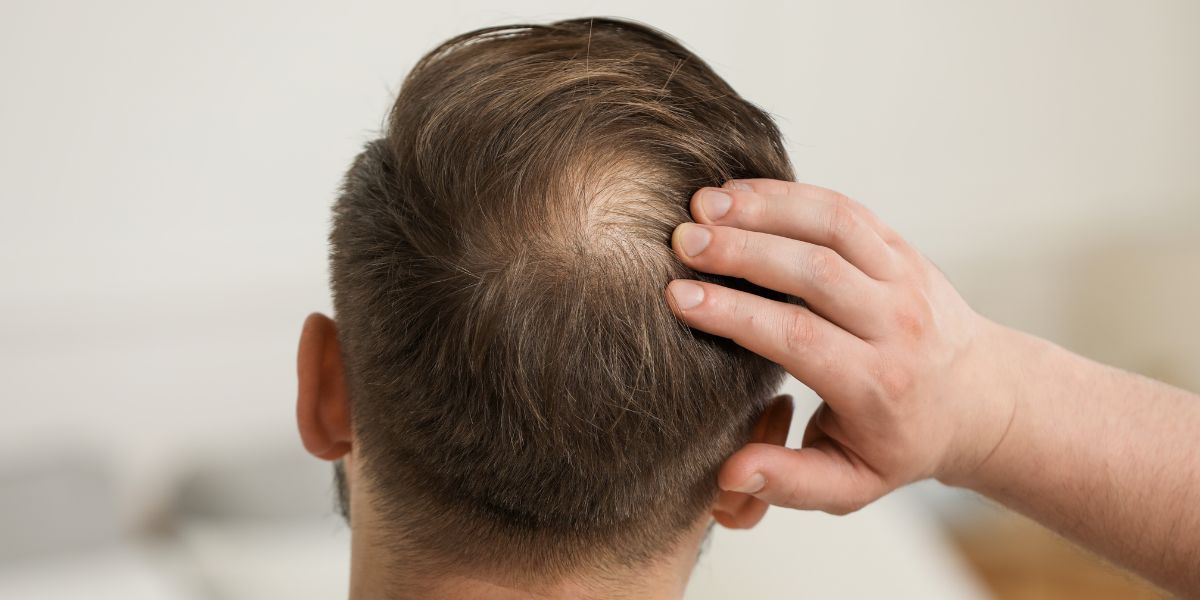
In particular, there are concerns that creatine may increase levels of dihydrotestosterone (DHT), a metabolite of testosterone associated with androgenetic alopecia. A study carried out in 2009 suggested that creatine supplementation could raise DHT levels, potentially accelerating hair loss in genetically predisposed individuals. However, the scientific evidence for this link is limited and inconclusive.
Most research into creatine has focused on its positive effects on physical performance, paying less attention to its effects on hair. Consequently, although there is a theoretical possibility that creatine may affect hair health, further studies are needed to confirm this effect.
People who are genetically predisposed to baldness should closely monitor any changes to their hair whilst taking creatine and consult a doctor if they have any concerns.
Risk factors and genetic predisposition
Androgenetic alopecia, commonly known as hair loss, is influenced by a combination of genetic and environmental factors.
One study suggested that creatine supplementation could increase DHT levels. This has raised concerns that creatine might accelerate hair loss in those who are predisposed to it.
The use of creatine as a dietary supplement has raised some concerns regarding its possible impact on levels of dihydrotestosterone (DHT), which is known to be a key factor in androgenetic alopecia. Here is an analysis of the main risk factors and genetic predisposition associated with creatine use:
- Genetics: Androgenetic alopecia is highly hereditary. If an individual has close relatives (parents, grandparents) who have suffered from hair loss, they are more likely to develop the same condition. Some individuals are more sensitive to DHT levels, which can accelerate the miniaturisation of hair follicles.
- Age: Hair loss becomes more common with age. Many men begin to show signs of hair loss as early as their 30s, with prevalence increasing over the following decades.
- Hormones: The hormone dihydrotestosterone (DHT) is a derivative of testosterone that binds to receptors in the hair follicles, causing the follicles to miniaturise and leading to hair loss. Furthermore, people with higher testosterone levels may experience greater conversion of testosterone to DHT, which increases the risk of hair loss.
- Stress and lifestyle: Stress, a poor diet and an unhealthy lifestyle can contribute to hair loss, although these factors have less of an impact than genetics and hormones.
Frequently Asked Questions
Can creatine cause baldness in everyone?
To date, no conclusive studies have confirmed that creatine directly causes hair loss in everyone.
Creatine is one of the most widely studied and commonly used dietary supplements for improving physical performance and increasing muscle mass. However, some people are concerned that it may cause hair loss.
It is important to note that, at present, there is no conclusive evidence to show that creatine causes hair loss in everyone. Hair loss, particularly androgenetic alopecia (common baldness), is strongly influenced by genetic factors.
Increased levels of DHT may accelerate hair loss in genetically predisposed individuals, but this does not necessarily have the same effect on everyone.
Is it possible to prevent creatine-related hair loss?
It is possible to prevent hair loss associated with creatine use by taking certain precautions, particularly for those genetically predisposed to baldness.
Although there is no definitive evidence that creatine causes hair loss in everyone, those concerned about this possibility can take preventative measures. In particular, it is recommended to monitor your hair closely, use specific products, maintain a balanced diet, manage stress and consult a professional.
Can creatine promote hair growth?
There is no scientific evidence to suggest that creatine directly promotes hair growth. However, its use may have indirect beneficial effects linked to improved general health and reduced stress.
For those concerned about the health of their hair, it is important to prioritise a balanced diet, look after your scalp and, if necessary, consult a professional for specific treatments.