- Training
- 34204 views

If we were to walk into any gym and ask everyone why they were training, we would find that most of them are training either to reduce their body fat or to increase their lean body mass.
Whatever your goal, let’s start by saying that without a proper diet and a personalised training programme, all your efforts will be in vain. In this regard, we can mention a third category of people in addition to the previous two: those who simply want to stay in shape. They train and eat healthily only occasionally, which means they can never hope to achieve better results. If your goal is to get into the best possible shape, you cannot afford to overlook a healthy lifestyle.
Muscle growth: the steps to follow
To start a programme aimed at increasing muscle mass, it is necessary to follow certain steps. Firstly, the individual’s nutritional status must be assessed using anthropometric tools such as a BIA, a skinfold caliper and/or a tape measure and scales. Next, the BMI and body type (android or gynoid) are calculated; with this data in hand, the individual’s starting point can be determined and, consequently, the first goal to be achieved can be set together. It is advisable to undertake a programme aimed at muscle hypertrophy when the body fat percentage is not too high and, once this phase has begun, does not exceed 15 per cent body fat in men and 20 per cent in women.
Regular monitoring of the individual using specialised tools, calorie management, the distribution of different nutrients and meal timing help to keep body fat percentage within a reasonable range and avoid having to follow strict diets during the summer months due to fat accumulated throughout this phase.
Nutrition
Once body composition has been assessed, the calorie intake is calculated, taking into account the individual’s starting point and the target to be achieved. To increase muscle mass, the energy balance must be positive; in other words, more calories must be consumed than are expended daily.
Of the calories consumed, 50–60 per cent should come from carbohydrates, 20–30 per cent from fats and the remainder from protein. It is not just a question of quantity, but also of quality: when it comes to carbohydrates, complex carbohydrates are preferred over simple carbohydrates; for fats, unsaturated fats are preferred over saturated fats; and for proteins, two-thirds should be of animal origin and one-third of plant origin.
Hydration also plays an important role at this stage, as it does at all others. Water makes up 70 per cent of the human body, part of which is found within the cells. The amount required is determined based on body weight using the coefficient provided by the Recommended Dietary Allowances (RDAs), with preference given to those with a low fixed residue. During training, it is important to maintain good hydration so as not to further disrupt the water-electrolyte balance and to enable a high training intensity to be sustained.
Training
Just as with diet, training must also be structured in several stages; the individual’s body type is assessed, specifically whether they are:
- Ectomorph, endomorph or mesomorph
- Stocky or slender
- Whether they have any physical abnormalities or variations that significantly influence the approach to the exercises
- Whether they have any muscle weaknesses, so that the weakened muscle can be trained several times using different techniques.
When choosing your training programme, remember that there is no standard programme for muscle hypertrophy. Muscle is an organ with a great capacity to adapt, which is why sticking to the same programme all the time would cause it to adapt very quickly and no longer respond to the same stimuli. For effective muscle growth, training must focus on white fibres; from an anatomical perspective, there are three types of fibre:
- red oxidative fibres, also known as slow fibres or type I fibres;
- white fibres, which are in turn subdivided into fast fibres (type IIA, or glycolytic-oxidative) and fast fibres (type IIB, or glycolytic).
It is the latter that are of interest to us, which is why training should be structured to recruit this type of fibre using a variety of exercises and techniques.
Finally, it is worth emphasising the importance of rest and its essential role in recovery following intense training sessions, the regeneration of muscles used during sporting activity, and the restoration of energy.
Dietary supplements
However, a healthy lifestyle can be supplemented with dietary supplements, which vary and are used in different ways depending on individual needs. As their name suggests, these should be incorporated where diet alone is insufficient to meet certain requirements.
Nowadays, many companies produce dietary supplements, but not everyone is aware of the actual quality of the product. For example, amongst companies that produce protein supplements, not all certify the origin of their ingredients, the raw materials used and, consequently, the quality of the product. One of the companies that invests the most and is committed to guaranteeing the quality of its products is Tsunami Nutrition. This company, which has established itself over the years as one of the leading manufacturers, now works with health professionals to develop new formulations. Below, we present what we consider to be the best dietary supplements to use during a muscle-building phase.
PROTEINS: ISOPure, HYDROPure, CASEIN PURE
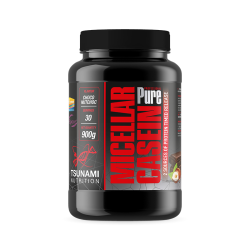
Choosing which type of protein to use is always a concern for all athletes. Proteins play a plastic, structural, regulatory and protective role in our bodies. The best proteins available on the market are undoubtedly whey proteins, which are also the most widely used and have a high biological value. Tsunami offers ISOPure Professional, an excellent product obtained through a CARBERY®-certified cross-flow microfiltration process, enriched with digestive enzymes (DIGEZYME®) and sweetened with stevia (sweet leaf). This type of protein can be used in a snack, combined with a source of carbohydrates, or in a main meal such as breakfast, where, if desired, the dose could be split between ISO PURE and CASEIN Pure to provide two different sources of protein and ensure a more gradual release of amino acids. For post-workout use, there is HYDRO Pure Professional, a blend of proteins broken down into dipeptides, oligopeptides and tripeptides, enriched with branched-chain amino acids. The hydrolysis process enables faster absorption, helping the body recover more quickly.
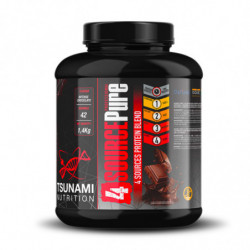
4 SOURCE PURE PROFESSIONAL
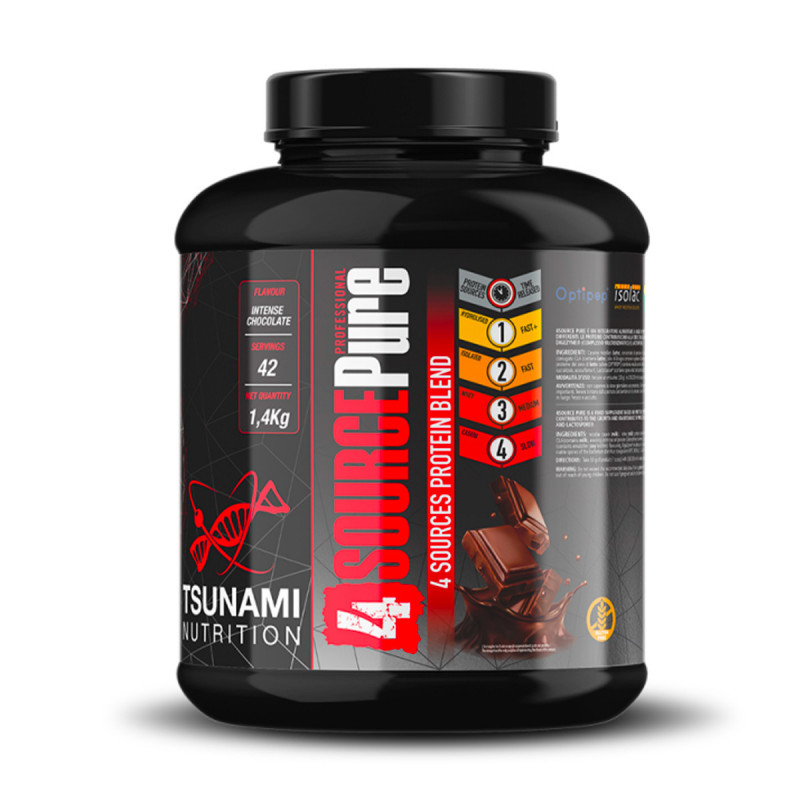
Before going to bed, you can opt for 4 SOURCE PURE PROFESSIONAL, a protein blend which, by releasing nutrients at different rates, helps combat nocturnal neoglucogenesis, a process activated to maintain the body’s homeostasis.
GLYCO Pure
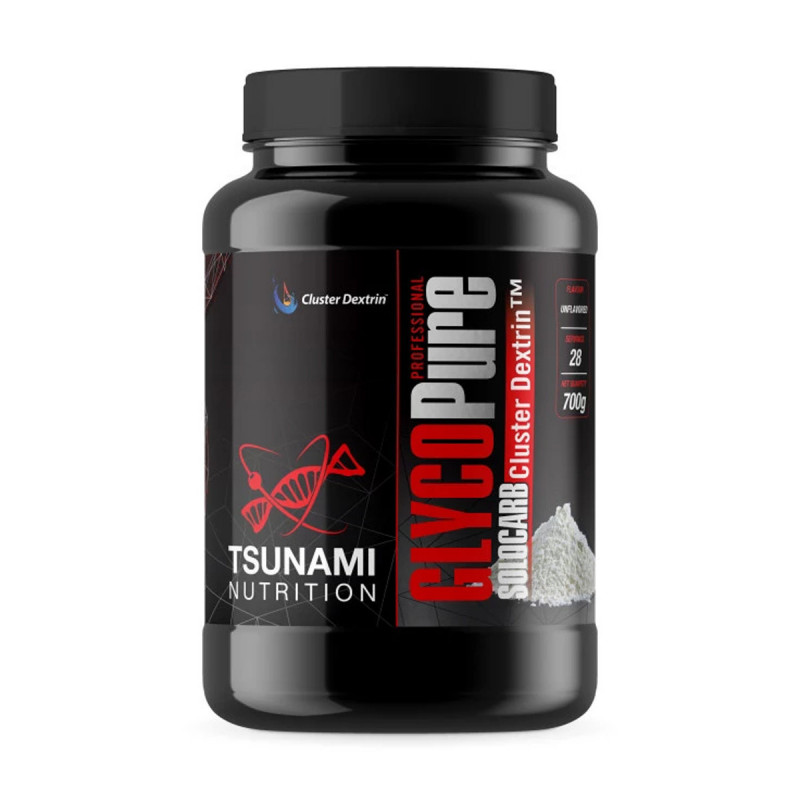
GLYCO Pure Professional is a carbohydrate supplement based on the patented high-molecular-weight CLUSTER DEXTRIN, which gives it very low osmolarity and promotes rapid gastric emptying. This helps to eliminate the gastrointestinal bloating often reported by athletes. Thanks to its molecular structure, it can be taken before training to maximise glycogen stores, during training to support physical activity, and after training to restore hepatic and muscle glycogen stores.
AMINO ACIDS: SUSTAPURE

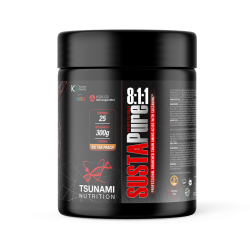
We can find effective support for our training in SUSTAPURE Professional 8:1:1, a Tsunami product composed of branched-chain amino acids in an 8:1:1 ratio, which acts as an ‘energy buffer’ during phases of muscle catabolism and contains a high proportion of leucine, which is important for activating protein synthesis, This sustamine formula (which gives the product its name), also known as alanil-glutamine, is composed of glutamine and alanine, which are important for nitrogen elimination, but above all for muscle hydration, which is essential for the uptake of water and electrolytes into the cells.
CREATINE: 2ALKAPure
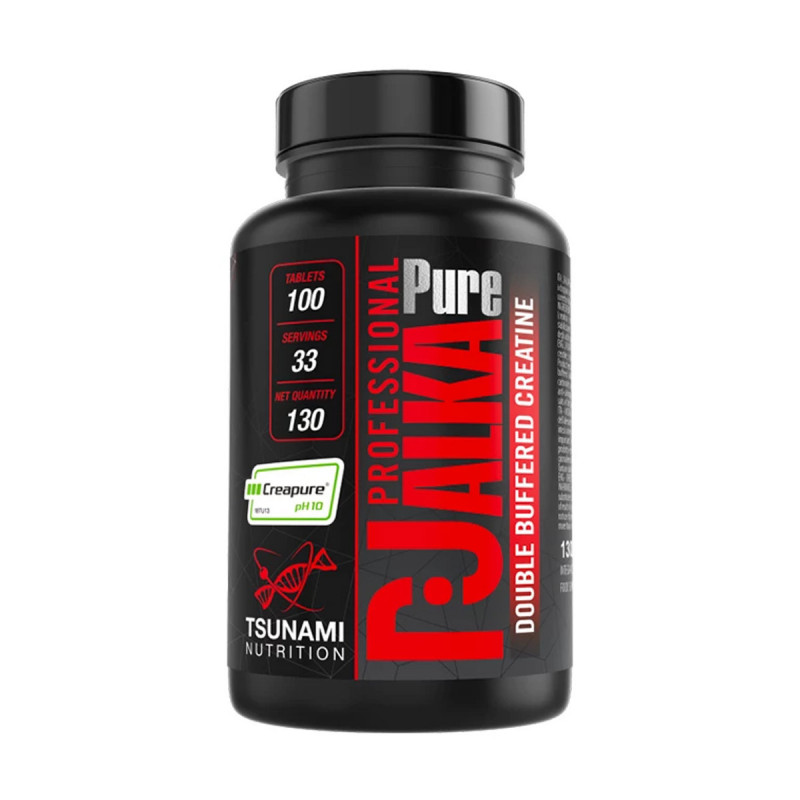
2ALKA Pure Professional is an excellent solution for our training. It is CreaPure-certified, which guarantees its origin, and also features a dual buffer system that protects the creatine during transport in the bloodstream, enabling it to reach the muscle cells. It prevents an excessive drop in pH levels in the muscles and thus the onset of muscle fatigue, thereby ensuring better energy efficiency.
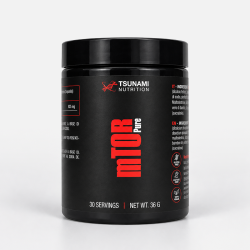
MTOR PURE PROFESSIONAL
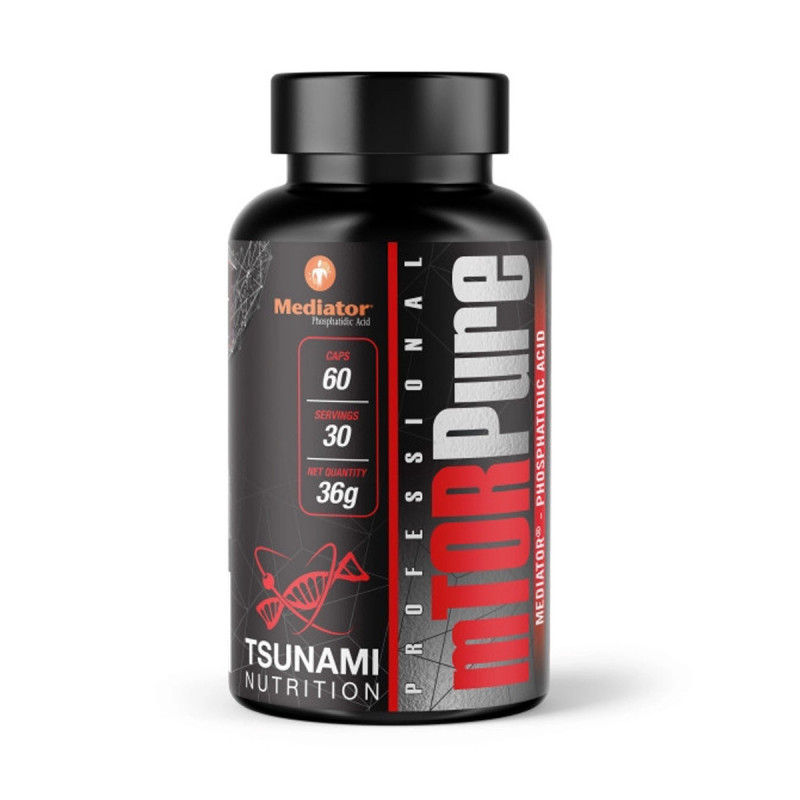
mTOR Pure is a Mediator®-patented dietary supplement considered to be the best for muscle hypertrophy as it activates the mTOR signalling pathway, the protein kinase that exerts direct control over muscle growth. Its main functions are as follows:
- Increased muscle growth
- Increased strength
- Increased fat loss
The presence of phosphatidic acid in its formulation not only guarantees an anabolic effect, but it has also been observed to counteract muscle catabolism. Clinical studies have indeed shown that increased gene expression of this phospholipid reduces protein breakdown and influences the synthesis of myostatin, the molecule responsible for the loss of muscle tissue.