- Training
- 35492 views

Multivitamins and minerals
We have discussed the benefits of multivitamin and mineral supplementation at length for a number of reasons. In any situation where it is not possible to monitor one’s diet closely, it is very difficult to ensure that daily vitamin and mineral requirements are met, for several reasons:
- Intensive farming no longer produces fruit and vegetables with adequate levels of vitamins and minerals
- Many methods of preservation and cooking reduce the vitamin and mineral content
- Many vitamins and minerals compete with other substances for absorption
Multivitamin supplementation should not replace a balanced diet – that much is clear – but it can be beneficial in all cases where nutritional requirements are increased or where dietary deficiencies exist.
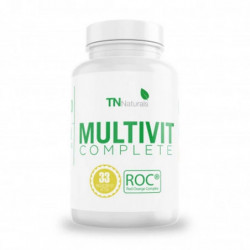
The research and development team has developed a highly effective supplement: a comprehensive multivitamin and mineral formula, carefully dosed and taken in two daily doses to ensure maximum absorption. This is an essential supplement in a CrossFitter’s diet: TN Naturals MULTIVITAMIN COMPLETE, a vitamin and mineral supplement whose formula is enriched with iron and ROC®, a patented extract from Sicilian blood oranges.
Probiotics
Probiotic supplementation has been shown to have numerous benefits for the digestive system, the immune system and the neuroendocrine system.
We now often refer to the gut-brain axis to highlight the close correlation between the gut microbiota and brain health, on which the health of the entire body depends. A healthy gut microbiota helps to optimise health at every level by promoting efficient nutrient metabolism, a key factor in muscle recovery and growth. You may have the best diet in the world, but if your gut is unable to metabolise food properly, you will never achieve the results you’re hoping for.
Intense training, stress and many other everyday factors place a heavy strain on the health of the gut microbiota. Probiotics are therefore essential in a CrossFitter’s arsenal of dietary supplements.
Given the importance attached to this issue, the research and development team has developed several products designed to balance the gut microbiota:
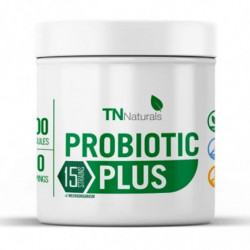
- TN Naturals Probiotic Plus, a dietary supplement containing 15 different strains of live lactic acid bacteria to improve digestion and restore balance to the gut microbiota.
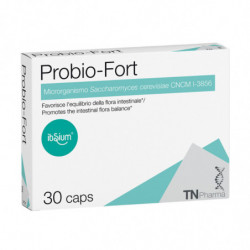
- TN Pharma Probio-Fort, a dietary supplement based on the IbSium® patent – a specialised strain of Saccharomyces cerevisiae – for the treatment of pain, intestinal irritation and irritable bowel syndrome.
- TN Pharma Entero-Fort, a dietary supplement containing two patented probiotics, LYNSIDE® and Fibrulose™, combined with inulin to restore the balance of the gut flora.
Each of these is specifically indicated for certain gastrointestinal problems, to ensure optimal restoration of the balance of the gut microbiota.
Protein powders
Protein powder supplementation can be very useful for meeting daily protein requirements and promoting muscle recovery. It is always wise to regard protein powder as a valid source of protein – an alternative to others that is highly satiating, easily digestible and versatile.
Hydrolysed whey proteins such as Tsunami Nutrition’s HYDRO PURE are the most suitable in this case and certainly the most popular, although other protein sources are by no means to be overlooked, as these are patented Carbery® proteins that are rapidly absorbed, allowing branched-chain and essential amino acids to be released more quickly into the bloodstream. Furthermore, the Hydro Pure formula also contains the patented DigeZyme® and Lactospore ingredients.
Knowing how to use and make the most of protein powders throughout the day is important for any athlete practising CrossFit.
Omega-3
In the specific case of CrossFit, omega-3 supplementation can be very useful for improving an athlete’s blood lipid profile, enhancing their cognitive abilities and reducing levels of systemic inflammation.
Omega-3s are well known for their anti-inflammatory properties, which are vital for any athlete engaged in intense exercise that generates high levels of inflammation. The best omega-3 supplements are rated on the IFOS scale, which awards 5 stars to the purest and least contaminated products.
Tsunami Nutrition’s OMEGA PURE has been awarded 5 IFOS stars (the highest rating), guaranteeing the product’s quality and safety. The formulation allows you to achieve maximum benefits with just 4 capsules a day.
Liver detoxifiers and antioxidants
We very often forget that the liver is the largest and most complex biochemical powerhouse in our body. The liver’s activity regulates hundreds of physiological balances within the body, as well as hundreds of biochemical reactions that enable us to remain fit and healthy. Sporting performance also depends on the liver functioning properly, something we very often overlook.
When we engage in very intense exercise – particularly the highly glycolytic and lactic-based exertion typical of CrossFit – the liver works extremely hard to support it. These same intense workouts are what trigger significant oxidative stress, a condition in which the liver is once again put under strain.
We can therefore see that supporting liver function with a dietary supplement could certainly be beneficial for everyone, and particularly for all CrossFit enthusiasts. One such supplement is undoubtedly D-Tox by TN Naturals, specially formulated for this purpose, with the aim of providing substances that are vital for liver health, such as N-acetylcysteine (NAC), alpha-lipoic acid and milk thistle.
NAC is also a precursor to glutathione, the body’s most powerful endogenous antioxidant. Glutathione supplementation can also provide effective support for liver health. In this case, however, we recommend considering TN Pharma’s new Liposomal Glutathione, which, thanks to its liposome technology, maintains a very high bioavailability compared to other forms of glutathione.
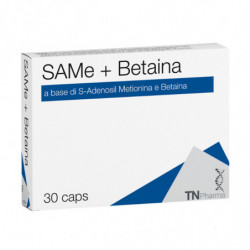
Another highly effective product for liver health (and overall health) is the new SAMe + Betaine, formulated by TN Pharma.
Now that we have established what the ‘starter pack’ for any CrossFitter’s health should be, let’s look more specifically at how to approach supplementation before, during and after training.
Pre-workout
During this phase, it is important to eat properly, at least 2 to 4 hours before training.
In the 30 to 45 minutes leading up to your workout, you can take substances that may enhance your performance: let’s look at the most important ones.
Caffeine
The benefits of caffeine on performance have been widely documented, both for its ability to stimulate the nervous system and for improving lipid metabolism through adrenergic stimulation.
The best results are achieved by taking 100 to 200 mg of caffeine 30 to 45 minutes before your workout.
Be careful not to overdo it, however, as its chronotropic effect (increased heart rate) could hinder your performance, particularly in a sport such as CrossFit, where the heart reaches a high number of beats per minute. Starting with a higher resting heart rate before training will certainly lead to higher peaks during exercise, which will result in energy depletion more quickly.
We therefore recommend that you carefully assess your tolerance to caffeine – that is, the dose that allows you to derive the maximum benefit without any ‘side effects’.
Creatine
Creatine is a valuable ally for performance as it helps increase strength and muscle mass, whilst improving recovery. It is precisely for these reasons that creatine is an essential part of any CrossFitter’s list of dietary supplements!
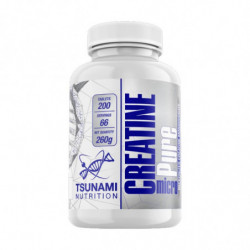
There are various forms of creatine on the market, but we recommend opting for products based on Creapure micronised creatine monohydrate, such as Creatine Micro Pure from Tsunami Nutrition.
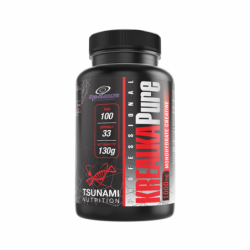
Even better, pH-buffered creatine – which offers maximum bioavailability – is a very recent development. The research and development team has created Kre-alka Pure and 2AlkaPure, two excellent creatine-based products featuring a dual-buffer system.
Simply take 3 to 6 grams of creatine, divided between before and after your workout, to achieve the desired benefits. Higher doses offer no additional benefits but may cause side effects affecting the gastrointestinal and renal systems.
Carbohydrates
We’ll discuss carbohydrates in the pre-workout window, but it’s worth noting that this topic also applies very well to the ‘during-workout’ period. As we have mentioned on several occasions, CrossFit is primarily an anaerobic-lactic-glycolytic sport, which means that the body uses a large amount of glucose to sustain this type of exertion.
This is even more important during very long training sessions involving repeated bursts of effort.
It is important to eat a meal containing complex carbohydrates at least 2 to 4 hours before training, but it can be helpful to consume a few grams of carbohydrates before the start of the session and throughout it.
Over the years, research has sought to identify a type of carbohydrate capable of providing sustained energy and minimising the digestive burden through appropriate osmolarity.
The latest advances have led to the development of polymers such as cyclodextrins, which are characterised by excellent digestibility and the ability to provide long-term energy.
A good example is GLYCOPure Hydra, the flagship product from Tsunami Nutrition, which combines cyclodextrins with amino acids and other substances capable of ensuring an adequate supply of muscle glycogen during exercise.
The recommended dose is approximately 30 g, but this should be adjusted according to the intensity and duration of the workout, as well as the athlete’s physical characteristics.
Beta-alanine
Beta-alanine is an amino acid capable of increasing carnosine levels in skeletal muscles. High levels of carnosine are found in type II fibres of the skeletal muscles, specifically those engaged during typical CrossFit exercises. Intense muscular exertion depletes carnosine, the resynthesis of which is primarily regulated by the availability of beta-alanine.
Beta-alanine supplementation therefore plays an important role in delaying muscle fatigue, prolonging exercise capacity and improving tolerance to lactic acid, thanks to its buffering capacity.
In summary, beta-alanine supplementation helps to:
- A delay in the onset of fatigue
- Greater resistance to fatigue
- A buffering effect on lactic acid
These are benefits that are highly sought after by CrossFit enthusiasts.
As with creatine, insulin promotes the uptake of beta-alanine into muscle cells. Consequently, it should be taken alongside a source of carbohydrates. It is also worth noting that the body can store beta-alanine as a reserve, which is why many athletes consider ‘loading’ with beta-alanine in the days leading up to a competition.
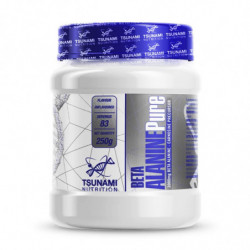
The recommended doses of beta-alanine for best results range from 3 to 6 grams before a training session, with the option of loading days involving doses of up to 8 to 10 g, split into several daily intakes alongside carbohydrate sources. An effective beta-alanine-based product is Beta Alanine Pure by Tsunami Nutrition.
Citrulline malate
This is another highly effective pre-workout supplement. It combines very well with beta-alanine due to the synergistic effect these two molecules can have on improving performance.
It could be said that its effects on performance are very similar to those mentioned for beta-alanine, but that’s not all, as citrulline also plays an important role in the synthesis of nitric oxide (NO).
To get the most out of citrulline, you should take between 3 and 6 g, which, when combined with beta-alanine and the other supplements mentioned, can really give your performance a ‘boost’.
During training
As we have already emphasised, this advice is only relevant for people who train at a very high intensity and for prolonged periods. It is not a good idea to take dietary supplements during short training sessions, and even less so during a competition where a single second lost whilst taking a supplement could affect your results.
When a training session lasts longer than 60 to 90 minutes, it makes perfect sense to include some carbohydrates, as we have already recommended.
Amino acids
Amino acid supplementation before and during training remains a rather controversial issue, particularly when the aim is to enhance performance. Recent literature on this subject has even highlighted certain negative aspects associated with taking amino acids before and during exercise, particularly with regard to BCAAs in their classic 2:1:1 formulation.
In essence, if your goal is peak performance, we recommend taking your amino acid supplements immediately after training, to promote muscle recovery at the most opportune time.
If, on the other hand, you have aesthetic goals and use CrossFit as a way to keep fit, we recommend taking amino acids before, during and after your workout, especially if you are following a low-calorie or low-carbohydrate diet (aimed at fat loss), in order to minimise the risk of losing muscle mass.
The recommended amount ranges from 5 to 15 g of amino acids, and the dosage within this range should be calculated primarily according to each individual’s specific characteristics.
The most suitable amino acids are a blend of essential amino acids (EAAs), preferably with a high leucine content. Leucine has been shown to be the most crucial amino acid for protein synthesis and muscle growth through the activation of the mTOR pathway; this is why it should be an essential supplement, particularly after training.
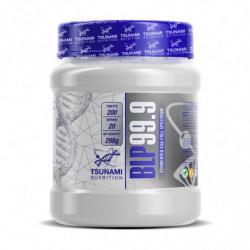
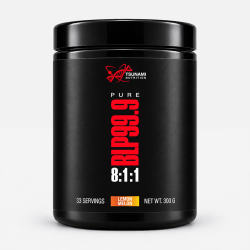
An effective dietary supplement based on essential amino acids could be, for example, BLP99.9 Professional by Tsunami Nutrition, formulated with Kyowa-grade EAAs, vitamins and minerals.
After training
At this point, it’s important to make use of every available means to aid muscle recovery. So, go for amino acids, creatine, carbohydrates and protein. Ideally, you should take amino acids straight after your workout, along with carbohydrates, such as BLP99.9 + Glycopure. Then, after 20 to 30 minutes, it’s a good idea to take hydrolysed protein such as HYDRO Pure, combined with other carbohydrates and creatine.
This strategy ensures that proteins and amino acids are not mixed in a single dose, thereby avoiding competition between amino acids (both essential and non-essential) for the same intestinal transporter. Indeed, in the early post-workout phases, it is preferable for the intestinal amino acid transporters to be fully available for essential amino acids, so that they can rapidly reach the muscle cells and trigger protein synthesis.
This is why we recommend taking them immediately after training. After 20 to 30 minutes, you can consume a complete, high-biological-value protein source, combined with simple carbohydrates, to make the most of insulin’s anabolic effect.
To conclude, we should also mention certain dietary supplements with anti-inflammatory and antioxidant properties, which promote joint health. We know just how demanding CrossFit can be, especially when practised at a high level. Such intense and frequent training sessions put the body under severe strain, placing it in a state of almost constant inflammation, which could become chronic. Added to this is tissue wear and tear, which is particularly problematic for joint tissue.
To address issues related to tissue inflammation, it could be very beneficial to take BROMELIN, in combination with SPIRULINA, another substance with anti-inflammatory and antioxidant properties. Combining these two substances with the antioxidant supplements mentioned above (SAMe + betaine, glutathione, NAC, omega-3) could provide a powerful natural weapon in the fight against inflammation.
For joint health, anti-inflammatory supplements work well when combined with hydrolysed collagen.
To find out more about the best dietary supplements for CrossFit, visit the Tsunami shop.