- Training
- 34241 views

Nitric oxide (NO) is a molecule that is essential to human metabolism, as it plays a fundamental role in the functions of the entire body. Over the last 20 years, nitric oxide has become one of the most extensively studied areas in scientific research, precisely because of the realisation of this molecule’s importance for health.
The best-known and most notable function of nitric oxide is its role in regulating vasodilation, blood circulation and mitochondrial function. It can therefore easily be deduced that NO also plays an important role in supporting physical exercise. A link has been observed between physical activity and nitric oxide, and it has been demonstrated that physical activity increases NO production. NO itself has the ability to improve sporting performance, promote recovery and benefit the athlete’s health through its physiological support of vasodilation, blood circulation and mitochondrial function.
Physical activity and nitric oxide are therefore linked, and exercise should be recommended to increase its levels, not only for athletes but for everyone. Emerging evidence strongly suggests that dietary nitrate, consumed as part of a diet – primarily through the consumption of vegetables – may contribute to cardiovascular health through its effects on nitric oxide synthesis.
Benefits of nitric oxide
NO plays a vital role in cardiovascular health and is produced via the ‘L-arginine-NO-synthase’ pathway and the recently discovered ‘enterosalivary nitrate-nitrite-NO’ pathway. The discovery of this alternative pathway has highlighted dietary nitrate as a candidate for the cardioprotective effect of a diet rich in fruit and vegetables.
Clinical trials conducted with dietary nitrate have observed improvements in blood pressure, endothelial function, ischaemia-reperfusion injury, arterial stiffness, platelet function and physical performance, alongside a concomitant increase in markers of NO status.
Although these results indicate the cardiovascular benefits derived from dietary nitrate intake, nitrates continue to raise concerns due to their link with methaemoglobinaemia, cancer and cardiovascular diseases.
It is becoming increasingly clear that many diseases are characterised by, or associated with, impaired nitric oxide (NO) production or signalling. Therapies or strategies designed to restore normal NO homeostasis are likely to have wide application and utility in the years to come. The highly complex, multi-phase biochemical process leading to NO production and the ensuing physiological response provides several useful targets for the development of drugs to treat cardiovascular diseases, antimicrobials, anti-cancer agents, wound healing, and so on.
The development of NO-targeted therapies will remain one of the main objectives for biotechnology companies, academic institutions and pharmaceutical firms, and the application of safe and effective strategies will represent a new frontier in medicine for the treatment of diseases. The treatment of chronic conditions such as obesity, diabetes, high blood pressure and coronary heart disease accounts for 75 per cent of the country’s annual healthcare costs.
According to the American Heart Association, millions of people in the United States suffer each year from one or more forms of cardiovascular disease, including high blood pressure, coronary heart disease, heart attacks, angina pectoris, strokes and heart failure.
Most of the aforementioned conditions result from endothelial dysfunction and an inability to produce NO and/or to maintain NO homeostasis and signalling.
Given that NO-based technologies can also influence infections, wound healing and targeted cancer treatment, safe and effective strategies for NO delivery could represent the most significant advances in science and medicine over the last two centuries. Understanding and developing new strategies to restore NO homeostasis will have a profound impact on public health and the healthcare system.
How to improve nitric oxide production
Following this introduction, one immediately wonders what the best strategies are for maintaining physiological nitric oxide homeostasis. Here again, there are no great secrets, and the starting point is always a healthy lifestyle, which involves a few essential principles:
- A healthy diet, rich in fruit and vegetables, pulses, whole grains, extra virgin olive oil and lean animal protein sources in moderation.
- Regular, moderate physical activity, with particular emphasis on the cardiovascular aspect of exercise.
- A regular sleep routine, which helps to regulate circadian rhythms.
- Reducing stress levels through the regular practice of breathing exercises, meditation and gratitude.
- These practices can be supported by the use of dietary supplements that can enhance nitric oxide production. This is highly beneficial not only for health (for the reasons we have mentioned), but above all for those seeking high levels of sporting performance.
Stimulating nitric oxide production can significantly contribute to improved performance, increased muscle mass, fat loss and muscle recovery. We must not downplay the subject, as is often done, by reducing it solely to vasodilation, which helps increase blood flow to the muscles. NO has the potential to do much more than that, given all the benefits it offers and the roles it plays in the body.
Let’s take a look at which dietary supplements are useful; you can also find the best nitric oxide-based supplements via this link:
L-ARGININE
Taking this supplement for years has been the cornerstone of practices aimed at increasing NO levels. Recently, however, it has been shown that its effectiveness is in fact limited, as the studies in the literature have mainly been conducted using high doses of L-arginine administered intravenously – doses that cannot be replicated orally due to the gastrointestinal problems they might cause.
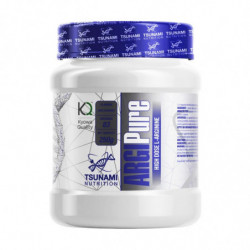
For example, one effective product is undoubtedly ARGININA PURE KYOWA QUALITY® by Tsunami Nutrition, based on Kyowa Quality-certified arginine hydrochloride, which is extremely important for boosting energy before training as it promotes NO production, increases muscle pump and stimulates vasodilation, a fundamental condition for transferring greater quantities of oxygen and nutrients from the bloodstream to muscle cells.
CITRULLINE MALATE
L-citrulline is an amino acid that is significantly more bioavailable and effective at increasing NO levels. Indeed, it has the ability to considerably raise plasma arginine levels compared to L-arginine supplementation. Not only is citrulline more effective than L-arginine in this respect, but it is also better tolerated by the gastrointestinal system than L-arginine.
Studies conducted in humans using citrulline malate show that it can help increase the number of repetitions performed, whilst reducing an individual’s perceived exertion (RPE) compared with a placebo. Research also indicates that citrulline malate supplementation can help reduce muscle soreness by up to 40 per cent in the hours following a workout.
Finally, citrulline also plays an important role in buffering ammonia, which helps to reduce the build-up of lactic acid.
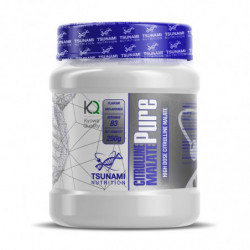
A wise choice is CITRULLINE MALATE Pure, a citrulline malate-based supplement formulated by Tsunami Nutrition. It benefits from the Kyowa Quality® patent, which underscores its quality, and is a product primarily used by athletes. Among its notable properties are its ability to help stimulate the production of nitric oxide, which is important for increasing strength and endurance levels through greater nutrient availability, and the elimination of ammonia, levels of which rise with training-induced protein catabolism, thereby delaying the onset of muscle fatigue.
BETA-ALANINE
This is a non-essential amino acid that binds with L-histidine (another amino acid) to form a powerful intracellular buffer, carnosine. When muscles contract repeatedly, hydrogen ions (H+) begin to accumulate and, as these ions build up, the muscle’s pH becomes more acidic, which ultimately prevents the muscle from continuing to contract.
Beta-alanine supplementation increases carnosine concentrations in skeletal muscle tissue, thereby improving the muscle’s ability to buffer H+ ions and delaying the onset of fatigue. This helps athletes sustain greater exertion before succumbing to fatigue.
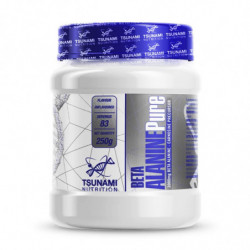
We recommend supplementation with Tsunami Nutrition Beta Alanina Pure, a product based on a non-essential amino acid that is used by muscle cells to synthesise carnosine, a dipeptide composed of beta-alanine and L-histidine.
BEETROOT EXTRACTS
This botanical extract is rich in antioxidant compounds which, amongst their many benefits, have been shown to promote NO production.
N-ACETYL CYSTEINE
N-acetylcysteine (NAC) is a more biologically active and stable form of the amino acid L-cysteine. NAC increases physiological levels of the body’s most powerful antioxidant, glutathione.
Research has shown that NAC can prevent oxidative stress and improve the bioavailability of nitric oxide. NAC is also a precursor to hydrogen sulphide, a powerful vasodilator.
FOLIC ACID
The biosynthesis of nitric oxide from arginine is catalysed by the enzyme ‘nitric oxide synthase’. This group of enzymes requires the cofactor tetrahydrobiopterin (BH4) to catalyse the production of nitric oxide. Consequently, it was initially thought that taking BH4 would increase nitric oxide production by promoting higher levels of nitric oxide synthase activity. However, studies have shown that taking BH4 did not significantly improve NO production or vasodilation due to BH4’s low bioavailability.
The inability of BH4 to increase NO concentrations led to alternative approaches, notably the use of FOLIC ACID, as it was discovered that oral intake of folic acid, a cofactor involved in BH4 biosynthesis, did indeed improve NO production and vasodilation. This was likely due to an increase in BH4 biosynthesis, which ultimately promoted greater production of nitric oxide synthase.
Our conclusion
In conclusion, NO is one of our most powerful allies in improving our health, supporting our sporting performance, promoting fat loss and increasing muscle mass. It is therefore essential to take this into account and make the most of it.