- Health and wellness
- 11318 views

Contents
| 1.The benefits of collagen and when to start taking it |
| 2.How long to take collagen: cycle lengths and timing |
| 3.Safety and contraindications of collagen supplementation |
| 4.Frequently asked questions |
| 1 |
The benefits of collagen and when to start taking it |
Why incorporate collagen into your routine
Incorporating collagen can support skin elasticity, hydration and firmness, with positive effects on nails, hair and joint health. Collagen peptides are easily digestible and combine well with vitamin C and an adequate protein intake. For those who exercise, they can aid the recovery of connective tissues stressed by repetitive strain. For those who follow a regular beauty routine, collagen peptides are an essential supplement, offering protection against damage caused by ageing and environmental factors. The key is consistency: small daily doses taken over sufficiently long periods.
Collagen is an essential protein that our bodies produce naturally, and it is the structural ‘building block’ of the skin, hair, nails, bones, cartilage, tendons and ligaments. With age, stress, sun exposure and unhealthy habits, its production tends to decline: the skin appears less elastic, joints may become stiffer and tissues weaken more easily. Taking collagen supplements (particularly in the form of hydrolysed collagen) helps to support the skin’s elasticity and hydration, joint health and tissue recovery after exercise. For those who exercise and for those who want to look after their appearance and their joints, collagen can be a simple everyday ally to incorporate into your routine.
At what age is it advisable to start taking collagen?
The body’s natural production of collagen begins to decline from the age of 20–30. For many people, it makes sense to consider taking supplements between the ages of 25 and 35, when the first signs become noticeable. Those exposed to the sun, smoking, oxidative stress or intense exercise may benefit from it sooner. After the age of 35–40, the perceived effects tend to be more noticeable with regular use. If you have any specific medical conditions or are undergoing treatment, always consult a healthcare professional.
| 2 |
How long should you take collagen: cycle lengths and timing |
The ideal duration of a course of treatment
An effective cycle generally lasts 8 to 12 weeks, with 5 to 10 g of hydrolysed collagen per day. For skin-related goals, 5 to 7 g is often sufficient; for joints and tendons, the higher end of the range may be necessary. The quality of the raw material and the presence of vitamin C help ensure consistent results. Continue taking the supplement even on rest days to avoid any ‘gaps’ in your intake. Monitor your progress using photos, skin hydration levels and a diary of any joint discomfort.
|
4–8
Weeks for skin
|
8–12
Weeks for nails
|
8–16
Weeks for joints
|
5–10g
Daily dose
|
How long does it take for collagen to have an effect on the skin?
On the skin, the first signs relate to hydration and elasticity after 4 to 8 weeks. For firmness, skin texture and fine lines, it takes an average of 8 to 12 weeks of consistent use. Stronger nails and less brittle hair are often noticeable between 8 and 12 weeks. Joint comfort may take 8 to 16 weeks, depending on the intensity of your training. A healthy lifestyle, good sleep and appropriate skincare help to speed up and stabilise the improvements.
Is it necessary to take breaks? How many cycles per year?
It is not compulsory to take breaks, as collagen is a dietary protein. Many people prefer cycles of 8 to 12 weeks of intake (‘on’) followed by 2 to 4 weeks off (‘off’) to monitor the body’s response. Over the course of a year, you can plan 2 to 4 cycles depending on your goals, budget and the time of year. If taking it continuously is easier for you, you can continue as long as it is well tolerated. Listen to your body’s signals and adapt your strategy with the help of a professional.
Example of an annual plan:
| Cycle 1 — 8 to 12 weeks on + 2 to 4 weeks off |
| Cycle 2 — 8 to 12 weeks of use + 2 to 4 weeks off |
| Cycle 3 — 8 to 12 weeks on + 2 to 4 weeks off |
| Or — continuous use if well tolerated and in line with long-term goals |
When should you take collagen: in the morning or in the evening?
The time of day matters less than overall consistency. Take collagen whenever you can stick to a routine, whether in the morning or evening, whichever suits you best. Taking it with a snack or a drink containing vitamin C can help boost your body’s own collagen production. If you have a sensitive stomach, split the dose into two smaller doses. Staying hydrated and ensuring an adequate protein intake will enhance the effectiveness of your routine.
| 3 |
Safety and contraindications of collagen supplementation |
Does collagen make you put on weight? Let’s take a closer look
Collagen does not cause weight gain: 10 g provides around 40 kcal, which is the equivalent of a small portion of protein. It may slightly increase feelings of fullness and help control snacking. Weight gain depends on your overall calorie balance, not on collagen itself. Choose products with no added sugars if you’re watching your calorie intake. Incorporate it into a balanced diet for consistent results.
Is collagen bad for the liver or the thyroid?
In healthy people, there is no evidence of direct damage to the liver or thyroid. However, it is still a protein: always assess your individual clinical situation. If you suffer from liver or thyroid conditions, speak to your doctor before starting. With marine collagen, check the quality, heavy metal testing and any potential allergies. Responsible use at appropriate doses minimises potential risks.
Key contraindications to be aware of
The main contraindications relate to allergies to fish or shellfish in the case of marine collagen. Exercise caution during pregnancy and whilst breastfeeding: personalised medical advice is required. If you are following a protein-restricted diet, discuss supplementation with a specialist. Any mild gastrointestinal discomfort can be managed by reducing the dose or taking it with food. Choose certified, traceable products with transparent labelling.

| 4 |
Frequently asked questions |
—How long can you take marine collagenfor?
Marine collagen can be taken even over the long term if it is well tolerated, so that you can enjoy all the benefits it offers. Alternatively, plan cycles of 8 to 12 weeks to assess the gradual effects. The quality of the source and testing for contaminants are key considerations when choosing a product. Monitor your skin, nails, hair and joint comfort to adjust the duration and dosage. If in doubt or if you have any medical conditions, discuss the best approach with your doctor.
—Should collagen be taken continuously or in cycles?
It can be taken continuously or in cycles, depending on preference. Continuous use is convenient for those with well-established routines and long-term goals. Cyclical use helps to better assess the impact of collagen in relation to other factors. Both approaches work provided the dose and consistency are appropriate. Choose the approach that is easiest to maintain in the long term and stick to it.
—How long does it take to see the first results from taking collagen?
The timeframe varies and depends on your goals, dosage and lifestyle:
| More hydrated and supple skin — often 4 to 8 weeks of consistent use |
| Nails and hair — improvements between 8 and 12 weeks with an adequate protein intake |
| Joint comfort — up to 8 to 16 weeks depending on the intensity of your training |
Tsunami Nutrition
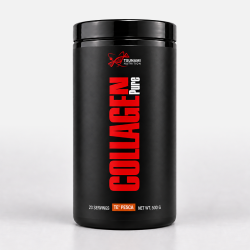
Start your collagen programme today
Naticol patent — Pack of 20 pre-measured sachets — Free delivery on orders over 59 EUR
Discover the product