- Health and wellness
- 1016 views
In recent years, plant-based protein powders have become one of the most sought-after supplements – and not just amongst those following a vegan or vegetarian diet. Athletes, people looking to reduce their intake of animal protein, and anyone seeking lighter, more easily digestible sources of protein have now incorporated them into their daily routines. However, not all products on the market are created equal: the source, the quality of the manufacturing process and the amino acid profile make a real difference to the results. This guide is here to help you make sense of it all.
The health and fitness benefits of plant-based proteins
Proteins are the fundamental building blocks for developing and maintaining muscle mass, but their role extends far beyond the gym. They are used in the production of enzymes, hormones and antibodies, and in the transport of oxygen in the blood. For those who train, ensuring an adequate protein intake helps protect muscles from excessive catabolism, promotes muscle recovery after sessions and supports the synthesis of fibres damaged by exercise.
Plant-based protein powders offer certain advantages over animal sources:
- They are generally easier to digest for people who are sensitive to dairy products or eggs;
- They provide fibre, polyphenols and micronutrients not found in whey protein;
- They have a lower environmental impact than animal-based sources;
- They are suitable for all diets, including vegan, vegetarian and lactose-free diets;
- They can help control blood sugar spikes, thanks to the presence of fibre which slows down absorption.
The traditional limitation of plant-based proteins (an incomplete amino acid profile compared to animal sources) is easily overcome by combining different sources, such as peas and rice, or by choosing protein blends that have already been formulated to cover all essential amino acids. The end result, in terms of muscle support, can be entirely comparable to that of animal proteins.
How to choose the ideal plant-based protein powders
Before choosing a product, it is worth knowing what constitutes a good assessment. The criteria that really matter are:
- Protein content per serving: look for products that provide at least 20–25 g of protein per serving, with a protein-to-dry weight ratio of over 70–75 per cent;
- Amino acid profile: the presence of all essential amino acids is fundamental, with particular attention to leucine, the amino acid that stimulates muscle protein synthesis;
- Source and manufacturing process: proteins extracted using cold-pressing, without aggressive chemical solvents, better preserve the nutritional properties of the raw material;
- List of ingredients: the fewer ingredients, the better. An excess of sweeteners, artificial flavourings and unnecessary thickeners is a sign of a product that prioritises taste over quality;
- Digestibility: certain plant-based sources (particularly soya) can cause bloating in sensitive individuals; in such cases, peas and rice are better tolerated;
- Tested by an independent laboratory: products with quality certifications or independent testing guarantees the absence of contaminants and that the label matches the actual contents.
Assessment methodology
The following ranking was compiled by assessing each product against four key criteria, with a score of 1 to 5 for each:
Only plant-based protein sources free from ingredients of animal origin were selected, with verifiable protein content stated on the label.
The best plant-based protein powders
Here are the most complete and most extensively studied plant-based protein powder sources, assessed according to the methodology described above. The choice of source depends on your goals, individual tolerance and dietary preferences: there is no single product that is universally superior, but there is one that is best suited to your own circumstances.
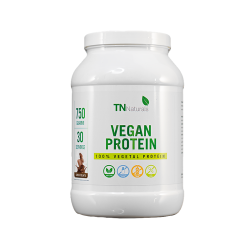
Vegan Protein TN Naturals
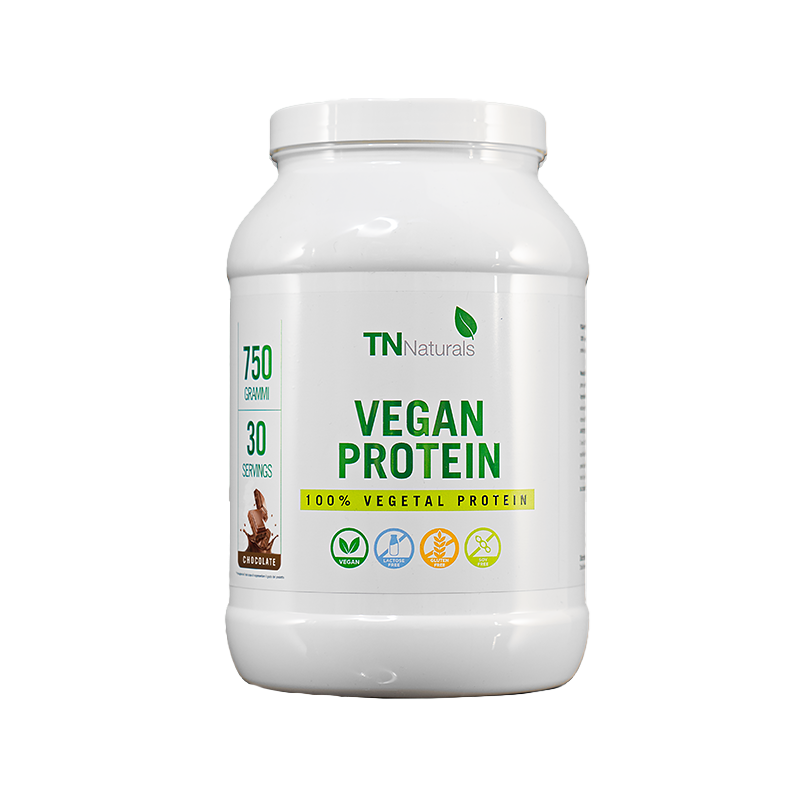
Pea protein is by far the most balanced plant-based source, and probably the best choice for those new to plant-based proteins. It can deliver excellent results when combined with other ingredients, such as rice and hemp.
This is precisely the case with TN Naturals’ Vegan Protein. The formula combines yellow pea, rice and hemp proteins – three complementary plant-based sources that provide a complete amino acid profile, suitable for both athletes and those following a vegan or vegetarian diet.
Each serving provides 20 grams of protein with a low fat and carbohydrate content, ideal for supporting the growth and maintenance of muscle mass. An added benefit is the inclusion of B vitamins and folic acid, which are beneficial for normal energy and protein metabolism.
The formula is also 100% vegan, gluten-free, lactose-free and soya-free, making it suitable for those with intolerances or looking for a highly digestible product. Available in Chocolate and Coffee flavours, it also stands out for its good solubility and pleasant taste – qualities that aren’t always a given when it comes to plant-based proteins.
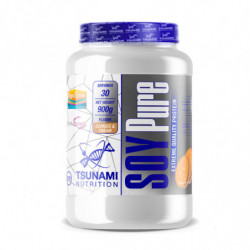
Soy Pure 900
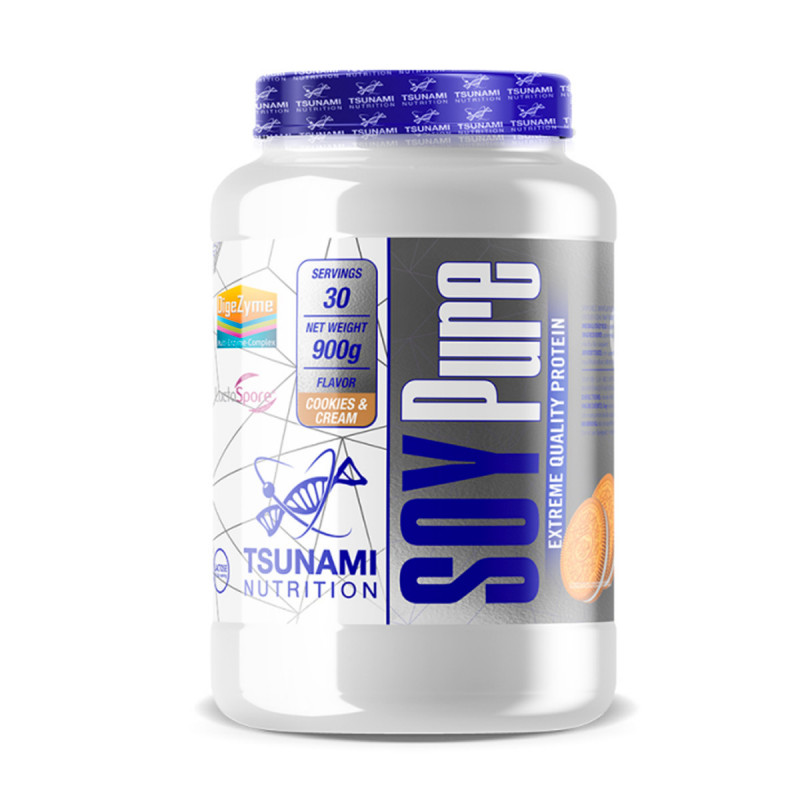
Soya proteins are historically the most widely studied plant-based proteins in the field of sport and the only plant-based proteins classified as absolutely ‘complete’: they alone provide all the essential amino acids in the correct proportions, without the need to supplement them with other sources.
For those looking for a simple yet complete plant-based protein, SOY Pure by Tsunami Nutrition is one of the most appealing options. It consists of high-purity soya protein isolate, designed for those following a vegan diet, who are lactose intolerant, or who simply wish to alternate with traditional whey proteins.
Each serving provides 25 grams of protein with a very low fat and carbohydrate content, making it ideal for both cutting and muscle-building phases. The formula is enriched with DigeZyme®, a complex of digestive enzymes that aids protein absorption, and LactoSpore®, a probiotic that supports the balance of gut flora and digestion.
Entirely vegan, gluten-free and lactose-free, it is also an excellent choice for those with specific dietary requirements. The Chocolate flavour is pleasant and its good solubility makes the shake easy to prepare and drink at any time of day.
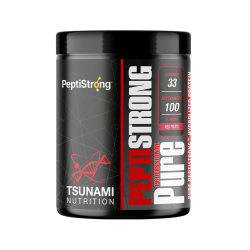
PeptiStrong Pure Professional
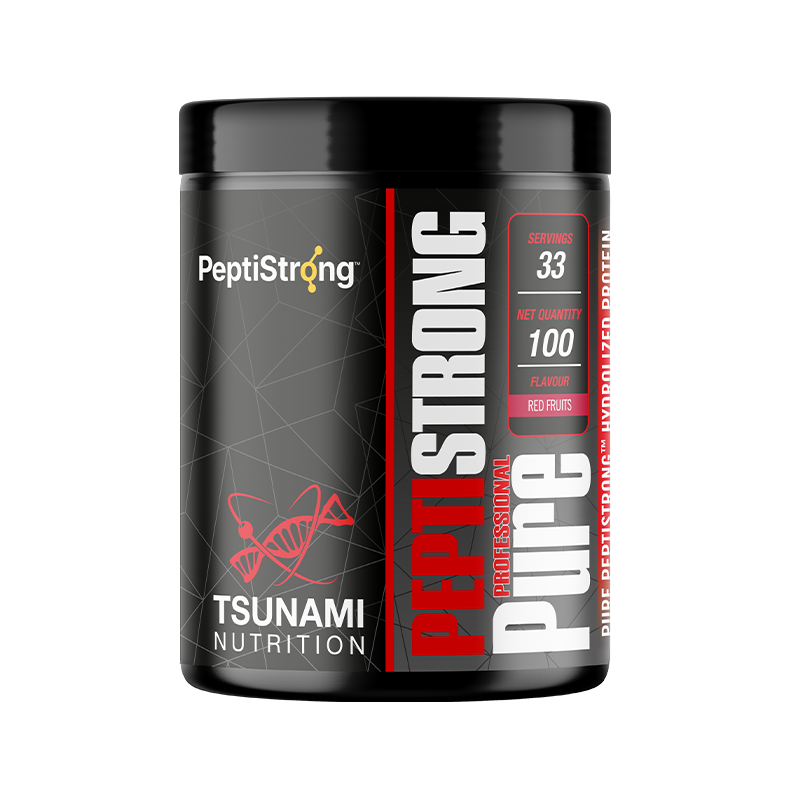
For those looking for something different from traditional protein powders, PeptiStrong Pure Professional is one of the most innovative products currently available. Its formula is based on the PeptiStrong™ patent, a complex of bioactive plant-based peptides designed to support the growth and maintenance of muscle mass, promote recovery and combat muscle breakdown.
Unlike traditional proteins, PeptiStrong™ does not merely provide amino acids, but works by stimulating the natural processes involved in muscle protein synthesis. Its effectiveness is supported by several clinical studies, which have demonstrated benefits for strength, recovery and the maintenance of muscle mass, including during periods of immobilisation or intense training.
The formula is 100% vegan, gluten-free and lactose-free, and is therefore also suitable for those following a plant-based diet or with specific dietary requirements. Thanks to its convenient daily dose of just 3 grams and its excellent solubility, it is a simple solution to incorporate into your daily routine for those who want to provide extra support for their muscles without resorting to traditional protein powders.
How to take plant-based protein to maximise results
The quality of the product matters, but when and how you consume it also makes a difference. Here are some practical tips for those who want to get the most out of their supplementation:
- After training: the post-workout window, within two hours of your session, is when your muscles absorb amino acids most easily. A shake containing 25–30 g of plant-based protein during this time supports protein synthesis and reduces recovery time;
- At breakfast: starting the day with a good protein intake reduces hunger pangs throughout the day and helps maintain stable energy levels;
- Before bed: in this case, pea or rice protein is less suitable than casein, but remains a valid option for those who struggle to meet their daily requirements;
- As a partial meal replacement: mixed with fruit, plant-based milk and a source of fat such as almond butter, plant-based protein powders can be turned into a balanced meal in a matter of minutes.
Regarding dosage, the average protein requirements for those who train regularly range from 1.6 to 2.2 g per kg of body weight per day. Supplementation serves to bridge the gap between what is consumed through a normal diet and the total amount required. For a comprehensive guide to dosages, timing and how to use them, the article on protein powders: what they’re for and how to take them is a detailed reference.
Frequently Asked Questions
Are plant-based protein powders harmful or do they have any contraindications?
Are plant-based protein powders harmful? Generally speaking, no: for a healthy adult population, they are safe and well tolerated, even when taken regularly. The most common concerns relate to the kidneys: the idea that a high protein intake puts a strain on them is widespread, but there is no solid evidence in the scientific literature to support this for people with normal kidney function. However, people who have already been diagnosed with a kidney condition should adjust their intake in consultation with their doctor. For a more in-depth look at the most common concerns regarding the safety of protein supplementation, the article ‘Are protein powders dangerous? ’ clarifies the main issues. The only specific contraindications relate to particular allergies (e.g. soya) and specific metabolic conditions.
Do plant-based proteins promote muscle mass growth?
Plant-based proteins do promote muscle mass growth, although there are a few differences compared with animal proteins to bear in mind. The key factor for muscle growth is leucine: this amino acid directly stimulates muscle protein synthesis, and pea protein contains comparable amounts to whey. Recent studies have shown that, with equivalent total protein intake and training, muscle mass gains between people using plant-based proteins and those using whey are broadly equivalent. To explore supplementation strategies for building muscle mass in more detail, the dedicated section of the store offers comprehensive solutions for every goal.
Which plant-based protein powders are the healthiest and most natural?
The answer to the question of which plant-based protein powders are the healthiest and most natural depends on what is meant by ‘natural’: if you’re looking for the purest formula, with the fewest ingredients and the least processing, pea protein and whole grain rice protein are among the best options.
Both are available in single-ingredient formulations, free from sweeteners, flavourings and thickeners. Hemp protein is a close runner-up, offering an excellent profile of essential fatty acids as well . Soya has been the most extensively studied of all, but care must be taken regarding the quality of the extraction process to avoid solvent residues in entry-level formulations.
Are there any effective soya-free plant-based protein powders?
Are there any effective soya-free plant-based protein powders? Absolutely. Those who prefer to avoid soya – whether due to intolerances, hormonal sensitivity or personal preference – haveexcellent sources available to them: pea protein covers almost the entire amino acid profile, whilst rice protein supplements the methionine missing from pea protein, and their combination produces a complete blend comparable to soya protein in terms of amino acid coverage. In practice, those who avoid soya do not compromise on protein performance.
Can plant-based proteins be used for weight loss?
Plant-based proteins can be used for weight loss, and in many contexts they are a useful tool for this purpose. An adequate protein intake during a calorie deficit helps protect muscle mass from loss, keeps you feeling full for longer and supports your basal metabolic rate. Plant-based protein powders help youmeet your daily protein requirements without exceeding your calorie intake from fats or carbohydrates, which is an advantage during a calorie-restricted diet. For a comprehensive guide on how to use protein powders for weight loss, the dedicated article explores the most effective timing, dosages and combinations during this phase.