- Health and wellness
- 2843 views

The link between collagen and bone health
There are various types of collagenthat support bones and joints, and a supplementation regime is particularly recommended for those who engage in physical activity or who are prone to joint strain due to poor posture or repetitive strain.
The collagen within the bones can break down, compromising the functionality of the joint structures.
Any strain that causes joint stiffness and tension creates internal trauma, and the immune system can be affected by recurrent inflammation and other autoimmune conditions that further worsen one’s physical condition.
What is osteoporosis?
Osteoporosis is a condition that is difficult to recognise in its early stages, but which causes serious damage as we age. Its name refers to the porosity of the bones, which increases the risk of fractures and compression fractures.
Young people often take this condition lightly precisely because it develops with age, but even the most active individuals and sportspeople may experience bone and joint problems if they underestimate the risks. In such cases, even at a younger age, collagen supplementation is essential.
The role of collagen in bone structure
Collagen protects and maintains the integrity of bone structure by improving:
- Structure and density
- Increased resistance to damage
- Reducing bone degradation.
The benefits of collagen for osteoporosis
Collagen makes up around 90 per cent of bone structure, and supplementation helps to support the body’s normal requirements for this protein.
Osteoporosis damages bone by making it brittle and fails to protect the layers that prevent inflammation and physical pain.
Furthermore, it is important to be aware that this condition does not only affect older people, but also younger people with a sedentary lifestyle or a vitamin D deficiency.
How collagen promotes bone density
Collagen plays a fundamental role in bone structure and promotes bone density by creating an elastic and resilient network that supports bone mineralisation.
Collagen stimulates the activity of the cells that form bone and contributes to the synthesis of bone, thereby strengthening the skeletal structure naturally.
Scientific studies on collagen and bones
Several scientific studies show that collagen is regarded as a key factor in supporting boneand joint health, forming the foundation upon which calcium is deposited. It has been proventhat taking collagen peptide supplements can help maintain healthy bone mineral density and improve tissue strength.
Collagen promotes elasticity, which absorbs shocks and provides a durable foundation for the deposition of nutrients that make up bone density.
Collagen is a protein, and like all parts of the body, it has a life cycle: it is created from DNA, matures and uses its structural forms to help the body function at its best, then ages and breaks down. It is very important to support the body’s collagen requirements to minimise the risk of developing osteoporosis.
Which type of collagen should you choose for your bones?
The best type of collagen for bones is combined with other specific ingredients (vitamin C, curcumin, etc.) to support both the skeleton and connective tissues, providing comprehensive support for the entire skeletal system.
The best collagen supplements for bone health are:
- BioCell Collagen® Plus: with its patented BioCell Collagen® formula, it takes a comprehensive approach to the wellbeing of cartilage, tendons, ligaments and synovial fluid for the overall maintenance of bones and joints;
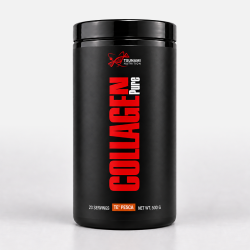
- Collagen 240g: hydrolysed collagen designed to support various tissues; with the addition of vitamin C, it aids protein synthesis and enhances the beneficial effects;
- Flexi-Fort: supports joints for normal function and bone health.
When considering bone health, it is essential to also consider mobility and the function of joints and ligaments. Looking after these tissues promotes the wellbeing of the entire skeletal system.
The Tsunami Nutrition Vitamin D3 + K2 supplement is manufactured by Tn Pharmaand is essential for bone health.
The main role of vitamin D3 is to regulate calcium and phosphorus levels, a process enhanced by the addition of vitamin K, which supports the reabsorption of calcium in the kidneys and that of phosphorus and calcium in the intestines.
It is recommended to take Vitamin D3+K2 in combination with Articolpure Professional 240g, which, thanks to the Fortigel® patent, supports the regeneration of joint cartilage. By supporting joint structures, it helps prevent the onset of osteoarticular conditions.
The importance of hydrolysed collagen
Hydrolysed collagen is the most recommended form and the one most commonly chosen to prevent adverse effects during digestion, thanks to its high bioavailability, which ensures the complete absorption of nutrients that have already been broken down into small peptides so that the body can absorb them fully.
Specific bioactive collagen peptides
Collagen supports the dermis, and the pre-digested peptides absorbed during digestion stimulate the metabolism by promoting the production of collagen and elastin, which enable fibroblasts to function.
The peptides form a robust and stable structure to support the skin, connective tissue, hair and blood vessel walls.
Read the label: what to look for in a supplement
When choosing a collagen supplement, it is essential to read the label to fully understand the nutrients it contains and to assess the quality of the product.
It is important to know the type of collagen – i.e. whether it is hydrolysed or not – the source of the collagen – whether it is bovine or marine – whether vitamin C is present to aid protein synthesis, and whether there are any ingredients that work synergistically with the collagen to support skeletal health, to assess the amount of added sugars and additives in order to avoid weight gain during the course of treatment, and to ensure the correct dosage of collagen is taken to avoid any unwanted side effects.
Dosage and correct intake of collagen
The correct dosagefor collagen supplementation depends on various factors: daily routine, diet and gut sensitivity. It is important not to exceed the recommended daily dose, which is generally between 5 and 10 g.
An effective course of supplementation to see the benefits lasts between 8 and 12 weeks. Taking collagen will not provide significant benefits unless it is combined with a healthy diet and a healthy lifestyle.
How much collagen should you take each day?
The daily dose of collagen varies depending on various aspects of an individual’s routine, including gender, dietary habits and the type of supplement chosen.
It is very important to follow the instructions on the label and seek professional advice to avoid any unwanted side effects. Generally, you should take around 5 to 10 g of hydrolysed collagen per day and maintain a healthy lifestyle to reap the full benefits.
The best time to take it
The best time to take collagen depends on your routine and dietary habits; the important thing is to take it consistently and regularly. You can take collagen in the morning or evening– it makes no difference. If you have a sensitive stomach, you can split the dose into two smaller doses to aid digestion.
Maximising the effects of collagen
To get the most out of collagen supplementation, you canconsume nutrients that support the body’s own collagen production.
Let’s take a look at the best nutrients to combine with collagen supplementation :
- Vitamin C and high-quality peptides: improved absorption
- Hyaluronic acid: to improve tissue hydration
- Zinc: to support cell regeneration
- Copper: to support normal collagen production.
Combining with vitamins C and D and calcium
Combining collagen supplementation with various nutrients significantly enhances the benefits provided by this structural protein , which is so essential for the well-being of the skeletal system.
Vitamin C promotes the absorption and natural synthesis of collagen; vitamin D improves calcium absorption to stabilise bone structure, whilst calcium is an essential mineral for the structural framework.
Other essential nutrients for bones
Other key elements to combine with collagen supplementation may include: magnesium, which promotes bone mineralisation; phosphorus, which makes up a high proportion of the overall bone structure; vitamin K2, which aids the digestion of calcium to prevent it from being deposited in the blood vessels.
Contraindications and side effects
Collagen has always been present in our bodies and, generally speaking, taking collagen supplements does not cause any serious adverse effects.
However, there are certain cases where taking it is not recommended without the advice and professional supervision of a doctor. Those who are allergic to or intolerant of animal proteins; those suffering from gastrointestinal disorders such as bloating or nausea; those taking other medicines that may affect the effectiveness of the nutrients; and women who are pregnant or breastfeeding.
Frequently Asked Questions
What is the best collagen for joints and bones?
Hydrolysed collagen is the best collagen to take as a supplement to support bone structure, thanks to its high absorption rate.
To maximise its effect , you can also take supplements containing other nutrients such as vitamin C, hyaluronic acid and other agents that work synergistically to support collagen synthesis and promote skeletal strength.
How much collagen per day is recommended for osteoporosis?
Generally, the recommended daily dose of hydrolysed collagen as a supplement is 5 to 10 g. If you have a sensitive stomach, you can split the dose into two parts to be taken throughout the day.
Are there any contraindications to taking collagen for bone health?
Supplementation is safe provided you follow the correct dosages and take your own physiological condition into account.
Risks associated with collagen supplementation include being allergic to or intolerant of animal proteins, having a particularly sensitive digestive system, or taking other medicines alongside the supplement that could compromise its effectiveness.
How long does it take to see the benefits of collagen on the bones?
To experience the initial benefits for bones and joints, it is necessary to follow a continuous course of collagen for at least 8 to 16 weeks.
Is it possible to take collagen during the menopause to prevent osteoporosis?
Collagen supplementation during the menopause is effective in combating osteoporosis: it supports collagen production and boosts overall metabolism. Discover the best collagen supplements for the menopausefrom Tsunami Nutrition.
Collagen supplementation is essential for supporting the health of the skeletal system, skin elasticity and for strengthening the structure of nails and hair. Tsunami Nutrition’s supplements are formulated using the finest raw materials to ensure the bioavailability and digestibility of the active ingredients, thereby maximising their benefits.