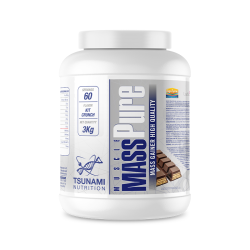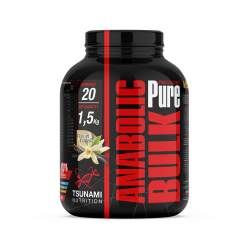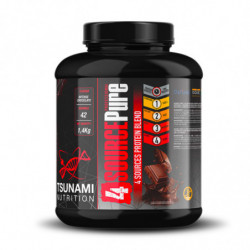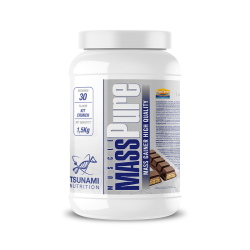
Muscle Mass Pure 1,5 kg
Protein, amino acid, creatine and carbohydrate supplement for muscle mass gain.
€69.80
€34.90
To build muscle mass, it’s not enough to just train hard: you also need energy, recovery, and enough protein every day. Protein supplements for muscle building help you meet your daily needs more easily, especially when it’s difficult to do so through meals alone. The right choice depends on your diet, your goal, and the time of day.
Protein, amino acid, creatine and carbohydrate supplement for muscle mass gain.
Protein, amino acid, creatine and carbohydrate supplement for muscle mass gain.
Comprehensive formula for muscle explosion, recovery and performance maximization. Lactose reduced. Doping tested.
Slow-release protein blend consisting of 4 different protein sources with high biological value. GLUTEN-FREE.
Protein contributes to muscle growth and maintenance. For this reason, it plays a central role in the diet of people who practise bodybuilding, fitness and strength training.
However, a supplement does not build muscle on its own. Increasing muscle mass requires an adequate training stimulus, a diet that provides enough energy and a protein intake consistent with individual needs. Supplementation is particularly useful when it makes it easier to reach this target in a simple and precise way. Research confirms that, when combined with resistance training, an adequate protein intake can support increases in lean mass.
There is no single protein specifically intended for muscle gain. Different sources can contribute to the same goal, and the choice mainly depends on nutritional characteristics, diet and personal preferences. Some examples include:
The overall picture matters most. Before focusing on the type of protein, it is worth checking how much protein is actually consumed throughout the day and choosing the product that makes it easier to reach the desired target.
Both whey concentrates and protein isolates can be used during a muscle-building phase. Both come from milk whey and provide complete proteins, including essential amino acids.
Whey concentrates are a versatile option for daily supplementation. Protein isolates, on the other hand, undergo more extensive filtration and generally have a higher protein percentage, with lower amounts of carbohydrates, fat and lactose.
There is therefore no need to choose isolates on the assumption that they will build more muscle. With an adequate protein intake, diet, training and consistency are the main factors. In the Tsunami Nutrition protein section, you can compare different protein sources and formulations according to your needs.
For people who train regularly, a general reference is around 1.4–2 g of protein per kg of body weight per day. This amount includes all protein consumed through the diet, including meat, fish, eggs, milk and dairy products, legumes and plant sources, as well as any supplements.
For a simple example, at a body weight of 80 kg, this reference corresponds to approximately 112–160 g of total protein per day. This does not mean that this amount needs to come from shakes: supplements are used to cover what is missing after taking regular meals into account.
For an individual serving, a practical reference can be around 20–40 g of high-quality protein, with the amount also adjusted according to body weight and overall diet.
The post-workout period is certainly one of the most convenient times, but there is no window of just a few minutes after which a shake becomes useless. The effect of training on muscle protein synthesis lasts much longer.
Protein can therefore be distributed throughout the day, for example:
Rather than trying to find the perfect minute, it is more useful to distribute protein well throughout the day and consistently meet your individual needs.
Protein powder can be mixed with water or milk, or added to smoothies, porridge, yoghurt and pancakes. Preparation can therefore vary according to the goal and the rest of the diet.
During a muscle-building phase, a shake can also be a practical way to increase energy intake: for example, by combining protein with milk, oats, fruit or nut butter. If the planned calorie intake is already easily reached through meals, a simpler preparation with water may be sufficient.
The principle remains the same: the shake should be built around the diet, not the other way around.
Before buying, it is worth checking the amount of protein per serving, protein source, amino acid profile, ingredients and nutritional values. Taste and solubility also matter: if a product is used regularly, it should be easy to incorporate into the routine.
Individual needs should also be considered. Those looking for a classic post-workout protein can choose whey; those looking for a high protein concentration can consider isolates; those following a plant-based diet can choose a plant protein source. There are also lactose-free proteins and gluten-free proteins for specific dietary requirements.
The Tsunami Nutrition selection allows you to compare different types and find the formulation that best suits your muscle-building phase, without focusing only on the claims on the packaging but looking at what really matters: composition, protein content and practical use.
The proteins to take to increase muscle mass can include whey, isolates, casein or plant-based sources. There is no mandatory type: the important thing is to choose a high-quality protein that helps meet daily requirements and fits your diet.
To build muscle mass, people who engage in regular physical activity can use around 1.4–2 g of protein per kg of body weight per day as a general reference. The precise amount depends on body weight, training, diet and individual goals.
Protein powder can support muscle growth because it helps meet protein requirements, but it works as part of a programme that includes strength training and an adequate diet. Without the training stimulus, simply increasing the number of shakes does not produce the same effect.
There is no single choice that applies to everyone when comparing whey and isolates for muscle gain. Isolates generally provide a higher protein concentration and less fat, carbohydrates and lactose; whey concentrates are a versatile and widely used option. The choice mainly depends on individual nutritional needs.
Protein for increasing muscle mass can be taken throughout the day when you need to complete your protein intake. The post-workout period is convenient, but it is not the only useful time: what matters most is reaching the daily target and distributing protein appropriately across meals.