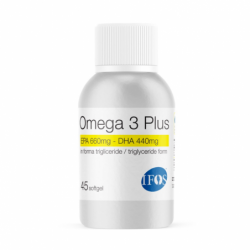
Omega 3 plus 45 softgel
Omega 3 supplement in Triglyceride form, high concentration of EPA and DHA, IFOS certified. Gluten Free. Lactose-free.
€23.41
€19.90
Omega-3 supplements are formulated to supplementthe intake of polyunsaturated fatty acids, which occur naturally in various foods and are available in supplements from different sources and in various formulations.
Among the main omega-3 fatty acids are alpha-linolenic acid (ALA), eicosapentaenoic acid (EPA), and docosahexaenoic acid (DHA), which differ in structure, dietary sources, and role in the body.
Omega 3 supplement in Triglyceride form, high concentration of EPA and DHA, IFOS certified. Gluten Free. Lactose-free.
High-quality IFOS-certified Omega 3 dietary supplement to promote the health of the body. GLUTEN-FREE and lactose-free.
High-quality IFOS-certified Omega 3 dietary supplement to promote the health of the body. GLUTEN-FREE and lactose-free.
Omega 3 dietary supplement to provide fatty acids for skin, bone and cardiovascular health. GLUTEN-FREE and lactose-free
Omega 3 dietary supplement to provide fatty acids for skin, bone and cardiovascular health. GLUTEN-FREE and lactose-free
Omega 3s are formulations useful for supplementing the intake of fatty acids in the diet, with a choice of different sources, formulations and product concentrations.
The main polyunsaturated fatty acids included are EPA and DHA, which are mainly found in fish and fish oils.
The choice of an Omega 3 supplement depends on the source of the fatty acids, the amount of EPA and DHA provided, the concentration and the overall formulation of the product.
To choose the most suitable supplement, it is essential to know your own goals and read the product information regarding the amount of raw material contained in the formulation.
EPA (eicosapentaenoic acid) and DHA (docosahexaenoic acid) are two of the main Omega 3 fatty acids. They are mainly found in oils of marine origin and perform different essential functions in the body.
In particular, EPA and DHA contribute to the normal functioning of the body and to normal heart function.
Fish oil is one of the most common sources of EPA and DHA used in food supplements. There are also plant-based sources of fatty acids known as ALA, which can be derived from marine algae and are completely plant-based.
To evaluate the concentration of Omega 3 active ingredients in formulations, it is essential to check the nutritional table of the product and verify the amount provided by the recommended daily dose.
Omega 3 supplements are available both in capsule and softgel form.
Softgels are particularly common for Omega 3 supplements because they can contain oils and liquid substances inside, while traditional capsules are generally used for powdered ingredients.
The amount of Omega-3 to take per day depends on the diet you are following and the formulation of the product. There is no single recommended amount, but it should be adapted to individual goals. Once you have chosen the product, you can check the instructions provided on the label to avoid unwanted effects. It is important to distinguish the total amount of oil from the actual amount of EPA and DHA provided by the serving. For adults, EFSA indicates an adequate intake of 250 mg per day of EPA and DHA combined. This value refers to total intake and does not automatically represent the amount that should be taken through a food supplement.
When choosing an Omega-3 supplement, it is essential to consider the dose, the sources of the raw materials and the concentration of EPA and DHA. It is useful to check the raw material used, the concentration of EPA and DHA and any additional ingredients. A product containing a high amount of oil does not necessarily provide an equally high amount of EPA and DHA.
Omega-3 can be included in your daily routine by following the instructions provided on the product chosen for your supplementation. The timing of intake may depend on the formulation and your personal habits. It is therefore more important to follow the recommended dose and use the product according to the instructions.
No, Omega-3 supplements are not all the same. Before choosing a product, it is therefore important to assess the nutritional information according to your individual goals. Omega-3 can come from fish oil, krill oil or algae oil, while some formulations may contain different concentrations of EPA and DHA. Even products from the same source can therefore have different nutritional characteristics.
The term Omega-3 refers to a family of polyunsaturated fatty acids that includes several molecules. Among the best known are ALA, EPA and DHA. ALA is mainly found in foods of plant origin, while EPA and DHA are long-chain Omega-3 fatty acids mainly found in fish and seafood and used in different food supplement formulations.