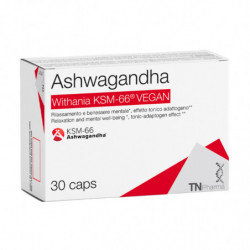
What is Ashwagandha?
Ashwagandha, whose botanical name is Withania somnifera, is a plant belonging to the Solanaceae family. It is also known as Indian ginseng, although botanically it does not belong to the same family as true ginseng.
The root has been used for centuries in the Ayurvedic tradition and contains numerous plant compounds, including withanolides, considered among the plant's main bioactive components.
Today Ashwagandha is often included in supplements intended for those who want to cope more evenly with periods characterized by stress, intense schedules and difficulty relaxing.
The available extracts can however differ greatly in extraction method, part of the plant used and percentage of withanolides. For this reason, when choosing an Ashwagandha supplement, it is useful to assess the standardization of the extract and the overall quality of the raw material.
What are the benefits of taking Ashwagandha?
Ashwagandha is known above all as an adaptogenic ingredient and is particularly valued in formulations dedicated to stress management and mental well-being.
Several clinical studies have observed that some standardized extracts can help reduce the perception of stress and promote a greater sense of calm and adaptation to daily pressures. Some research has also observed changes in cortisol levels, the hormone most associated with the physiological response to stress.
Another particularly interesting area concerns sleep. Some studies suggest that Ashwagandha may promote better quality rest, helping people fall asleep more easily and improving some parameters related to sleep duration and continuity.
For those who lead an active life, Ashwagandha is also being studied in relation to recovery, strength and adaptation to training. The evidence is still evolving, but its profile makes it particularly interesting in formulas aimed at people who want to combine psychophysical well-being, recovery and a dynamic lifestyle.
How and when to take Ashwagandha
Ashwagandha can be taken daily following the amount and directions for use indicated on the chosen supplement. The extracts available on the market can in fact have very different concentrations of withanolides, so it is not appropriate to use a universal dose that applies to every product.
It can be taken in the morning, in the evening or divided throughout the day based on the formulation and personal goal.
Those who want to use it mainly to cope with periods of stress can include it in their daily routine at the most convenient time. When instead it is chosen mainly to promote relaxation and quality of rest, it is often taken in the evening hours.
Studies have generally evaluated continuous use for several weeks, often from 6-8 weeks up to about 3 months. Regular intake is therefore more important than seeking an immediate effect after a single dose.
FREQUENTLY ASKED QUESTIONS ABOUT ASHWAGANDHA
What is Ashwagandha used for?
Ashwagandha is used mainly in supplements dedicated to stress, relaxation and psychophysical well-being. It is one of the best-known adaptogenic plants and some standardized extracts have been studied to help the body cope better with periods of greater mental and physical pressure. For this reason it represents an interesting choice for those who lead an intense life and want to supplement their diet with a plant extract aimed at balance and recovery.
Is it better to take Ashwagandha in the morning or in the evening?
Both options are possible. In the morning it can easily be included in the daily routine of those who use it to cope with demanding periods, while the evening is a particularly popular choice when the goal is to promote relaxation and quality of rest. The best time therefore depends on the formulation used and one's own needs.
Does Ashwagandha help with sleep?
Some studies indicate that certain Ashwagandha extracts can promote an improvement in sleep quality and duration, especially when used regularly for several weeks. It is not a sleeping pill and should not be considered a traditional sedative substance, but it can represent an interesting ingredient in formulations dedicated to relaxation and nighttime rest.
How long can Ashwagandha be taken?
Many clinical studies have evaluated Ashwagandha for periods ranging from several weeks to about three months. For more prolonged use the available safety information is still more limited. It is therefore advisable to follow the directions for use of the chosen supplement and, in the case of continuous intake for long periods, consult a healthcare professional.
What are the contraindications of Ashwagandha?
Ashwagandha is generally well tolerated in the short term, but in some people it can cause nausea, gastrointestinal disturbances or drowsiness. Particular caution is recommended in the presence of thyroid problems, liver diseases or therapies for blood sugar, blood pressure, the immune system or sleep. Its use is also not recommended during pregnancy and breastfeeding.