Carnipure 60 caps
L-Carnitine dietary supplement for fat loss and building lean mass. VEGAN, GLUTEN-FREE and lactose-free.
€37.80
€18.90
L-Carnitine is a substance naturally present in the body, synthesized from the amino acids lysine and methionine and concentrated primarily in muscle tissue. It plays a fundamental role in energy metabolism because it helps transport long-chain fatty acids into the mitochondria, where they can be used in energy production processes. It is found primarily in animal-based foods, such as red meat, fish, and dairy products, while plant-based sources contain smaller amounts.
L-carnitine supplements are widely used in the fitness, sports, and weight management sectors. They are primarily used by active individuals and those who wish to incorporate this substance into their diet. Research has also examined L-carnitine in relation to performance, recovery, and lipid metabolism, with results varying depending on the study population and the protocol used. It is available in various forms, including L-carnitine, L-carnitine L-tartrate, and acetyl-L-carnitine.
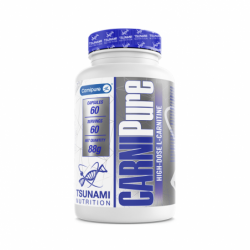
L-Carnitine dietary supplement for fat loss and building lean mass. VEGAN, GLUTEN-FREE and lactose-free.
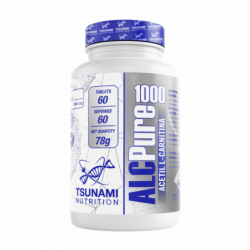
Acetyl L-Carnitine dietary supplement in tablets to speed up fat reduction during dieting. VEGAN OK, GLUTEN-FREE AND LACTOSE-FREE.
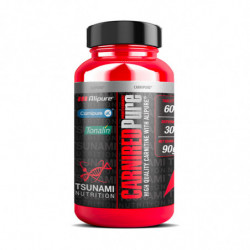
Weight loss-promoting supplement based on patented Carnipure®, Alipure® and Tonalin®. VEGAN, GLUTEN-FREE and lactose-free.
L-Carnitine is a natural compound derived from the amino acids lysine and methionine. The human body is generally able to produce adequate amounts of it on its own, especially in the liver and kidneys, and then distribute it to the tissues that need it most. Much of the carnitine present in the body is stored in the muscles.
Its best-known biochemical function concerns fatty acid metabolism. L-Carnitine contributes to their transport across the mitochondrial membrane, allowing long-chain fatty acids to reach the mitochondria, where they can enter beta-oxidation processes and contribute to energy production.
This mechanism explains why carnitine has become particularly popular in the field of sports supplementation and formulations aimed at fat metabolism. However, the fact that it physiologically participates in the utilization of fatty acids does not mean that taking more L-Carnitine automatically results in greater body fat consumption.
L-Carnitine can also be obtained through diet. The main sources are red meat, poultry, fish, milk and dairy products, while fruit, vegetables and grains provide much lower amounts.
The main nutritional interest in L-Carnitine derives from its physiological role in energy metabolism and in transporting fatty acids to the mitochondria.
For this reason it is frequently included in supplements intended for people who engage in physical activity, endurance sports, bodybuilding and programs focused on body composition.
The relationship between L-Carnitine and weight loss has also been extensively studied. Some meta-analyses have observed reductions in body weight in certain groups of subjects, but the average effect is modest and the results of individual studies are heterogeneous. L-Carnitine should therefore not be considered a substitute for a calorie deficit, physical activity or a balanced diet.
L-Carnitine supplements should be used in accordance with the dosage and directions for use indicated on the label of the individual product, because the concentration and form of carnitine can differ considerably from one formulation to another.
There is no time of day that has been universally proven to be best for taking L-Carnitine. In sports it is often used before training, but there is no solid evidence that a single intake immediately before a workout necessarily produces an acute effect on performance or fat oxidation.
For this reason, when it is used as a daily supplement, consistency of intake and adherence to the dose specified by the product are generally more important than choosing a precise minute before or after training.
The scientific literature includes studies that have used very different amounts and supplementation periods.
L-Carnitine participates in the transport of long-chain fatty acids into the mitochondria, where they are used in energy production processes. It is precisely this metabolic function that explains its widespread use in sports supplements and in formulations dedicated to lipid metabolism. In healthy people, however, the body is generally able to synthesize the carnitine needed for normal physiological functions on its own.
L-Carnitine is not a fat burner capable of causing significant weight loss on its own. Some studies have observed an average reduction in body weight in subjects taking carnitine compared with control groups, while others have found no significant benefits. To lose body fat, an appropriate calorie balance, physical activity and consistency over time remain essential.
There is no rule that applies to everyone. L-Carnitine is often recommended as a pre workout, but the available evidence does not show that taking it immediately before training guarantees an acute increase in performance or fat consumption. If it is part of your supplementation regimen, it is preferable to follow the product instructions and include it regularly in your daily routine.
There is no universal amount suitable for every person and every formulation. Studies have used very different doses, often in the range of several grams per day, but this does not mean that such amounts are appropriate for every supplement. It is therefore necessary to follow the daily dose recommended by the manufacturer. The NIH notes that high dosages may increase the likelihood of adverse effects.
L-Carnitine is generally well tolerated, but high amounts can cause nausea, vomiting, abdominal cramps, diarrhea and a characteristic fish-like body odor. Particular caution is recommended in the presence of medical conditions, seizure disorders, kidney problems or drug therapies. In these cases, as well as during pregnancy and breastfeeding, it is advisable to seek medical advice before use.