Magnesio bisglicinato 60 caps
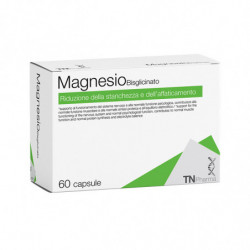
The most bioavailable form of magnesium for proper functioning and well-being of the body. Vegan. Gluten-free. Lactose-free.
€19.88
€16.90
Magnesium bisglycinate is a form of magnesium in which the mineral is bound to glycine, an amino acid naturally present in the body. This form is used in dietary supplements as a source of magnesium and is available in various formulations and dosing options.
Magnesium is an essential mineral involved in numerous physiological processes. It contributes tothe normalfunctioning of the nervous system and muscle function, to normal energy metabolism, and to the reduction of tiredness and fatigue. It also contributes tonormal electrolyte balance and to the maintenance of healthy bones and teeth.
The most bioavailable form of magnesium for proper functioning and well-being of the body. Vegan. Gluten-free. Lactose-free.
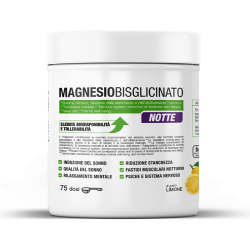
Magnesium bisglycinate for overnight with high bioavailability and intestinal tolerability. VEGAN. LACTOSE-FREE. GLUTEN-FREE. SUGAR-FREE.
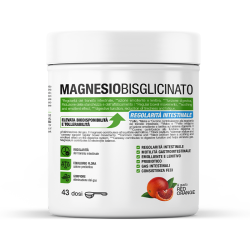
Formula with magnesium bisglycinate and plant extracts for intestinal regularity and transit. Vegan. Gluten-free. Sugar-free. Lactose-free.
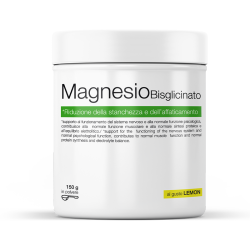
The most bioavailable form of magnesium powder for proper functioning and well-being of the body. Vegan. Gluten-free. Lactose-free.
Magnesium bisglycinate is a form of magnesium in which the mineral is bound to a molecule of an amino acid called glycine.
Magnesium is an essential mineral that contributes to the normal functioning of the nervous system and normal muscle function, as well as to normal energy metabolism and the reduction of tiredness and fatigue.
Magnesium bisglycinate differs from other forms of magnesium in the way the mineral is present in the formulation, as it is associated with glycine.
In food supplements, it can be used as the sole source of magnesium or as part of more complex formulations.
Magnesium bisglycinate can be available in capsules or powder, and the choice may depend on personal preferences and ease of use.
The main difference concerns the format and method of intake rather than the nature of the magnesium used, which remains the same; it may be intended to provide a particular benefit when combined with other ingredients in the formulation.
Magnesium requirements can vary depending on different individual factors and diet; therefore, the amount present in a supplement should not be assessed separately from the overall dietary intake.
There is no universal amount of magnesium bisglycinate that is suitable for everyone. To assess the intake, it is important to consider the amount of magnesium provided by the daily dose and follow the instructions provided on the product label.
Total magnesium intake should also be considered together with the amount obtained from food and any other supplements. EFSA indicates a tolerable upper intake level of 250 mg per day for magnesium from certain forms of supplements; this value does not include magnesium naturally present in foods and beverages.
Depending on the function of the supplement, a suitable time of intake may be indicated on the product packaging and can be followed.
The best time to take a magnesium bisglycinate supplement depends on your personal routine and the specific goal of supplementation.
For specific formulations, such as products combining magnesium bisglycinate with other ingredients, it is important to refer to the directions for use of the individual formulation.
Choosing the magnesium bisglycinate supplement that best suits your needs depends on the amount of magnesium in the formulation, the additional ingredients and the format you prefer to use.
It is useful to check how much magnesium is actually provided by the daily dose, rather than relying solely on the total amount of magnesium bisglycinate contained in the product.
The presence of other ingredients can also differentiate formulations. Some products contain only magnesium bisglycinate, while others may be enriched with additional substances or ingredients designed for specific formulations.
Magnesium bisglycinate cannot be considered better than other forms of magnesium. The different forms are mainly distinguished by the compound to which magnesium is bound and may differ in composition, the amount of magnesium provided and the characteristics of the formulation.
The choice may also depend on individual characteristics and product tolerability. It is therefore not appropriate to establish that one form is better than another in absolute terms without considering the specific formulation and the individual's needs.