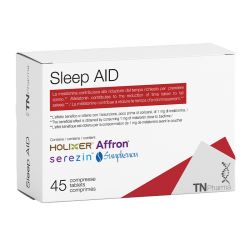
Sleep AID 45 tablets
A formula that helps promote relaxation for sleep and reduces the time it takes to fall asleep. Vegan. Gluten-free. Lactose-free.
€34.00
€28.90
Melatonin is a hormone produced naturally by the body that plays a role in regulating the sleep-wake cycle. Its production is primarily linked to the light-dark cycle: it tends to increase in the evening and at night, while exposure to light reduces its production. For this reason, melatonin is closely linked to the mechanisms that regulate the normal circadian cycle.
Melatonin is found in various dietary supplements and is available in different formulations. As a dietary supplement, melatonin is known for its role in reducing the time it takes to fall asleep when taken in the amount specified in the conditions of use for the relevant authorized claim.
A formula that helps promote relaxation for sleep and reduces the time it takes to fall asleep. Vegan. Gluten-free. Lactose-free.
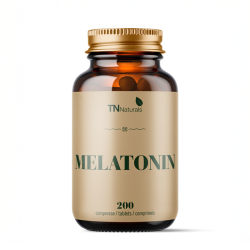
100% natural melatonin to regulate sleep patterns. VEGAN, GLUTEN FREE and LACTOSE FREE
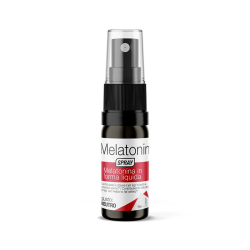
High-quality liquid melatonin: relieves sleep disturbances and reduces the time to fall asleep. Vegan. Gluten-free. Lactose-free.
Melatonin is a hormone naturally produced by the body, mainly by the pineal gland. Its levels tend to increase in the evening and at night, contributing to the regulation of the sleep-wake rhythm.
It is used in food supplements, available in different formulations and dosages, to contribute to reducing the time needed to fall asleep.
Melatonin intake may be used in specific situations where the aim is to influence the time needed to fall asleep and contribute to managing a temporary alteration of the circadian rhythm.
The choice of a melatonin supplement may depend on the amount of melatonin per dose, the formulation and the format of intake.
To compare products, it is therefore useful to check the amount of melatonin per dose, any other ingredients present, the number of doses per package and the directions for use provided by the manufacturer.
The main difference concerns the method of intake, which can be chosen according to convenience and individual preferences.
Tablets allow you to take a predetermined amount of the product. A spray, on the other hand, allows intake in liquid form through applications according to the directions provided on the label.
There is no single amount of melatonin that is valid for every situation and every product.
For the European health claim relating to the reduction of the time needed to fall asleep, the specified condition of use is 1 mg of melatonin per serving, taken shortly before bedtime.
This is the amount required to use this specific health claim and is not a universal dose applicable to all supplements or all situations.
For this reason, it is important to follow the daily dose indicated on the label.
The timing of intake depends on the intended use and the instructions provided on the product. Due to its benefits associated with rest, it is generally taken shortly before bedtime.
The format may also affect the practical method of intake: tablets, gummies and sprays may have different instructions. It is therefore advisable to follow the directions for use provided on the packaging and maintain an intake routine that is consistent with your daily habits.
No, melatonin supplements may differ in terms of the amount of melatonin, formulation, additional ingredients and format.
Some products contain melatonin as the only main ingredient, while other formulations may combine it with other components. The amount of melatonin per serving may also vary between different products.
When comparing different formulations, it is therefore useful to check the amount of melatonin per serving, any additional ingredients, the format and the directions for use provided on the label.
Melatonin is a hormone naturally produced by the body and plays a role in the regulation of the circadian rhythm and sleep-wake cycle. Its production mainly follows the light-dark cycle: it tends to increase during the evening and at night, while exposure to light can influence its production.
Melatonin should not be considered a substitute for a proper sleep routine: regular sleep times, a suitable environment for rest and appropriate daily habits remain important factors in supporting a normal sleep-wake cycle.