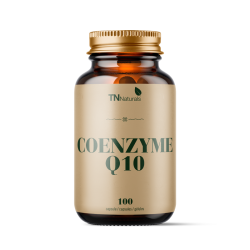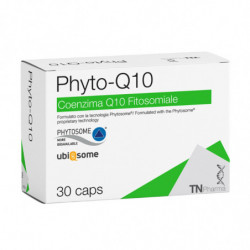
Phyto q10 30 caps
Coenzyme Q10 UbiQsome®️, a formula designed to increase phospholipid absorption. Vegan. Gluten-free. Lactose-free.
€24.90
€21.17
Coenzyme Q10, also known as CoQ10, is a substance naturally present in the body and particularly concentrated in tissues with high energy demands. It plays an important role within the mitochondria, where it participates in the cellular processes involved in energy production. CoQ10 also possesses antioxidant properties and occurs naturally in certain foods, particularly meat, fish, and organ meats.
As we age, levels in the body can decline, which is why Coenzyme Q10 supplements are particularly popular in formulas designed to support vitality, well-being, and healthy aging. In supplements, it is primarily found as ubiquinone or as ubiquinol, its reduced form. Thanks to its biological role, CoQ10 is a well-known ingredient in the nutraceutical industry and is often combined with other nutrients in formulations designed for daily well-being.
Coenzyme Q10 UbiQsome®️, a formula designed to increase phospholipid absorption. Vegan. Gluten-free. Lactose-free.
Counteracts oxidative stress, promotes energy metabolism and well-being of the body. Lactose-free, Gluten-free, Vegan formula.
Coenzyme Q10 is a fat-soluble molecule naturally synthesized by the body and present in virtually all cells. The name “ubiquinone” derives precisely from its widespread distribution in human tissues.
Its biological function is closely linked to mitochondria, the cellular structures responsible for ATP production. CoQ10 is in fact involved in the electron transport chain, one of the main mechanisms through which cells convert nutrients into usable energy.
The highest concentrations are found in organs characterized by intense metabolic activity, such as the heart, liver, kidneys and pancreas.
Coenzyme Q10 can also be obtained through food, but the amounts present in common foods are relatively low. For this reason, specific CoQ10 supplements are available, often formulated in capsules or softgels to make daily intake easier.
Interest in Coenzyme Q10 stems mainly from its physiological role in cellular energy processes and its antioxidant properties.
For this reason, it has become a widely used ingredient in formulations aimed at adults, physically active individuals and those who wish to supplement their diet with a substance naturally present in the body.
CoQ10 has also been studied for many years in relation to cardiovascular well-being, fatigue, physical activity and processes related to cellular aging. Research results are not, however, consistent across all these areas and, in the European Union, no specific health claims are currently authorized that would allow these benefits to be attributed to Coenzyme Q10 as guaranteed effects of supplementation.
It nevertheless remains one of the best-known molecules in the field of mitochondrial nutrition and is frequently chosen as part of supplementation programs dedicated to general well-being and vitality.
Coenzyme Q10 should be taken according to the dosage recommended on the label of the specific supplement, since concentrations and formulations can vary significantly from one product to another.
As it is a fat-soluble substance, it is generally recommended during a meal containing some fat, a condition that may promote its absorption.
Many people prefer to take it at breakfast or lunch, so that it can be easily incorporated into their daily routine. There is, however, no universally mandatory time: regular intake and adherence to the product instructions remain the main considerations.
If you are undergoing drug therapy, especially with anticoagulants such as warfarin, blood pressure medications or specific treatments, it is advisable to seek medical advice before starting supplementation.
Coenzyme Q10 is naturally present in cells and participates in the mitochondrial processes through which ATP, the main form of energy used by the body, is produced. It is also involved in cellular redox systems. These characteristics explain why it is frequently used in supplements dedicated to vitality, healthy aging and general well-being.
There is no mandatory time. It is generally taken at breakfast or lunch, preferably together with a meal containing fat, since CoQ10 is fat-soluble. For those who experience a greater feeling of activation after taking it, it may be more practical to avoid the hours immediately before sleep.
The dosage depends on the concentration and formulation of the supplement. Products with very different amounts of CoQ10 are available on the market and there is no universal dose suitable for all needs. It is therefore advisable to always follow the daily dose indicated on the label and not increase it on your own in the belief that you will obtain greater benefits.
Ubiquinone and ubiquinol are two forms of Coenzyme Q10. Ubiquinone is the oxidized form, while ubiquinol is the reduced form. The body is able to convert one form into the other. The choice of supplement should therefore not be based exclusively on the name of the form used, but also on the overall quality of the formulation and the technology used to promote its absorption.
Statins can reduce circulating levels of Coenzyme Q10 and it is precisely for this reason that the combination of statins and CoQ10 supplements has been extensively studied. However, the available evidence does not conclusively demonstrate that supplementation prevents or resolves muscle pain associated with statins. Those undergoing therapy with these medications should therefore avoid self-treatment and discuss any potential supplementation directly with their doctor.