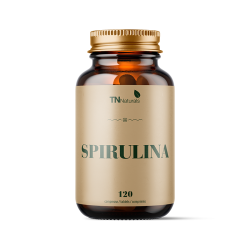
Spirulina 120 tbl
Natural spirulina to support energy, vitality and overall well-being during times of physical and mental fatigue. VEGAN. GLUTEN-FREE. LACTOSE-FREE.
€35.81
€17.90
Spirulina is a microalga used in food and dietary supplements due to its unique nutritional profile, which includes proteins, vitamins, minerals, and other compounds naturally present in the raw material.
Spirulina is distinguished primarily by its protein content and the presence of various micronutrients and bioactive compounds. For this reason, it is used as an ingredient in various formulations designed to supplement the diet.
Natural spirulina to support energy, vitality and overall well-being during times of physical and mental fatigue. VEGAN. GLUTEN-FREE. LACTOSE-FREE.
Spirulina is a microalgae, more precisely a cyanobacterium, naturally rich in proteins, vitamins, minerals and other bioactive compounds.
It is used to increase metabolic energy, purify the body and strengthen the immune system.
Spirulina is characterised by its high protein content and the presence of pigments such as phycocyanin, as well as various minerals and other nutrients.
Spirulina mainly contains protein, as well as carbohydrates, lipids, minerals and various plant compounds.
Spirulina is mainly cultivated in aquatic environments rich in mineral salts. Among the species most commonly used in food supplements are Arthrospira platensis and Arthrospira maxima.
There is no specific time of day that is suitable for everyone. Spirulina can be taken according to the instructions provided on the product label.
Spirulina may be available in tablets, capsules, powder or other formulations, so the method of use may vary from one product to another.
The presence of any additional ingredients may also affect how the product should be used. It is therefore preferable to refer to the specific composition and instructions for the product, without considering a particular time of day as being better.
The amount depends on the formulation and concentration of the product. It is advisable to follow the daily dose indicated by the manufacturer and not exceed it.
Scientific studies on spirulina have used different dosages, which may also vary depending on the duration of supplementation and the objective of the research.
A recent systematic review, for example, included studies using amounts ranging from 1 to 8 g per day, while highlighting significant variability. These values should not automatically be interpreted as recommended dosages for daily supplementation.
It is advisable to not exceed the dose indicated by the manufacturer and to consider the specific formulation of the supplement, especially when other ingredients are included.
To choose a spirulina supplement, it is useful to compare the amount per serving, product format, composition and method of intake, always checking the information provided on the label.
Spirulina is characterised by the presence of proteins, pigments such as phycocyanin, carotenoids and other compounds naturally present in the raw material. However, its composition may vary depending on the species, growing conditions and processing methods.
The choice should be based on the actual characteristics of the formulation and individual supplementation needs, without considering a higher amount of spirulina as automatically meaning that a product is more suitable.