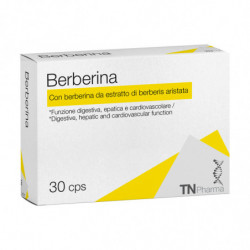
Berberina 30 caps
High-dose Berberine supplement with active ingredient titrated to 98%. Vegan. Gluten-free. Lactose-free.
€16.90
€14.36
Berberine is a natural alkaloid found in various plant species, including Berberis aristata, and is currently one of the most promising ingredients in supplements designed to support metabolism. It is studied primarily in relation to carbohydrate and lipid metabolism and is therefore frequently included in formulas designed for metabolic control and weight management. In supplements, it is often used as berberine HCl, a concentrated and standardized form that allows for precise measurement of the amount ingested. Scientific interest focuses particularly on its interaction with various cellular mechanisms that regulate nutrient utilization and energy metabolism.
Berberine is also studied in relation to blood glucose, insulin sensitivity, cholesterol, and triglycerides. Because of these properties, it is a particularly valued ingredient among those who wish to complement a balanced diet and physical activity with nutritional support aimed at metabolic well-being. However, its effects on body weight are generally moderate and do not replace a healthy diet and lifestyle.
High-dose Berberine supplement with active ingredient titrated to 98%. Vegan. Gluten-free. Lactose-free.
Berberine is appreciated above all for its interesting metabolic profile. Clinical studies have investigated its use in relation to glucose metabolism, insulin sensitivity and lipid profile, with interesting results especially in individuals with metabolic alterations.
It is precisely this characteristic that has made it one of the most widely used ingredients in modern formulations dedicated to the management of carbohydrates and fats.
Berberine is also studied in relation to weight and body composition. Some research highlights favorable effects, but generally of moderate magnitude: it is therefore more appropriate to consider it a support to be included in a well-structured nutritional program rather than a true “fat burner”.
It may be particularly interesting for:
Berberine does not contain caffeine and may therefore also be interesting for those who wish to avoid stimulant-based thermogenic formulas.
Berberine should always be taken following the amounts and methods indicated on the label of the specific supplement, since concentration and formulation may differ between different products.
It is frequently taken around mealtimes, especially when the goal of the formulation concerns nutrient metabolism. Some supplements involve a single intake, while others divide the daily amount between several meals.
Consistency is an important aspect: studies on Berberine generally evaluate continuous use and not an occasional effect after a single intake.
Berberine may also have gastrointestinal effects and interact with various medications. Particular attention is necessary especially for those who use medications for blood sugar, blood pressure, coagulation or other chronic therapies.
Berberine is used mainly in supplements dedicated to metabolism. Research has investigated its interaction with glucose and lipid metabolism and with some mechanisms involved in energy regulation. For this reason it has become particularly popular in formulas aimed at metabolic control, body composition and cardiovascular well-being.
Berberine should not be considered a weight-loss product capable of causing significant weight loss on its own. Some studies have observed favorable effects on weight and on some metabolic parameters, but on average the results on weight loss are modest. Its use therefore makes more sense as support within a program based on a controlled diet, physical activity and an adequate calorie balance.
Berberine is frequently used around mealtimes and some formulations involve taking it shortly before or immediately after eating. However, there is no universal rule valid for all products: amount, concentration and number of intakes may vary. It is therefore preferable to follow the directions for use provided on the chosen supplement.
No. Berberine is a plant compound also used in dietary supplements, while Metformin is a medication used in the treatment of specific metabolic conditions. Some research studies metabolic mechanisms that may have points in common, but Berberine should not be considered a natural substitute for Metformin or other therapies prescribed by a doctor.
Berberine may cause mainly gastrointestinal disorders such as nausea, cramps, diarrhea or constipation. It may also interact with various medications and requires particular caution in the case of therapies for blood sugar, blood pressure, coagulation or immunosuppressive medications. Use is generally not recommended during pregnancy and breastfeeding; those undergoing drug therapy should discuss it with their doctor before taking it.