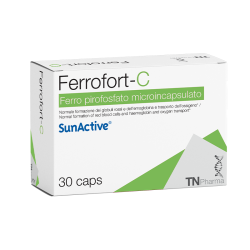
Ferrofort-c 30 caps
Dietary supplement containing SunActive® microencapsulated pyrophosphate iron and vitamin C. Vegan. Gluten-free. Lactose-free.
€14.91
€12.67
Iron is an essential mineral that plays a key role in numerous bodily processes, particularly in the formation of hemoglobin and the normal transport of oxygen in the blood. It contributes to normal energy metabolism and helps reduce tiredness and fatigue, characteristics that make it particularly beneficial during periods of increased physical and mental demand. Iron also supports the normal function of the immune system and normal cognitive function.
The main dietary sources include meat, fish, eggs, legumes, leafy green vegetables, and grains. During certain stages of life or when dietary intake does not provide an adequate supply, an iron supplement can serve as a valuable nutritional support. Various forms of iron are available, developed to offer different absorption rates and tolerability profiles. Combining iron with vitamin C is particularly beneficial because vitamin C enhances iron absorption.
Dietary supplement containing SunActive® microencapsulated pyrophosphate iron and vitamin C. Vegan. Gluten-free. Lactose-free.
Iron is an essential micronutrient that the body must obtain through food. One of its most important functions is related to the production of hemoglobin, the protein found in red blood cells responsible for transporting oxygen from the lungs to the different tissues.
Iron in fact contributes to the normal formation of red blood cells and hemoglobin and to the normal transport of oxygen in the body.
It is also involved in energy metabolism and normal cognitive function, as well as contributing to the normal function of the immune system and the process of cell division.
The body stores some of the iron in the form of ferritin, creating reserves that can be used when needed. A varied and balanced diet is therefore important for maintaining an adequate intake of this mineral over time.
In supplements iron can be present in different forms, such as ferrous salts or chelated forms, including iron bisglycinate. The choice may depend on the amount of elemental iron provided, the formulation and individual tolerability.
Iron is particularly valued when seeking to support energy and vitality because it contributes to the reduction of tiredness and fatigue and to normal energy metabolism.
Its role in the normal formation of red blood cells and hemoglobin also makes it essential for the physiological transport of oxygen to tissues, including muscles.
The main nutritional benefits of iron include:
Because of these characteristics, iron supplements can be particularly useful when requirements increase or dietary intake is insufficient, always taking into account one's actual needs.
Those who engage in physical activity should also pay attention to an adequate intake of iron, especially considering its role in oxygen transport and energy metabolism.
Iron supplements must be taken according to the dose indicated on the package, considering that different formulations may provide different amounts of elemental iron.
In general iron is absorbed better away from meals, for example before eating. However, some people may experience nausea or stomach discomfort when taking it on an empty stomach: in these cases it may be more practical to take it during or immediately after a meal, following the directions for the specific product.
A very common combination is with vitamin C, which increases iron absorption. It may therefore be useful to choose formulations that contain both nutrients or to take iron close to foods rich in vitamin C.
Conversely, tea, coffee, high amounts of calcium and some foods rich in phytates can reduce its absorption when consumed at the same time.
When supplementation is used to correct a documented deficiency, amounts and duration should be determined based on test results and the doctor's recommendations.
Iron plays an essential role in the production of hemoglobin and in the transport of oxygen within the body. It also contributes to normal energy metabolism, cognitive function, the functioning of the immune system and the reduction of tiredness and fatigue. For this reason it is one of the most important minerals to maintain at adequate levels through diet and, when necessary, supplementation.
Insufficient iron intake or stores may be associated with tiredness, weakness, reduced ability to concentrate and lower exercise tolerance. These symptoms, however, are not specific to iron deficiency. To determine whether a deficiency actually exists it is necessary to undergo the appropriate blood tests, such as a complete blood count, ferritin and other parameters indicated by the doctor.
It is not necessary to take iron at a specific time. It is often taken in the morning or away from meals to promote absorption, but individual tolerability is important. If it causes nausea or stomach discomfort on an empty stomach, it can be taken with a meal according to the product directions. More important than the specific time is maintaining good consistency in taking it.
Yes. The combination is particularly useful because vitamin C increases iron absorption. For this reason many supplements directly combine the two nutrients. Consuming foods rich in vitamin C, such as citrus fruits, kiwi or peppers, together with sources of plant-based iron can also promote its use by the body.
How long should an Iron supplement be taken?
The duration depends on the reason for supplementation. If the product is used simply to complement the diet, it is sufficient to follow the directions indicated on the label. In the presence of a confirmed deficiency, however, supplementation may be required for several weeks or months and should be monitored through blood tests. Even after hemoglobin has returned to normal it may take more time to replenish iron stores, which is why it is important to follow the doctor's recommendations without stopping or extending supplementation on your own.