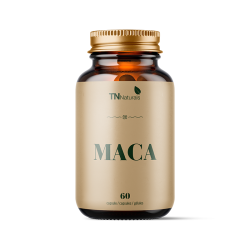
Maca 60 caps
Maca supplement with tonic-adaptogenic action to combat physical and mental fatigue VEGAN, GLUTEN-FREE and lactose-free
€25.80
€12.90
Tsunami Nutrition ’s Peruvian maca supplements are made from maca (Lepidium meyenii), a plant native to the Andean regions of South America that has traditionally been used as a food and is now available in various dietary supplement formulations.
The most commonly used part of maca is the root, which is harvested, dried, and then processed into powder or used to produce specific extracts. It contains carbohydrates, proteins, fiber, minerals, and various plant compounds, the presence and quantity of which may vary depending on the plant variety, the raw material used, and the processing method.
Maca supplement with tonic-adaptogenic action to combat physical and mental fatigue VEGAN, GLUTEN-FREE and lactose-free
Peruvian maca (Lepidium meyenii) is a plant native to the Andes, traditionally used as a food and as an ingredient in food supplements. Traditionally associated properties of maca include support for vitality, energy and general well-being.
Maca is a root belonging to the Brassicaceae family. Its composition includes carbohydrates, proteins, fibre and various plant compounds.
Maca is native to the mountainous regions of the Andes, particularly Peru, where it has been cultivated for centuries, including for food use.
It is important to check the amount of maca provided by the daily dose, paying attention to the recommended serving and the form used.
Maca in capsules is a practical format that allows you to take a predefined amount of the ingredient.
There is no specific time of day that is suitable for everyone. It is advisable to follow the instructions provided on the product label.
The method of intake may depend on the formulation and the amount of the ingredient provided per serving. Studies on maca have also used different methods of administration. Therefore, it is not possible to establish a universally better time for everyone.
The amount of maca to take per day depends on the formulation and concentration of the product. Therefore, there is no universal dosage that applies to all maca supplements.
Scientific research has used different amounts and preparations, also depending on the objective of the study. In one clinical trial, for example, 3 g per day of maca extract was used for 12 weeks, while other studies used different amounts and formulations. However, these dosages should not automatically be interpreted as recommendations for daily supplementation.
To choose a maca supplement, it is useful to first evaluate the amount of maca per serving and the form of the ingredient, checking whether the product contains root powder or an extract.
It is important to consider whether the extract is standardised, the part of the plant used, the format and the presence of other ingredients. The composition of maca may in fact vary depending on the plant variety, growing conditions and processing methods.
The choice should be based on the actual characteristics of the formulation. The available evidence on maca covers different areas, including sexual function and physical performance, but effects are not guaranteed for all products or all people.