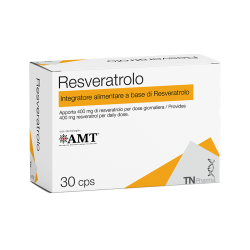
Resveratrolo 30 caps
High-quality resveratrol supplement with AMTΩ® patent that optimizes its bioavailability. Vegan, gluten-free, lactose-free.
€23.41
€19.90
Resveratrol is a natural polyphenol found primarily in the skins of red grapes, but also in berries, peanuts, and other plant species. It has become one of the best-known ingredients in the supplement industry focused on wellness, vitality, and healthy aging. It belongs to the stilbene family and is naturally produced by plants as a defense mechanism. Resveratrol has been extensively studied for its antioxidant properties and its potential role in processes related to oxidative stress and cellular aging.
In supplements, it is often used in the form of trans-resveratrol, which is particularly interesting from a nutraceutical perspective. Research has also explored its relationship with metabolism and cardiovascular health, although no specific European health claims are authorized for resveratrol. Resveratrol supplements therefore represent an attractive option for those who wish to enrich their daily routine with one of the most extensively studied polyphenols in the fields of wellness and longevity.
High-quality resveratrol supplement with AMTΩ® patent that optimizes its bioavailability. Vegan, gluten-free, lactose-free.
Resveratrol is a natural compound belonging to the polyphenol family and, more precisely, to the stilbenes. It is a phytoalexin, that is, a substance produced by certain plants in response to stressful conditions or attack by microorganisms.
One of the best-known dietary sources is the skin of red grapes, but Resveratrol is also found in blackberries, blueberries, peanuts, cocoa and other plant-based foods. In dietary supplements it is normally used in concentrated and standardized amounts, making it easier to include it in your daily routine.
Among the different configurations of the molecule, trans-resveratrol is the one most widely used and studied in the nutraceutical field.
Interest in this ingredient stems mainly from the numerous studies devoted to its biological activities and its role in mechanisms related to oxidative stress, cellular metabolism and healthy aging.
Resveratrol is one of the most studied natural ingredients in the field of nutrition dedicated to well-being and longevity.
Scientific research has analyzed in particular its antioxidant properties and interactions with various cellular mechanisms involved in the response to oxidative stress. It is precisely this profile that has made Resveratrol particularly popular in supplements dedicated to healthy aging and maintaining general well-being.
Studies have also investigated its possible relationship with metabolism, vascular function and various cardiometabolic parameters. The results are interesting, but not always consistent across different populations and different study protocols.
For this reason Resveratrol can be considered a nutraceutical ingredient of particular interest for those who wish to supplement their diet with a widely studied plant polyphenol, without attributing therapeutic effects to it or considering it a substitute for a healthy lifestyle.
Resveratrol can be easily included in your daily supplementation routine, always following the dose and directions for use indicated on the chosen product.
There is no time of day universally considered best. It can be taken in the morning or during one of the main meals, choosing a time that makes it easy to maintain good consistency in use.
The amounts found in supplements can vary considerably depending on the concentration of the extract and the percentage of trans-resveratrol used. For this reason it is more appropriate to follow the daily dose specified by the particular formulation rather than use a standard dosage that applies to everyone.
If you are undergoing drug therapy, especially with anticoagulants, antiplatelet agents or drugs that can alter blood clotting, it is advisable to consult your doctor before use.
Resveratrol is a natural polyphenol studied mainly for its antioxidant properties and for its interaction with various cellular processes. In supplements it is particularly valued in formulations dedicated to healthy aging, vitality and general well-being. It is one of the best-known plant-based ingredients in the nutraceutical sector for those who wish to enrich their diet with selected polyphenols.
There is no mandatory time to take Resveratrol. It can be used in the morning or during a meal, based on the directions of the specific supplement and your own habits. For daily supplementation, consistency is generally more important than choosing a precise time of day.
There is no universal amount suitable for every person, because the available supplements can have very different concentrations. Scientific studies have also used extremely variable dosages. The best solution is therefore to follow the daily amount stated on the product label, avoiding increasing the dose on your own in the belief that you will achieve greater results.
Resveratrol is not a fat burner and should not be considered a weight-loss supplement. Some studies have analyzed its possible relationship with body weight, metabolism and body composition, obtaining overall modest and not always consistent results. It can therefore be included in a general well-being strategy, while diet, physical activity and energy balance remain essential for reducing body fat.
Resveratrol is generally used in supplements in amounts well below those employed in many experimental studies. At high dosages, gastrointestinal disturbances in particular may occur. Particular caution is also necessary when taking anticoagulants, antiplatelet agents or certain anti-inflammatory drugs, because interactions affecting clotting may occur. In the case of therapies, pregnancy, breastfeeding or particular conditions it is therefore advisable to seek medical advice before use.