- Training
- 11 views

- Mass gainer: what it is and what it is used for
- Ingredients and characteristics
- Proteins, carbohydrates and amino acids: the role of macronutrients
- Creatine, vitamins and other functional ingredients
- How to use a mass gainer in your sports routine
- When to take a mass gainer: before or after training
- How to incorporate it into your diet for muscle growth
- Frequently asked questions
- Does a mass gainer help increase muscle mass?
- How many times a day can you take a mass gainer?
- Is it better to take a mass gainer or protein powder?
- Can a mass gainer replace a meal?
- What should you look for when choosing a mass gainer?
Mass gainer: what it is and what it is used for
A mass gainer is a dietary supplement formulated to provide a combination of nutrients, especially carbohydrates and proteins, in a preparation that can be consumed alongside your usual diet. It is mainly used by people who want to increase their daily energy intake during a phase focused on muscle growth.
To build muscle mass, resistance training must be supported by a diet that provides sufficient energy and protein. When meals do not make it easy to meet your nutritional requirements, a gainer can help you conveniently supplement some of the nutrients you need.
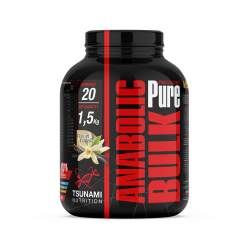
Tsunami Nutrition has developed Anabolic Bulk Pure Professional, a formula containing whey protein, various carbohydrate sources, creatine monohydrate, amino acids, vitamins, minerals and other functional ingredients.
It is important to remember that a mass gainer does not automatically lead to an increase in muscle mass. Results depend on the overall combination of diet, training, recovery and consistency over time.
Ingredients and characteristics of a complete mass gainer
When evaluating a mass gainer, it is useful to check the amount of calories, protein, carbohydrates and fat per serving. It is equally important to review the added ingredients, declared amounts and manufacturer's directions for use.
The main categories of ingredients that may be found in these supplements include:
- Protein: provides amino acids needed to maintain and build muscle mass as part of an adequate diet;
- Carbohydrates: provide energy and can help meet daily calorie requirements;
- Creatine: is included in some sports nutrition formulas and, when consumed in adequate amounts, can support performance during repeated, short bursts of high-intensity exercise;
- Amino acids: may be added to the formula, including essential or branched-chain amino acids;
- Vitamins and minerals: help complete the product's nutritional composition, depending on the amounts present.
Your choice should depend on individual requirements, dietary composition and sporting goals. The number of ingredients should not automatically be considered an indicator of effectiveness.
One serving of Anabolic Bulk Pure Professional provides 280 kcal, 30 g of protein and 31 g of carbohydrates per 75 g serving. The same serving provides 3 g of creatine monohydrate. These figures make it possible to assess the supplement's contribution to your daily diet.
Proteins, carbohydrates and amino acids: the role of macronutrients
Proteins and carbohydrates perform different but complementary functions in the diet of people who engage in physical activity.
Proteins provide amino acids, which are necessary for numerous bodily processes and for muscle protein synthesis. During a muscle-building programme, an adequate protein intake distributed throughout the day and combined with training helps create favourable conditions for muscle development and maintenance.
Carbohydrates, on the other hand, are an important energy source during physical activity and help replenish the glycogen stores used by muscles. The amount required varies according to training intensity and duration, energy expenditure and individual characteristics.
Anabolic Bulk Pure Professional includes maltodextrin, glucose, isomaltulose and Vitargo® amylopectin. These carbohydrate sources make it possible to consume carbohydrates in a single preparation, but this does not mean that the formula is essential for everyone who exercises.
Essential amino acids (EAAs) are amino acids that the body cannot produce in sufficient quantities and must obtain through the diet. These include BCAAs, namely leucine, isoleucine and valine.
Creatine, vitamins and other functional ingredients
Creatine monohydrate is one of the most extensively studied ingredients in sports nutrition. Adequate intake can improve physical performance during successive sets of short, high-intensity exercises.
B vitamins contribute to normal energy-yielding metabolism; other micronutrients, such as magnesium and zinc, perform various physiological functions. The contribution of a supplement depends on the amounts actually present and on the overall nutritional intake from the diet.
Anabolic Bulk Pure Professional also contains glutamine, arginine alpha-ketoglutarate, HMB, betaine, plant extracts, an enzyme blend and a bacterial blend. The presence of these ingredients does not mean that each one necessarily provides an additional noticeable benefit or that its effects are the same for everyone.
Before choosing a product with a complex formula, it is useful to read the label, check the amounts per serving and consider any allergies, intolerances, health conditions or potential interactions with medication.
How to use a mass gainer in your sports routine
A mass gainer can be included in your diet when you need to increase your intake of energy and nutrients, but its usefulness depends on your individual requirements. Before using one, it is advisable to assess how many calories and how much protein you already obtain from meals and what you want to achieve with your training programme.
To build muscle mass, you generally need to provide your body with sufficient energy, consume an adequate amount of protein and follow a progressive training programme. An excessive calorie surplus, however, may promote an increase in body fat as well as lean mass.
The serving size and frequency of use should be determined according to the product instructions and personal needs. There is no need to take a gainer several times a day if your requirements are already met through your diet and a single appropriate serving.
When to take a mass gainer: before or after training
The timing of a mass gainer mainly depends on convenience, individual tolerance and meal distribution. There is no single schedule that works for everyone: the overall nutritional intake throughout the day is what matters most.
- After training, a gainer can be a convenient way to consume protein and carbohydrates, especially when a meal cannot be eaten soon afterwards. However, a post-workout supplement is not essential if your usual diet already meets your needs.
- Before training, it may be considered when you need to increase your energy intake, taking care with the amount consumed and the time between intake and physical activity. A large serving taken too close to a workout may feel uncomfortable for some people.
Another option is to include it at breakfast or as a snack if this helps you meet your daily requirements. For Anabolic Bulk Pure Professional, the recommended serving is 75 g mixed with 300–350 ml of water, once a day.
How to incorporate it into your diet for muscle growth
To use a mass gainer in a way that supports muscle growth, it is important to consider it a supplement to your diet, not a shortcut to results. The priority remains a varied, balanced diet with an energy and protein intake suited to your needs.
It may be useful to start with a few simple checks:
- Calculate your energy requirements: consider daily energy expenditure, physical activity and your muscle-building goal;
- Assess your protein intake: check whether your meals already provide enough protein and avoid adding unnecessary servings;
- Distribute nutrients throughout the day: organise meals and snacks around your training schedule and personal needs;
- Monitor your progress: track changes in body weight, performance and body measurements over time, adjusting your diet if necessary;
- Prioritise recovery: get enough rest and maintain a consistent training routine, both of which are important for muscle growth.
If your energy requirements are already met, adding a mass gainer may unnecessarily increase your calorie intake. Conversely, for people who struggle to eat enough food, a drinkable preparation can be a convenient way to supplement their diet.
Frequently asked questions
Does a mass gainer help increase muscle mass?
A mass gainer can help you reach the calorie and protein intake needed to support muscle growth, especially when it is difficult to obtain enough nutrients through meals. It does not automatically increase muscle mass: results also depend on training, overall diet and recovery.
How many times a day can you take a mass gainer?
Frequency depends on the formulation and the manufacturer's instructions. Some products recommend one serving per day, while others may have different directions. For Anabolic Bulk Pure Professional, the official product information indicates a daily serving of 75 g. Do not exceed the recommended amount, and take your diet's total nutrient intake into account.
Is it better to take a mass gainer or protein powder?
The choice depends on your nutritional goal.
- A mass gainer generally combines protein and carbohydrates and may be useful when you need to increase your overall energy intake;
- Protein powder is mainly used to supplement protein intake.
If your diet already provides enough calories but not enough protein, a protein supplement may be more suitable. If you also need additional energy, a gainer may be worth considering.
Can a mass gainer replace a meal?
No, a mass gainer should not automatically be considered a complete meal replacement. Even when it provides protein, carbohydrates, vitamins and minerals, it may not offer the same variety of foods and nutrients as a balanced meal.
What should you look for when choosing a mass gainer?
It is useful to compare calories per serving, the amounts of protein and carbohydrates, the types of ingredients used and any added substances, such as creatine, amino acids, vitamins and minerals. Allergens, directions for use and warnings should also be checked.
The best choice is the product that fits your nutritional requirements and dietary plan, not necessarily the one with the largest number of ingredients.
A mass gainer is useful for supplementing calories, protein and carbohydrates when your usual diet does not provide enough to meet the demands of physical activity. Your choice should be based on the product's actual composition, the amounts per serving and your individual needs. When incorporated into a routine that includes adequate nutrition, progressive training and recovery, it can offer convenience without replacing the fundamentals of a sports programme.