- Diet
- 4 views
- 1. Nutritional Properties of Soy
- Soy: Protein and Carbohydrates
- Protein Content in Major Soy Products
- 2. Soy Protein and Muscle Mass
- Effectiveness for Muscle Development
- Comparison Between Soy and Whey Protein
- 3. Soy Protein Powder
- Difference Between Concentrates and Isolates
- Guide to Buying the Best Supplements
- 4. Soy Safety and Contraindications
- Phytoestrogens and Hormonal Balance
- Recommended Daily Amounts
- 5. Frequently Asked Questions
- How Much Protein Does 100 Grams of Soy Contain?
- What Is the Best Plant Protein for Athletes?
- Are Soy Noodles a Source of Protein or Carbohydrates?
- Does Soy Milk Provide the Same Protein Content as Soybeans?
Nutritional Properties of Soy
Soy is a legume known for its protein content and for containing predominantly unsaturated fats, fiber, and various micronutrients. It also contains characteristic plant compounds, including isoflavones, which belong to the phytoestrogen family.
Dry soybeans are more nutrient-dense than cooked soybeans, while foods such as tofu, tempeh, and soy drink contain different amounts of water, protein, fat, and carbohydrates. Processing methods also affect the final composition.
From a sports nutrition perspective, soy is interesting because it provides protein containing all essential amino acids. However, the amount of protein actually consumed depends on the serving size and the product chosen: the same protein content cannot be attributed to all soy products.
Soy: Protein and Carbohydrates
Dry mature soybeans contain approximately 36 g of protein per 100 g, although values vary depending on the variety and the nutritional reference data used. They are also a source of fat and carbohydrates, as well as fiber. This profile distinguishes soy from other legumes and contributes to its nutritional value.
However, it is essential to specify whether the weight refers to the dry or cooked product. During cooking, soybeans absorb water and increase in weight. Consequently, 100 g of cooked soybeans generally contain less protein than 100 g of dry soybeans, even though they come from the same food.
Soy is therefore more than just a source of protein. Its fats contribute to energy intake, while carbohydrates, together with fiber, complete its nutritional profile. For people who engage in physical activity, the value of a food should be assessed by considering its overall nutrient content and the context of the diet, rather than just the number of grams of protein.
Another aspect to consider is the difference between whole soybeans and products obtained by processing them. A food may have a high protein concentration because it contains less water or because some of its carbohydrates and fats have been separated during production. To compare two products accurately, it is therefore useful to read the nutritional information for the same quantity.
Protein Content in Major Soy Products
The protein content of soy varies considerably depending on the derivative and the production process. Dry soybeans, edamame, tofu, tempeh, and soy drink are not nutritionally interchangeable, even though they come from the same raw ingredient.
The table shows some indicative values per 100 g of food, or per 100 ml in the case of soy drink.
| Food | Approximate Protein Content | Nutritional Note |
|---|---|---|
| Dry mature soybeans | Approximately 36 g per 100 g | Concentrated value, referring to the dry product |
| Cooked edamame | Approximately 11–12 g per 100 g | Immature soybeans harvested before full maturity |
| Cooked mature soybeans | Approximately 16–18 g per 100 g | Content varies according to the amount of water absorbed |
| Tofu | Approximately 8–17 g per 100 g | Depends mainly on texture and production process |
| Tempeh | Approximately 18–20 g per 100 g | Fermented soy-based product |
| Soy drink | Approximately 3–3.5 g per 100 ml | Values vary depending on the formulation |
If the goal is to increase protein intake, it is best to check the grams of protein per serving rather than relying solely on the food's name. For people following a plant-based diet, alternating legumes, grains, nuts, seeds, and soy products helps create a varied diet.
Soy Protein and Muscle Mass
Soy protein can be used to help meet the protein needs of people who train. Like all dietary protein sources, it provides amino acids that the body uses to synthesize and renew its own proteins, including those found in muscle tissue.
However, choosing a single protein source is not enough to build muscle mass. Progressive resistance training, overall energy intake, an adequate amount of protein distributed throughout the day, and recovery are all important. Soy can contribute to this combination of factors, but it does not produce muscle hypertrophy on its own.
Effectiveness for Muscle Development
Soy protein contains all essential amino acids, which are amino acids the body cannot produce in sufficient quantities and must obtain through food. Soy is therefore a useful plant-based protein source, including for people who engage in weight training.
During resistance exercise, mechanical stimulation activates processes involved in muscle protein synthesis and tissue adaptation. Adequate protein intake helps provide the amino acids needed for these processes, which support increases in muscle size and muscle hypertrophy.
Results depend on training, the amount of protein consumed, the duration of the intervention, and the characteristics of the participants.
For people training to increase muscle mass, it is useful to focus on several key aspects:
- Overall protein intake: the total amount consumed throughout the day is more important than choosing a single food;
- Quality and variety of sources: soy can be alternated with other legumes, grains, and protein-rich foods according to personal preferences;
- Progressive training: the muscular stimulus should be appropriate and consistent over time;
- Energy and recovery: sufficient food intake and adequate rest contribute to the body's adaptations.
Soy protein can be consumed through foods or as a powdered supplement when a practical option is needed to complete the daily protein intake. Supplementation is not necessary if dietary intake already meets requirements.
Comparison Between Soy and Whey Protein
Soy protein and whey protein are two different protein sources. Soy is plant-based, while whey comes from milk. Both can contribute essential amino acids, but they differ in their amino acid profiles, digestion rates, and concentrations of certain amino acids.
Whey protein generally has a high leucine content, an essential amino acid involved in regulating muscle protein synthesis.
Soy protein also provides leucine and all essential amino acids, although its content per gram of protein may differ. For this reason, comparing two supplements requires considering the actual amount of protein and the product's composition, not just the serving size of the powder.
There are also differences in digestion. Whey protein is generally digested and absorbed more quickly than some other sources, while soy has its own characteristics depending on the formulation and processing method. However, absorption speed alone does not determine training results: total daily protein intake, meal distribution, and consistency in the training program also matter.
The choice between soy and whey mainly depends on individual needs. Soy can be an option for people following a vegetarian or vegan diet, while whey may be convenient for those who consume dairy products and want a highly concentrated protein source. In the case of an allergy to soy or milk proteins, the responsible source must be avoided and the product ingredients checked carefully.
Soy Protein Powder
Soy protein supplements are produced through processing methods that concentrate the protein fraction of the beans. They can be used to supplement the diet when it is difficult to meet protein requirements through meals alone, or as a convenient option after training or throughout the day.
Formulations are not all the same: protein concentration, carbohydrate and fat content, the presence of flavorings and sweeteners, and solubility can vary. To choose a suitable product, it is important to read the nutrition table and ingredient list, as well as follow the directions for use on the label.
Difference Between Concentrates and Isolates
Concentrated proteins and isolated proteins differ mainly in their degree of processing and the percentage of protein in the product. Both come from soy, but production processes can yield ingredients with different compositions.
- Protein concentrates are processed to increase the proportion of protein compared with the original beans, while retaining varying amounts of other components;
- Protein isolates undergo additional separation and purification steps to obtain a more concentrated protein fraction, generally with lower amounts of carbohydrates and fats.
The actual percentages depend on the production process and the finished product. It is not accurate to assign the same protein value to every concentrate or isolate. Flavorings, sweeteners, and other added ingredients can also alter the nutritional composition of the supplement sold to consumers.
The choice between concentrates and isolates should be based on protein content per serving, personal dietary needs, tolerance, and price.
Guide to Buying the Best Supplements
When choosing a soy protein supplement, it is useful to start with your goal and the information provided on the label. There is no universally best product: the choice depends on protein concentration, ingredients, personal preferences, and how you intend to use the supplement.
Before buying, consider these criteria:
- Protein percentage: check how many grams of protein are present per 100 g of product and per serving;
- Nutritional profile: also compare carbohydrates, fats, sugars, and calories;
- Ingredient list: check flavorings, sweeteners, and other components according to your preferences and individual tolerance;
- Solubility and taste: these practical factors can make regular use of the product easier;
- Manufacturer information: check label clarity, traceability, and information about product quality and testing rather than relying solely on marketing slogans;
- Dietary needs: check allergens and any added ingredients if you follow a specific diet.
As with other protein supplements, the dose should be calculated by taking into account the protein already obtained from food. A serving may be useful for completing protein requirements, but it does not need to be taken automatically every day if meals already provide an adequate amount of protein.
Soy Safety and Contraindications
Soy can be included in the diet of many people, but there are situations that require caution. The main contraindication is a soy allergy, which may make it necessary to avoid soybeans, soy products, and foods containing protein from this legume.
The quantity and composition of the compounds present can differ, so a serving of tofu, a soy drink, and a specific isoflavone supplement should not be considered equivalent.
In particular, people taking thyroid medication should ask for guidance on how to take it and on the timing in relation to meals or foods that may interfere with medication absorption.
Phytoestrogens and Hormonal Balance
Soy contains isoflavones, plant compounds classified as phytoestrogens because they can interact with certain estrogen receptors. However, their activity is not identical to that of the hormones produced by the body, and their effects depend on several factors, including the amount consumed, the form of intake, and individual characteristics.
One common concern is the possible effect of soy on male testosterone. Available clinical evidence does not support the idea that normal consumption of soy or soy protein systematically lowers testosterone levels in men.
For most people, soy should therefore be assessed in the context of the overall diet and the available evidence, rather than excluded because of unconfirmed hormonal concerns. However, in the presence of an endocrine condition, a specific treatment, or questions about the use of concentrated extracts, it is advisable to consult the relevant healthcare professional.
Recommended Daily Amounts
There is no universal daily amount of soy or soy protein that everyone should consume. The most suitable serving depends on overall protein requirements, dietary variety, energy needs, and individual tolerance.
For people who play sports, the starting point is to establish how much protein is needed throughout the day and assess how much is already obtained from meals. Soy can contribute to meeting this amount through foods such as tofu, tempeh, and edamame, or through a supplement when convenient.
Individual tolerance is another factor to consider. People with a soy allergy should avoid products containing soy according to their healthcare professional's guidance. In cases involving medical conditions, pregnancy, medication, or specific nutritional needs, the most suitable amount and form of intake may require an individualized assessment.
In general, it is preferable to use soy as one of several protein sources in the diet, without considering it essential or automatically superior to other foods. Dietary variety remains important for people following a sports training program.
Frequently Asked Questions
How Much Protein Does 100 Grams of Soy Contain?
The amount depends on the form in which it is consumed. 100 g of dry mature soybeans provide approximately 36 g of protein, whereas 100 g of cooked soybeans generally contain less, often around 16–18 g, because the beans absorb water during cooking.
Soy products also have different values. Tofu may contain approximately 8–17 g of protein per 100 g, depending on its texture and processing, while tempeh often contains around 18–20 g per 100 g. Soy drink generally provides approximately 3–3.5 g per 100 ml, but the label of the specific product should always be checked.
What Is the Best Plant Protein for Athletes?
There is no single plant protein that is best for every athlete. The choice depends on the amino acid profile, the amount of protein per serving, digestibility, dietary preferences, and how the source fits into the overall diet.
Soy is a complete plant-based protein source because it provides all essential amino acids. Pea protein can also be useful for supplementing protein intake, while rice protein has a different amino acid profile.
Combining different sources can help diversify the diet and balance nutritional characteristics, but it is not necessary to combine every source in the same meal to achieve an adequate diet.
For people who play sports, the most useful choice is one that makes it possible to meet daily protein requirements in a practical way that suits their needs and can be maintained over time.
Are Soy Noodles a Source of Protein or Carbohydrates?
Soy noodles commonly sold as transparent strands or vermicelli are often made mainly from starches, such as mung bean starch or starch from other legumes, and not necessarily from soy flour or soy protein.
The commercial name can be confusing: not all soy noodles are made from soybeans, and their composition varies depending on the recipe. To find out their actual protein and carbohydrate content, it is important to check the ingredient list and nutrition table.
If the goal is to prepare a meal with a good protein content, noodles can be served with tofu, tempeh, edamame, or another protein source compatible with the diet.
Does Soy Milk Provide the Same Protein Content as Soybeans?
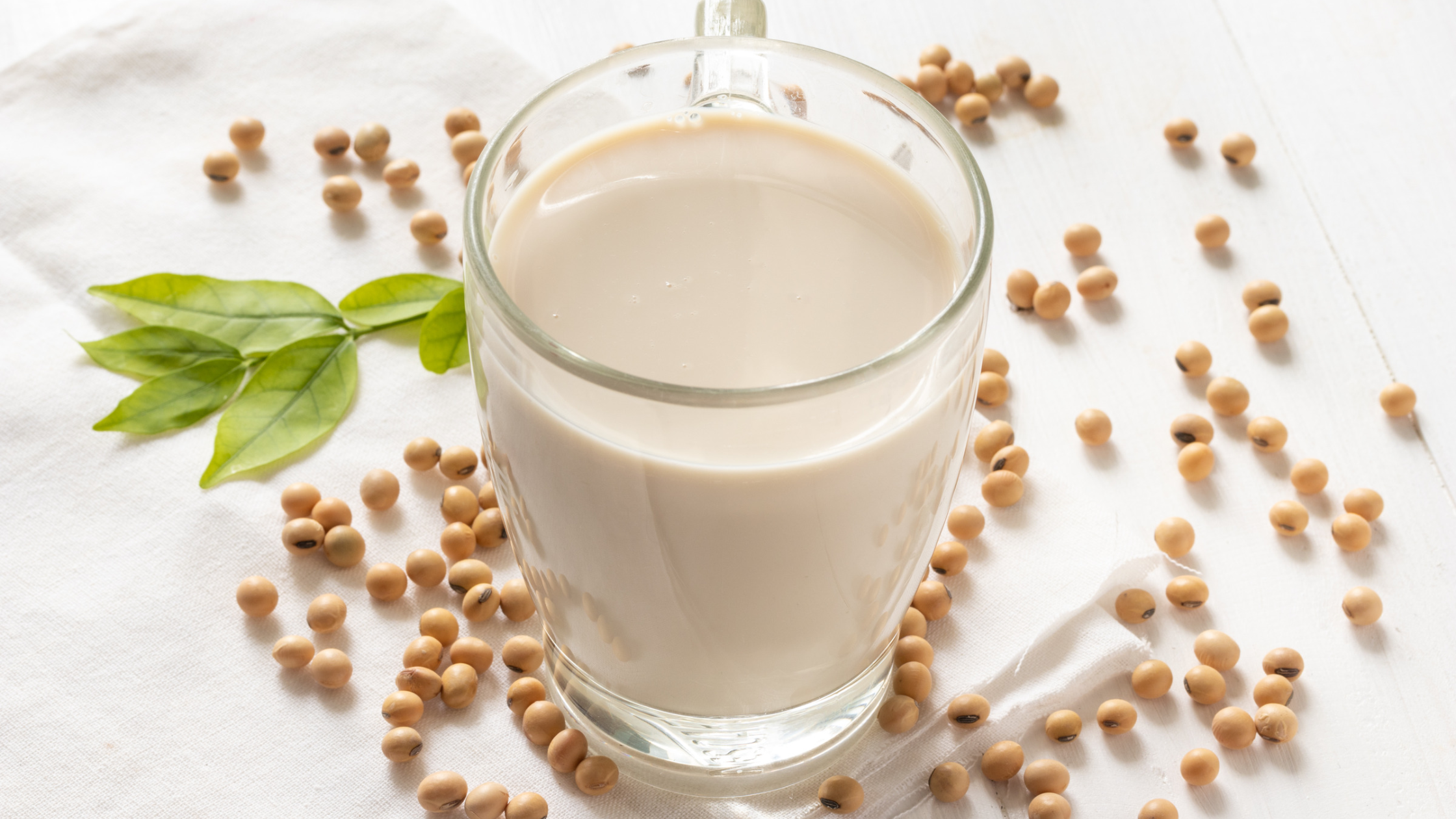
No, soy drink generally does not provide the same amount of protein as whole soybeans, especially when compared by weight. Dry soybeans are highly concentrated and can provide approximately 36 g of protein per 100 g, while soy drink often contains around 3–3.5 g per 100 ml.
The difference depends on the production process and the amount of soy used to make the drink, as well as its dilution with water. Commercial formulations can vary, so it is useful to compare the values on the label and check whether the product contains added sugars or other ingredients.
Soy protein can contribute to maintaining and developing muscle mass when included in an appropriate diet and combined with consistent training. When choosing a supplement, it is useful to assess protein concentration, ingredients, and tolerance, remembering that soy is not essential and that the main contraindications concern allergies and specific clinical needs. A varied and well-planned diet remains the foundation for meeting protein requirements.