- Health and wellness
- 54 views
- What Are BCAAs
- Leucine, isoleucine and valine
- What Are Branched-Chain Amino Acids Used For
- Supporting muscle recovery
- Reducing the feeling of fatigue
- Differences Between BCAAs and EAAs
- Which supplement should you choose?
- How and When to Take BCAAs
- Meaning of the 2:1:1, 4:1:1 and 8:1:1 ratios
- Ideal timing for intake
- Frequently Asked Questions
- Can long-term BCAA intake damage the kidneys?
- Do branched-chain amino acids pose risks to heart health?
- What are the main contraindications to using BCAAs?
- Which foods naturally contain high amounts of BCAAs?
What Are BCAAs
BCAAs are three essential branched-chain amino acids: leucine, isoleucine and valine. They are considered essential because the human body cannot synthesise them in sufficient quantities and must therefore obtain them from food or, when necessary, from specific supplements.
Their distinguishing feature is the chemical structure of their side chain. Unlike many other amino acids, a significant part of BCAA metabolism takes place in peripheral tissues, including skeletal muscle. During physical activity, they can also be used as an energy source, although their actual contribution depends on the duration and intensity of the effort and on the availability of other nutrients.
BCAAs are found in many protein-rich foods, both animal and plant-based. In a varied, balanced diet, a significant proportion of the body's requirements is usually met by eating meat, fish, eggs, dairy products, legumes and other protein sources.
Leucine, isoleucine and valine
The three branched-chain amino acids participate in protein metabolism and have specific functions, while working within a broader biological system.
- Leucine: plays an important role in regulating muscle protein synthesis. It helps activate cellular signals involved in producing new proteins, including those associated with the signalling pathway of the mTOR protein;
- Isoleucine: is involved in energy metabolism and the use of nutrients by tissues. Like the other BCAAs, it can also be metabolised in muscle;
- Valine: participates in amino acid metabolism and can contribute to energy production under certain physiological conditions and during physical activity.
Leucine is often mentioned in discussions about muscle growth because it helps activate the cellular mechanisms that regulate protein synthesis. Taking leucine, isoleucine and valine alone does not guarantee the availability of all the components needed for protein synthesis. For this reason, BCAAs should be considered in the context of the overall diet and not as automatic substitutes for complete proteins or essential amino acids.
What Are Branched-Chain Amino Acids Used For
Branched-chain amino acids participate in protein metabolism and can be used by muscles as an energy source during exercise. In sports, they are mainly associated with maintaining muscle mass and supporting recovery after demanding training sessions.
However, it is important to distinguish the physiological functions of BCAAs from the benefits that may result from supplementation. The fact that a nutrient participates in a biological process does not mean that consuming an additional amount will necessarily improve that process. The effect depends, among other things, on individual requirements, diet quality and the presence of any deficiencies.
Supporting muscle recovery
During intense training, particularly when it involves resistance exercises or movements the body is not accustomed to, temporary changes in muscle structures may occur. Soreness and stiffness can develop in the following hours; these symptoms are often referred to as DOMS (Delayed Onset Muscle Soreness).
Some reviews of the scientific literature suggest that BCAA supplementation may help reduce perceived muscle soreness and certain indirect markers of muscle damage after strenuous exercise. However, the results are inconsistent and do not demonstrate a consistent improvement in strength recovery or physical performance. The evidence should therefore be interpreted with caution.
To support muscle recovery after physical activity, several factors should be considered:
- Adequate protein intake: proteins provide all the amino acids needed to maintain and renew tissues;
- Sufficient energy and food intake: an excessively low energy intake may hinder training adaptations;
- Rest and sleep: allow the body to recover between sessions;
- Training load management: intensity, volume and frequency should be appropriate to the individual's level of fitness.
In this context, BCAAs may be considered as part of a nutritional strategy, but they do not replace an adequate diet or a well-structured training programme.
Reducing the feeling of fatigue
Another reason branched-chain amino acids are used in sports is their potential role in managing fatigue during exercise. BCAAs can be metabolised for energy, but this does not mean that taking them will necessarily improve endurance or allow a workout to last longer.
Available research shows varying results depending on the type of sport, the protocol used and the participants' conditions. They therefore cannot be considered a universal solution for fatigue. To support performance during prolonged workouts, hydration, carbohydrate availability, rest and exercise intensity must also be taken into account.
If the goal is to improve performance, supplementation should be selected according to actual needs. In some situations, adjusting the overall diet or energy intake may be more useful than adding branched-chain amino acids alone.
Differences Between BCAAs and EAAs
The main difference between BCAAs and EAAs lies in the number of essential amino acids contained in the supplement. BCAAs include only leucine, isoleucine and valine, whereas EAAs (Essential Amino Acids) provide all nine essential amino acids required in an adult's diet.
Essential amino acids cannot be produced by the body in sufficient quantities and must be obtained through the diet. In addition to the three BCAAs, EAAs include histidine, lysine, methionine, phenylalanine, threonine and tryptophan.
This difference is particularly relevant when considering protein synthesis. Leucine helps activate the signals involved in the process, but building new proteins requires the availability of all the necessary amino acids. EAAs therefore provide a more complete range of essential amino acids than BCAAs alone.
Which supplement should you choose?
Choosing between BCAAs, EAAs, protein powder and creatine for muscle growth depends mainly on usual dietary habits, protein requirements and convenience. There is no single product that is best for everyone or for every sporting goal.
- BCAAs: provide leucine, isoleucine and valine. They may be considered in specific situations, but they do not supply all the essential amino acids required for protein synthesis;
- EAAs: contain all nine essential amino acids and may be an option when the aim is to supplement these nutrients specifically;
- Protein powder: can help meet daily protein requirements when food intake is insufficient or when a convenient option is useful. Its composition varies according to the protein source.
For people who already follow a varied diet and consume adequate amounts of protein throughout the day, an amino acid supplement may not provide significant additional benefits. The priority remains meeting overall requirements through food and, if necessary, choosing targeted products.
How and When to Take BCAAs
How BCAAs are taken depends on the product formulation and the instructions on the label. Before using a supplement, it is important to check the amount of amino acids per serving, the composition and the manufacturer's recommended directions for use.
There is no single ideal time to take BCAAs that applies to everyone. The most suitable timing may depend on meal schedules, the type of workout and individual needs. Furthermore, there is no evidence that taking them within a specific time window is always better than ensuring adequate nutritional intake throughout the day.
Meaning of the 2:1:1, 4:1:1 and 8:1:1 ratios
In BCAA supplements, the numerical ratios indicate the proportions of leucine, isoleucine and valine, generally in that order. The highest number indicates a greater relative amount of leucine compared with the other two amino acids.
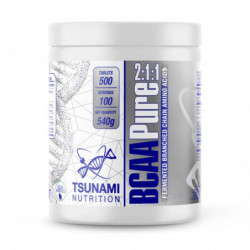
- BCAA 2:1:1: for every two parts of leucine, there is one part of isoleucine and one part of valine. This is a commonly used ratio in branched-chain amino acid supplements;
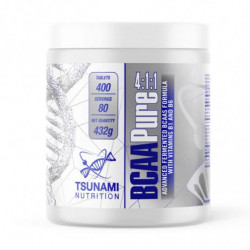
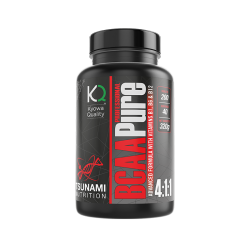
- BCAA 4:1:1: the relative amount of leucine is twice that found in the 2:1:1 ratio, while isoleucine and valine are present in lower proportions than leucine;
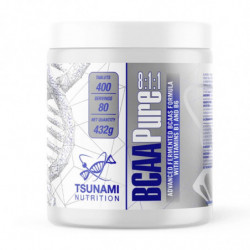
- BCAA 8:1:1: the product contains an even greater relative proportion of leucine compared with isoleucine and valine.
A ratio containing more leucine is not automatically more effective. Leucine helps regulate protein synthesis, but the body also needs the other essential amino acids to produce new proteins. Increasing its proportion in a supplement therefore does not guarantee greater muscle benefits or better performance.
Ideal timing for intake
BCAAs can be taken at different times of the day, depending on the product instructions and personal habits. However, the choice should not be based on the idea that a particular time alone can guarantee better recovery or performance.
- Before training: intake may be considered as part of a planned nutritional strategy. It is still important to start the session with adequate energy availability and not neglect the pre-workout meal;
- During training: a drink containing amino acids may be convenient during some long or demanding sessions. Its usefulness depends on the duration of the activity, prior food intake and individual needs;
- After training: intake may be included in the nutrition plan, but recovery fundamentally depends on sufficient protein and energy intake, as well as adequate rest.
During prolonged workouts, a nutritional strategy may also include fluids, electrolytes and carbohydrates, depending on the effort and environmental conditions. BCAAs do not automatically replace these nutrients and are not essential for every training session.
Frequently Asked Questions
Can long-term BCAA intake damage the kidneys?
There is no evidence that taking BCAAs at recommended doses necessarily causes kidney damage in healthy people. However, the data on the safety of long-term use of concentrated supplements do not make it possible to rule out every potential risk under all conditions or at every intake level.
People with kidney disease or impaired kidney function should discuss their overall protein and amino acid intake with their doctor. In these situations, nutritional requirements may differ from those of a healthy person, and supplements should not be used without professional guidance.
Do branched-chain amino acids pose risks to heart health?
There is insufficient evidence to claim that taking BCAAs at the indicated doses directly causes cardiovascular disease. At the same time, it is not appropriate to consider every dose or method of use risk-free, particularly given the lack of robust data on long-term use across all populations.
People with cardiovascular or metabolic conditions, those taking medication or following a specific nutritional plan should discuss potential supplementation with a healthcare professional. A balanced diet, regular physical activity, sleep and management of individual risk factors remain important for heart health.
What are the main contraindications to using BCAAs?
The main precautions when using BCAAs primarily concern people with pre-existing medical conditions, specific nutritional requirements or ongoing treatments. Although amino acids are nutrients normally found in food, concentrated supplements are not necessarily suitable for everyone.
Medical advice should be sought before using BCAAs in the following circumstances:
- Kidney or liver disease: protein and amino acid intake may need to be tailored;
- Pregnancy and breastfeeding: it is preferable to avoid taking concentrated supplements without guidance and to ask a healthcare professional for advice;
- Chronic conditions or medication use: it is advisable to check whether the product is compatible with the person's condition and any treatments;
- Already taking numerous supplements: the total intake from different products should be assessed to avoid unnecessary overlap.
Which foods naturally contain high amounts of BCAAs?
Foods that contain significant amounts of protein generally also provide leucine, isoleucine and valine. BCAAs are found in both animal and plant-based sources, so they can be obtained through different dietary patterns.
- Meat and poultry: beef, chicken and turkey provide protein containing branched-chain amino acids;
- Fish: various types of fish provide protein and BCAAs;
- Eggs: contain complete proteins, including all essential amino acids;
- Milk, yoghurt and cheese: provide proteins that naturally contain leucine, isoleucine and valine;
- Soy and soy products: tofu, tempeh and other soy-based foods contribute to essential amino acid intake;
- Legumes: lentils, chickpeas, beans and peas provide plant protein and branched-chain amino acids.
The amount of BCAAs varies according to the food, serving size and protein composition. It is not necessary to focus exclusively on these three amino acids to meet nutritional requirements: a varied diet with adequate protein intake also helps provide the other essential amino acids the body needs.
BCAAs, namely leucine, isoleucine and valine, are three essential amino acids involved in protein and muscle metabolism. Their supplementation is used mainly in sports, but the potential benefits for recovery and muscle soreness are not the same for everyone and do not guarantee improved performance. Before choosing between BCAAs, EAAs or protein powder, it is important to consider usual dietary habits and individual requirements. Adequate protein and energy intake, along with sufficient rest, remain essential for supporting recovery and training adaptations.