- Health and wellness
- 17 views
- Caffeine and ginseng
- Caffeine and ginseng: effects on energy and attention
- Caffeine and ginseng in sports supplements
- Frequently asked questions
Caffeine and ginseng
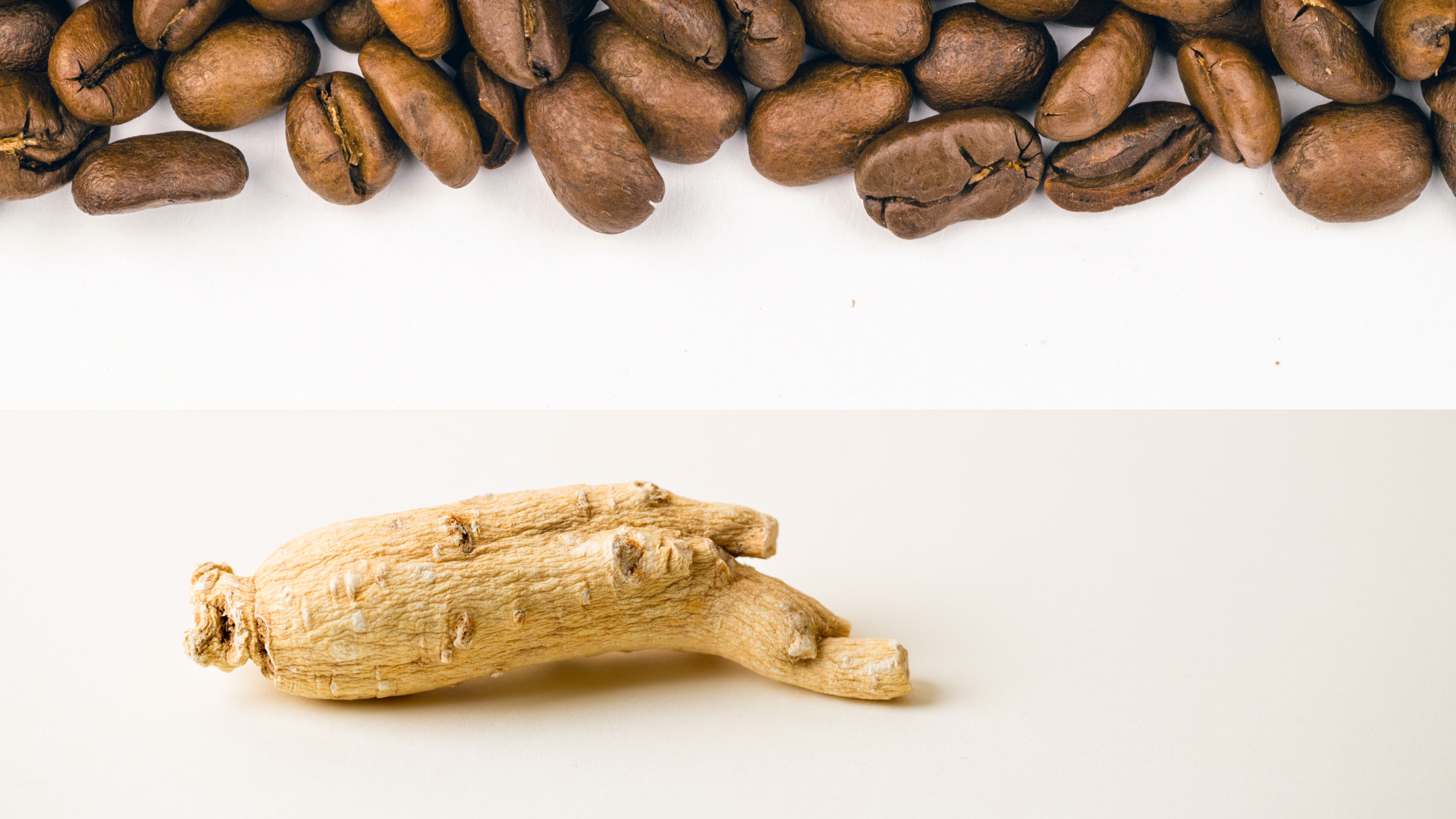
Caffeine and ginseng are often associated with concepts such as energy, concentration and resistance to fatigue, but they should not be considered equivalent.
- Caffeine is a substance naturally present in several plants and acts mainly on the central nervous system;
- Ginseng is a plant-based ingredient containing numerous compounds, including ginsenosides, whose effects are still being researched.
This distinction is particularly important when choosing food supplements: a product containing caffeine has different characteristics from one based on ginseng.
What is caffeine and where is it found?
Caffeine is a substance belonging to the alkaloid family, naturally present in coffee beans, tea leaves, cocoa and guarana seeds. It may also be found in energy drinks, foods, medicines and food supplements.
Its best-known effect is linked to its interaction with adenosine receptors, which are involved in processes that promote drowsiness. By temporarily blocking these receptors, caffeine can increase alertness and reduce the perception of tiredness.
Its effects depend on several factors, including the amount consumed, individual sensitivity, habitual intake and timing. In some people, caffeine can cause agitation, nervousness, palpitations or difficulty falling asleep, particularly when consumed in high amounts or close to bedtime.
Caffeine is also used in supplements intended for people who practise sports, but assessing total intake is essential. Coffee, tea, energy drinks, pre-workout products and tablets can all contribute to the total amount consumed throughout the day.
What is ginseng and what active compounds does it contain?
The most commonly used part of ginseng is the root, from which powders and extracts used in food supplements are obtained. Its main characteristic compounds include ginsenosides, also known as panaxosides, which have been studied for their potential biological activities.
Ginseng is generally associated with supporting vitality and managing tiredness. Modern research has also examined its possible relationship with certain cognitive functions and fatigue, but results are inconsistent and depend on the species, extract used and conditions studied.
The available evidence does not allow us to claim that all ginseng supplements necessarily improve concentration, increase physical endurance or produce immediate effects.
Caffeine and ginseng: effects on energy and attention
When discussing energy and attention, caffeine and ginseng are often mentioned together, but the scientific evidence concerning them differs.
Caffeine has a well-documented stimulating effect on alertness, whereas studies on ginseng have produced varying results depending on the preparation and the functions considered.
The subjective feeling of having more energy does not necessarily correspond to a measurable improvement in cognitive or physical performance.
The role of caffeine in alertness
Caffeine is known for its ability to temporarily increase alertness and reduce drowsiness. Its interaction with adenosine receptors helps counteract certain physiological signals associated with the need for sleep, promoting a state of increased attention.
This effect may be useful in situations requiring concentration, but it does not eliminate the need for rest or replace adequate sleep.
Individual responses vary considerably. Some people notice effects even with relatively small amounts, while others develop greater tolerance through regular consumption.
High amounts may increase the likelihood of adverse effects, such as restlessness, tremors, gastrointestinal disturbances, palpitations and sleep disruption.
According to assessments by the European Food Safety Authority (EFSA), for most healthy adults, a single dose of up to 200 mg of caffeine and a total intake of up to 400 mg per day, spread throughout the day, do not raise safety concerns.
Ginseng and cognitive functions
Ginseng has been studied for its possible relationship with certain cognitive functions, including attention, memory and information processing. However, the available results are conflicting and do not support considering it a cognitive enhancer with established effectiveness. It has also been examined in relation to fatigue, but it cannot be claimed to eliminate tiredness or consistently improve concentration.
While caffeine has a more firmly established stimulating effect on alertness, the possible contribution of ginseng to cognitive functions remains less clearly defined. When evaluating a supplement, it is therefore useful to know the species used, the type of extract and the information provided on the label.
Caffeine and ginseng in sports supplements
In the field of sports supplementation, caffeine is mainly used for its effect on alertness and its potential contribution to performance under certain conditions.
Ginseng, on the other hand, is included in some formulations intended to support wellbeing and vitality, but evidence regarding improvements in athletic performance is limited and inconsistent.
The choice between these ingredients, or of a product combining them, should be based on the specific goal, individual tolerance and the supplement's complete composition. The fact that a product is marketed as an energy booster is not enough to conclude that it necessarily improves sports performance.
Differences in use before training
Caffeine is one of the most extensively studied ingredients in sports nutrition. Under certain conditions, it may help improve some aspects of performance, but the response depends on the sport, exercise intensity, amount consumed and individual sensitivity.
Using caffeine before training requires care, particularly to avoid excessive intake and limit potential adverse effects. Taking it too close to bedtime may also interfere with sleep, with negative consequences for recovery.
For ginseng, the evidence regarding improvements in sports performance is less convincing. Research does not consistently demonstrate that taking Panax ginseng improves athletic performance. It is therefore incorrect to consider it equivalent to caffeine as a pre-workout ingredient.
How to assess total caffeine intake
When using supplements containing caffeine, it is essential to consider all sources consumed throughout the day. The total includes not only tablets or pre-workout products, but also coffee, tea, energy drinks, cola, cocoa and other products that may contain caffeine.
To assess a supplement correctly, it is useful to check:
- Amount of caffeine per serving: check the milligrams stated on the label and the number of servings recommended.
- Other dietary sources: consider the drinks and foods consumed on the same day.
- Timing of intake: avoid consumption that interferes with sleep, especially if you are sensitive to caffeine.
- Individual tolerance: watch for nervousness, tremors, palpitations, gastrointestinal disturbances or difficulty falling asleep.
- Product composition: check whether other stimulant ingredients are present and, when necessary, discuss their use with a healthcare professional.
Ginseng should not automatically be counted as a source of caffeine. It is important to check the declared amounts of ingredients and any potential interactions.
If you have a medical condition, take medication or are particularly sensitive to stimulants, consult a doctor or pharmacist before using these products. In all cases, it is important to follow the doses stated on the label and avoid combining several stimulant supplements without first checking their composition.
Frequently asked questions
Does ginseng contain caffeine?
Ginseng, including Panax ginseng, is not considered a significant natural source of caffeine. Its characteristic compounds mainly include ginsenosides.
Do caffeine and ginseng have the same effects?
No. Caffeine acts mainly on the central nervous system, temporarily promoting alertness and reducing drowsiness. Ginseng contains ginsenosides and other plant compounds studied for their potential physiological effects, but the evidence concerning energy and cognitive functions is less consistent. The two ingredients should therefore not be considered equivalent.
Can caffeine and ginseng be taken together?
Whether caffeine and ginseng can be combined depends on the formulation, amounts consumed, individual circumstances and any medicines being taken.
Combining them does not guarantee greater effects and may make it more difficult to assess the product's overall tolerability. People taking medication or with specific health conditions should consult a healthcare professional before using supplements containing these ingredients.
Can caffeine and ginseng be useful before exercise?
Caffeine has been studied for its potential to improve certain sports performances and for its effect on alertness. For ginseng, evidence of improved athletic performance is limited and does not demonstrate a consistent benefit. Choosing a pre-workout supplement should take into account the sport, product composition, individual tolerance and nutritional needs.
What precautions should be considered when taking stimulant products?
It is important to check the total amount of caffeine consumed from all sources, follow the instructions on the label and watch for possible effects such as insomnia, nervousness and palpitations.
Ginseng may also cause adverse effects, including insomnia, and may interact with certain medicines. During pregnancy or breastfeeding, in the presence of medical conditions or when taking medication, consult a healthcare professional before use.
Caffeine and ginseng are different ingredients and should not be confused or considered interchangeable. Caffeine has stronger evidence supporting its effect on alertness and certain sports-related uses, while the benefits of ginseng for energy, attention and performance remain less clearly established. Assessing total caffeine intake and understanding potential interactions helps you choose supplements more consciously, in line with your needs and without neglecting nutrition, rest and recovery.