- Health and wellness
- 2 views
- Essential amino acids: what they are and why they matter
- The difference between essential and non-essential amino acids
- Essential amino acids and proteins: their role in nutrition
- The main dietary sources of essential amino acids
- Essential amino acids and physical activity
- Muscle protein synthesis and post-workout recovery
- The importance of protein intake for people who exercise
- Essential amino acid supplements: when to consider them
- How to use EAA supplements and precautions
- Frequently asked questions
- What are essential amino acids?
- How many essential amino acids are there?
- What is the difference between EAAs and BCAAs?
- Which foods contain essential amino acids?
Essential amino acids: what they are and why they matter
Amino acids are the building blocks of proteins. After protein-containing foods are digested, amino acids are absorbed and used by the body to build new proteins or contribute to other metabolic processes.
Essential amino acids (EAAs) are those that the human body cannot synthesise on its own in quantities sufficient to meet its needs. For this reason, they must be obtained through food or, when appropriate, dietary supplements.
Their role is not limited to muscles. Proteins are part of the structure of many tissues and are involved in the formation of enzymes, transport proteins, and other molecules necessary for the body to function. Amino acids also contribute to the processes of protein renewal that continuously take place in the body.
For people who train, an adequate supply of essential amino acids is important because these nutrients contribute to muscle protein synthesis, the process through which the body produces new muscle proteins. This mechanism works alongside training stimuli and recovery, but it does not depend on a single nutrient or supplement: the overall balance between nutrition, exercise, and rest matters.
The difference between essential and non-essential amino acids
The distinction between essential and non-essential amino acids depends on the body's ability to produce them.
- Essential amino acids: must be obtained through the diet because the body cannot synthesise them in sufficient quantities. They include histidine, isoleucine, leucine, lysine, methionine, phenylalanine, threonine, tryptophan, and valine;
- Non-essential amino acids: can be produced by the body through various metabolic processes, including from other molecules.
This classification does not mean that non-essential amino acids are less important. All amino acids contribute to metabolism and protein formation in different ways. The distinction simply helps identify which amino acids must necessarily be obtained from external sources.
Among the essential amino acids, leucine has been particularly widely studied for its involvement in the mechanisms that regulate muscle protein synthesis.
Essential amino acids and proteins: their role in nutrition
Dietary proteins are one of the main sources of essential amino acids. During digestion, they are broken down into peptides and amino acids, which the body absorbs and uses according to its needs.
The quality of a protein source depends, among other factors, on its amino acid profile and digestibility. Proteins that provide all essential amino acids in adequate amounts are often described as complete proteins. Many animal-based sources have this characteristic; plant-based sources can also make a significant contribution to protein intake, especially when the diet is varied and well planned.
For people who engage in physical activity, it is not just about consuming a certain amount of protein in a single meal. It is useful to consider total daily protein intake, distributing it in a way that fits individual habits and needs. Requirements and dietary strategies may vary depending on the type of sport, training volume, age, and individual goals.
The main dietary sources of essential amino acids
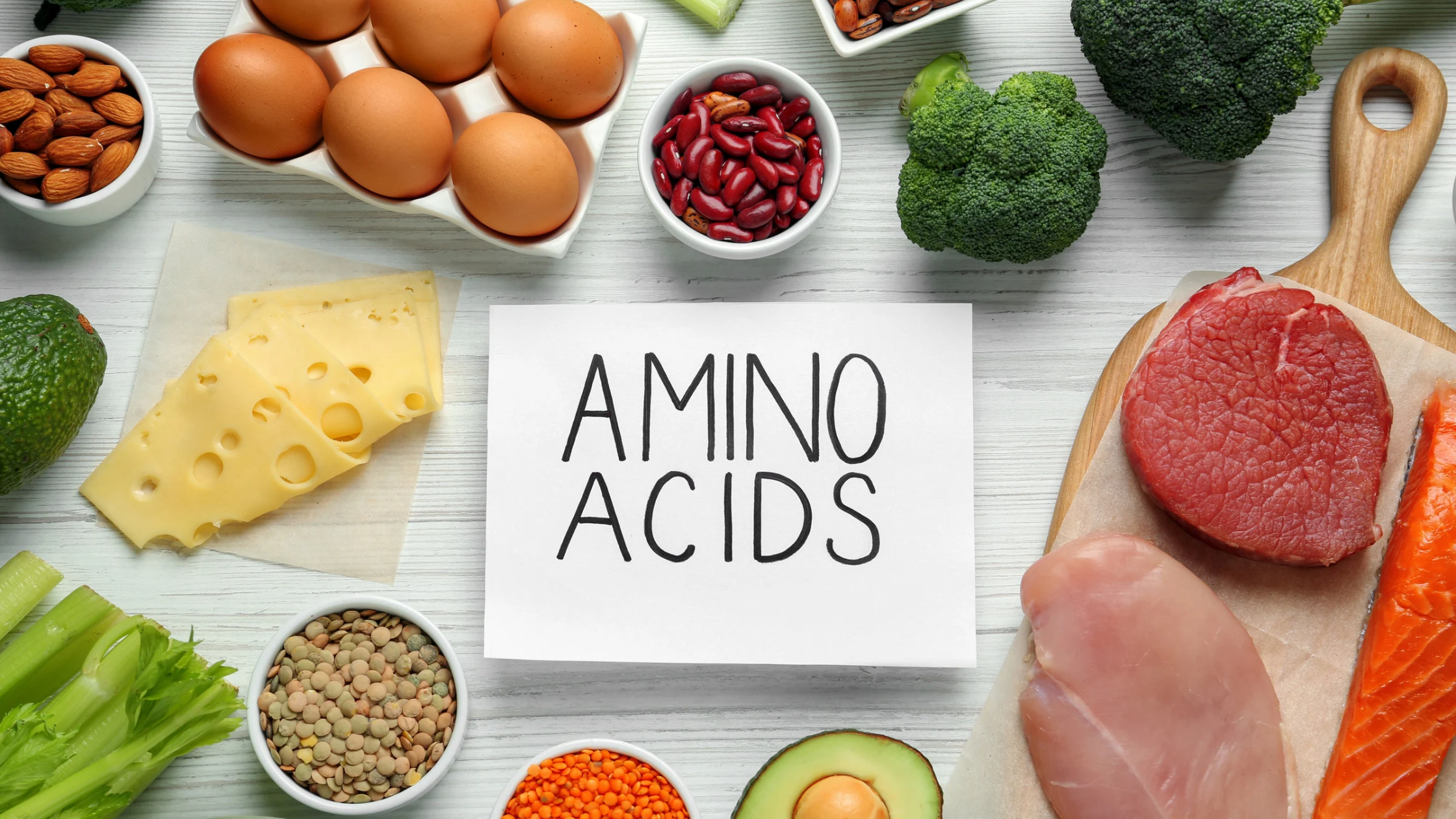
Essential amino acids are found in many protein-containing foods. Alternating between different sources helps create a varied diet and meet nutritional needs throughout the day.
- Eggs: provide protein containing all essential amino acids;
- Meat and fish: are protein sources that contribute amino acids needed for tissue renewal;
- Milk, yoghurt, and other dairy products: provide high-quality protein with a complete amino acid profile;
- Legumes: lentils, chickpeas, beans, and other varieties contribute plant-based protein;
- Soy and soy products: tofu, tempeh, and other soy-based foods can be useful protein sources, including in plant-based diets;
- Cereals and pseudocereals: contribute to overall protein intake and can complement the nutritional profile of plant-based meals;
- Nuts and seeds: provide protein alongside fats and other nutrients, although amounts vary depending on the product and serving size.
In a vegetarian or vegan diet, essential amino acids can be obtained by combining different protein sources throughout the day and paying attention to total protein intake.
When assessing protein intake, it is also useful to consider actual serving sizes, meal frequency, and individual needs.
Essential amino acids and physical activity
During physical activity, muscles are exposed to stimuli that require adaptation and renewal processes. Strength training, for example, places demands on muscle tissue, while endurance exercise involves different energy and physiological requirements. In both cases, nutrition helps support recovery and adaptation to exercise.
Essential amino acids are important because they provide the components needed for protein synthesis. However, their availability must be considered alongside that of other nutrients, dietary energy intake, the quality of the training programme, and rest.
EAAs can be obtained from protein-rich foods or, in specific circumstances, through supplements. The choice depends on the situation, including meal planning, the amount of protein already consumed, the duration and intensity of physical activity, and personal goals.
Muscle protein synthesis and post-workout recovery
Muscle protein synthesis is the process through which muscle cells produce new proteins. Together with the breakdown of existing proteins, it forms part of the continuous turnover of muscle tissue. Training and nutrition can influence the balance between these processes.
Consuming protein containing essential amino acids can stimulate muscle protein synthesis. Free-form EAAs are absorbed and become available quickly, but the outcome also depends on the amount consumed, the amino acid profile, and the overall nutritional context.
Post-workout recovery involves more than protein synthesis alone. It also includes replenishing energy stores, neuromuscular recovery, and adaptation to the training stimulus. For this reason, it is important not to focus exclusively on amino acids while neglecting carbohydrates, hydration, sleep, and training-load management.
A meal or snack containing high-quality protein can help provide the amino acids needed for recovery. EAA supplements are an option worth considering when they may be practical for individual needs, but they do not automatically guarantee better results than an already adequate diet.
The importance of protein intake for people who exercise
The protein requirements of people who exercise may be higher than those of sedentary individuals, but there is no single amount that suits everyone. The appropriate intake depends on factors such as the sport, training frequency, body composition, energy availability, and goals.
To develop a consistent nutrition strategy, it is useful to consider several aspects:
- Daily amount: intake should be appropriate for individual needs and physical activity volume;
- Protein quality: it is important to include sources that provide all essential amino acids;
- Meal distribution: spreading protein intake throughout the day can help organise nutrition more effectively;
- Total energy intake: consuming protein does not compensate for insufficient energy intake relative to the demands of physical activity;
- Recovery: sleep, rest, and training-load management contribute to long-term adaptations.
Adequate protein intake can support the maintenance and development of muscle mass when combined with an appropriate training programme. Consuming more protein than the body needs, however, does not guarantee proportionally greater muscle growth.
Essential amino acid supplements: when to consider them
EAA supplements provide essential amino acids in concentrated form and may be considered when a practical way to supplement dietary intake is desired. However, they are not necessary for every athlete and do not replace a varied, balanced diet.
Before choosing a product, it is useful to assess:
- The amino acid profile: check which amino acids are present and in what quantities;
- The recommended serving: compare nutritional values for the suggested dose, not just those per 100 g or per package;
- The overall composition: check for other ingredients and read the label carefully;
- The format: tablets and powders may suit different preferences in terms of convenience and use;
- Personal needs: consider how useful the supplement may be in relation to the diet already followed.
Options in the Tsunami Nutrition range include Essential Amino Pure Professional tablets and Essential Amino Pure powder.
The tablet version provides 4.95 g of AminoAMTΩ® blend in the recommended serving of 8 tablets, while the powder version provides 6.34 g of AminoAMTΩ® per 9.5 g serving. The formulations also contain other ingredients, including AstraGin™; the tablet version also includes Bacillus coagulans BC513.
The choice between tablets and powder should therefore be based on composition, label instructions, and convenience, rather than treating the format as an automatic indicator of greater effectiveness.
How to use EAA supplements and precautions
There is no universal dose that is suitable for everyone. Follow the instructions on the packaging and take into account the protein already provided by the diet.
The instructions for the respective Tsunami Nutrition products differ:
- Essential Amino Pure Professional tablets: 8 tablets per day with plenty of water;
- Essential Amino Pure powder: 9.5 g per day with plenty of water.
For responsible supplement use, keep the following precautions in mind:
- Do not exceed the recommended serving: higher amounts do not guarantee better results;
- Do not replace meals: EAAs do not provide all the nutrients needed for a complete diet;
- Consider individual circumstances: if you have medical conditions, metabolic disorders, or follow a special diet, seek advice from a healthcare professional;
- Pregnancy and breastfeeding: do not use the product without consulting a doctor, in accordance with the warnings provided for the product;
- Long-term use: before taking supplements for extended periods, it is advisable to consult a healthcare professional.
Ultimately, EAAs can be a practical tool in certain situations, but their usefulness should be assessed in the context of overall nutritional needs. Nutrition, structured training, and recovery remain the foundations of a sustainable sports strategy.
Frequently asked questions
What are essential amino acids?
Essential amino acids are molecules that the body cannot produce in sufficient quantities and must therefore obtain through the diet. They are necessary components for protein synthesis and contribute to tissue renewal, including muscle tissue. They can be obtained from protein-rich foods or, when appropriate, through specific supplements.
How many essential amino acids are there?
Adults are recognised as requiring nine essential amino acids: histidine, isoleucine, leucine, lysine, methionine, phenylalanine, threonine, tryptophan, and valine. They must be supplied by the diet because the body cannot synthesise them independently in adequate amounts. All are important: the availability of one amino acid cannot replace that of the others needed for protein synthesis.
What is the difference between EAAs and BCAAs?
EAA stands for Essential Amino Acids and refers to all nine essential amino acids. BCAA stands for Branched-Chain Amino Acids and identifies three branched-chain essential amino acids: leucine, isoleucine, and valine.
Therefore, BCAAs represent only part of the EAAs. An EAA product may provide a broader amino acid profile, but its composition and the amounts listed on the label must be checked to assess it properly.
Which foods contain essential amino acids?
Essential amino acids are found in protein-rich foods such as eggs, meat, fish, milk, and dairy products. Legumes, soy, cereals, nuts, and seeds also contribute to overall intake.
People following a plant-based diet can meet their needs through a varied, well-planned diet, paying attention to the quantity and quality of protein consumed throughout the day.
Essential amino acids are indispensable for protein synthesis and numerous physiological processes. For people who exercise, obtaining adequate amounts through a balanced diet is important to support training adaptations and recovery. Understanding the differences between EAAs and BCAAs, reading labels, and considering individual needs can help people make more informed choices.

