- Health and wellness
- 5 views

- What Fat-Soluble Vitamins Are
- The Four Fat-Soluble Vitamins
- Comparing Fat-Soluble and Water-Soluble Vitamins
- Foods Rich in Fat-Soluble Vitamins
- Deficiency and Risk of Toxicity
- Frequently Asked Questions
What Fat-Soluble Vitamins Are
Fat-soluble vitamins are micronutrients that dissolve in fats and are absorbed by the body together with the lipids obtained from food. Unlike water-soluble vitamins, which dissolve in water, these substances can be stored in body tissues, particularly in the liver and adipose tissue, and used when needed.
There are four vitamins in this category: vitamin A, vitamin D, vitamin E and vitamin K. Each performs specific functions involving different processes, such as vision, calcium metabolism, protection of cells from oxidative stress and blood clotting.
The fact that they can accumulate in the body is also important from a safety perspective. An adequate intake is necessary to support normal physiological functions, but excessive intake, particularly through high-dose supplements, may involve a risk of toxicity. This is why it is useful to understand their dietary sources, the role of each vitamin and the precautions to take when considering supplementation.
How Absorption Works with Dietary Fats
Fat-soluble vitamins are absorbed mainly in the small intestine, and their absorption also depends on the presence of fats in a meal. During digestion, lipids are emulsified by bile and broken down by digestive enzymes. Structures called micelles form in this environment, helping transport fat-soluble vitamins to intestinal cells.
Once absorbed, the vitamins are incorporated into particles that allow them to travel through the lymphatic system and subsequently into the bloodstream. From there, they can reach body tissues and, depending on the vitamin, be used, converted or stored.
This process can be influenced by several factors:
- Presence of fats in a meal: contributes to the digestion and absorption of fat-soluble vitamins;
- Biliary and pancreatic function: bile and digestive enzymes are involved in the processes required for lipid absorption;
- Intestinal health: certain conditions that impair fat absorption may also reduce the availability of fat-soluble vitamins;
- Food characteristics: preparation, processing and meal composition can influence the amount of vitamin that is actually absorbed.
This does not mean that meals need to be particularly high in fat to absorb these vitamins. In general, an adequate amount of dietary fat as part of a balanced meal supports the normal absorption process. This is also why it is useful to vary fat sources, prioritising those that are compatible with a balanced diet.
The Four Fat-Soluble Vitamins
There are four fat-soluble vitamins, but they do not all perform the same functions.
- Vitamin A is involved in vision and tissue maintenance;
- Vitamin D contributes to calcium metabolism and bone health;
- Vitamin E plays an antioxidant role;
- Vitamin K contributes to normal blood clotting and bone metabolism.
Understanding their characteristics helps explain why it is important to obtain them through a varied diet and to make more informed decisions about any supplements. The amounts required and the main precautions differ from one vitamin to another.
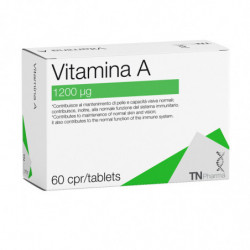
The Functions of Vitamin A
Vitamin A includes a group of compounds, such as retinol and its derivatives, known as retinoids. In foods, it is found both as preformed vitamin A, mainly in animal products, and as provitamin A carotenoids, present in various plant foods and convertible into vitamin A by the body.
This vitamin contributes to several physiological functions:
- Vision: participates in the processes required for normal visual function, particularly in low-light conditions;
- Tissue maintenance: contributes to maintaining normal skin and mucous membranes;
- Immune system: supports the normal functioning of the body's defences;
- Cell differentiation: participates in the processes through which cells mature and develop specific characteristics.
Among the plant-based precursors of vitamin A, the best known is beta-carotene, found mainly in orange, yellow and dark green foods such as carrots, pumpkin and leafy green vegetables. The body can convert it into vitamin A in varying amounts, whereas the retinoids found in animal foods are forms that can be used after absorption.
The Functions of Vitamin D
Vitamin D is a fat-soluble micronutrient that plays an important role in calcium and phosphorus metabolism. The body can produce it in the skin through exposure to ultraviolet B (UVB) rays, while some can also be obtained from certain foods and supplements.
Its main physiological functions include:
- Calcium and phosphorus absorption: contributes to the normal absorption and utilisation of these minerals;
- Bone health: contributes to the maintenance of normal bones and normal bone mineralisation;
- Muscle function: contributes to the maintenance of normal muscle function;
- Immune system: contributes to the normal functioning of the immune system.
Vitamin D is naturally present in a relatively limited number of foods. Some of the most relevant sources include oily fish, fish liver oil, egg yolk and certain fortified products. The amount obtained through the diet can therefore vary considerably depending on eating habits.
When discussing supplementation, it is important to distinguish vitamin D2, or ergocalciferol, from vitamin D3, or cholecalciferol. Both contribute to vitamin D intake, but the formulation and amount should be assessed according to individual needs.
The Functions of Vitamin E
Vitamin E includes several compounds, such as tocopherols and tocotrienols. The most extensively studied and biologically relevant form in human nutrition is alpha-tocopherol. Its main function is antioxidant activity: it helps protect cells from oxidative stress, contributing to the protection of lipids in cell membranes.
Vitamin E therefore plays a role in maintaining cell integrity and contributes to the normal functioning of the body. It is found mainly in foods containing plant fats, such as:
- Vegetable oils: sunflower, wheat germ and safflower oils are among the most relevant dietary sources;
- Nuts: almonds and hazelnuts contribute to vitamin E intake;
- Seeds: particularly sunflower seeds and other oil-rich varieties;
- Vegetables: spinach, broccoli and other green vegetables can provide varying amounts.
A diet that regularly includes vegetable oils, seeds, nuts and vegetables can help meet vitamin E requirements. However, there is no evidence that taking high amounts through supplements automatically improves cell protection or prevents specific diseases.
The Functions of Vitamin K
Vitamin K includes several forms, such as phylloquinone (vitamin K1) and menaquinones (vitamin K2). K1 is found mainly in leafy green vegetables, whereas K2 is present in certain fermented foods and animal products, with amounts varying according to the raw material and production process.
Vitamin K is required to activate certain proteins involved in normal blood clotting. It also participates in bone metabolism through the activation of proteins such as osteocalcin, which contributes to bone mineralisation processes.
Its main functions include:
- Blood clotting: contributes to the normal activation of proteins involved in clotting processes;
- Bone health: participates in the activation of osteocalcin, a protein involved in bone tissue metabolism;
- Tissue metabolism: helps activate other vitamin K-dependent proteins, including matrix Gla protein (MGP).
Vitamin K is often combined with vitamin D3 in supplements intended to support bone health. The two nutrients perform different but complementary functions: vitamin D contributes to calcium absorption and utilisation, while vitamin K participates in the activation of proteins involved in bone metabolism. However, this biological relationship does not demonstrate that the combination is necessary for everyone or that it automatically prevents arterial calcification.
People taking anticoagulant medicines, particularly warfarin or other vitamin K antagonists, should maintain a regular intake of this vitamin and should not independently change their diet or start taking a supplement without consulting their doctor.
Comparing Fat-Soluble and Water-Soluble Vitamins
The distinction between fat-soluble and water-soluble vitamins mainly concerns their solubility, how they are absorbed and the body's ability to store them. Fat-soluble vitamins dissolve in fats and can accumulate in tissues; water-soluble vitamins dissolve in water and, in most cases, are more easily eliminated through urine when present in amounts exceeding the body's needs.
This difference also affects the precautions associated with supplementation. Fat-soluble vitamins require particular attention because some can accumulate in the body, whereas the risk of accumulation is generally lower for water-soluble vitamins. This does not mean that water-soluble vitamins can be taken without limits: excessive amounts of certain nutrients in this category can also cause unwanted effects.
Comparative Table of Their Properties
The following table summarises the main differences between the two vitamin categories, considering solubility, absorption, storage in the body and the main examples.
| Characteristic | Fat-Soluble Vitamins | Water-Soluble Vitamins |
|---|---|---|
| Solubility | Dissolve in fats | Dissolve in water |
| Absorption | Occurs together with dietary lipids and requires the normal processes involved in fat digestion | Occurs mainly in the intestine, through mechanisms specific to each vitamin |
| Storage | Can be stored mainly in the liver and adipose tissue | Generally stored in smaller amounts, with some exceptions such as vitamin B12 |
| Elimination | Turnover and elimination are generally slower | Excess amounts are often eliminated through urine |
| Examples | Vitamins A, D, E and K | Vitamin C and B vitamins |
| Precautions | Some can accumulate and reach excessive levels with inappropriate supplementation | They are not risk-free: high doses of certain vitamins can still cause unwanted effects |
This distinction is useful for understanding the general behaviour of vitamins, but it should not be interpreted as an absolute rule. Each micronutrient has specific characteristics and may have different absorption, transport and storage mechanisms.
Differences Between Vitamins B and C
B vitamins and vitamin C belong to the water-soluble vitamin category. Unlike vitamins A, D, E and K, they dissolve in water and participate in numerous metabolic processes without requiring absorption together with dietary fats.
B vitamins include several micronutrients, such as B1, B2, B3, B5, B6, B7, B9 and B12. Many are involved in energy metabolism, nervous system function and red blood cell formation. Vitamin C, on the other hand, contributes to protecting cells from oxidative stress, the normal functioning of the immune system and collagen formation.
The main differences compared with fat-soluble vitamins include:
- Absorption: water-soluble vitamins are absorbed through the intestine without depending on the presence of fats in a meal in the same way as fat-soluble vitamins;
- Storage: many are stored in limited amounts, whereas vitamin B12 is an exception because it can be stored in the liver for extended periods;
- Regular intake: a consistent dietary intake is important for several water-soluble vitamins, according to individual requirements;
- Risk of excess: urinary elimination of excess amounts does not rule out the possibility of unwanted effects from high doses or prolonged intake.
Both water-soluble and fat-soluble vitamins are necessary for the proper functioning of the body. Their intake should be ensured mainly through a varied diet that includes different sources of fruit, vegetables, grains, protein foods and fats.
Foods Rich in Fat-Soluble Vitamins
Fat-soluble vitamins are found in many foods of both animal and plant origin. Their distribution varies depending on the vitamin: some are found mainly in plant foods, while others are present predominantly in animal products or fortified foods.
To obtain these nutrients through the diet, it is useful to vary food sources and regularly include vegetables, fruit, vegetable oils, seeds, nuts, fish, eggs and other protein-rich foods. The presence of fats in a meal also contributes to the absorption of fat-soluble vitamins.
The main dietary sources include:
- Vitamin A: liver, eggs and dairy products provide preformed vitamin A, while carrots, pumpkin, sweet potatoes, spinach and other green vegetables provide provitamin A carotenoids such as beta-carotene;
- Vitamin D: oily fish, fish liver oil, egg yolk and certain fortified foods can contribute to intake. Skin production through exposure to UVB rays is another important source;
- Vitamin E: vegetable oils, sunflower seeds, almonds, hazelnuts, spinach and broccoli are among the most relevant dietary sources;
- Vitamin K: spinach, kale, Swiss chard, broccoli and other leafy green vegetables are rich in K1. Some fermented foods, cheeses and animal products can also provide K2.
The amount of vitamins in foods can vary depending on the variety, season, storage conditions and preparation method. For this reason, it is better not to rely on a single food but to alternate different sources throughout the week.
A balanced diet generally makes it possible to obtain fat-soluble vitamins from different food groups. In the presence of dietary restrictions, malabsorption or conditions that increase the risk of deficiency, intake may need to be assessed with a healthcare professional.
Deficiency and Risk of Toxicity
Fat-soluble vitamins are needed in adequate amounts, but both insufficient intake and excessive consumption can have health consequences.
- Deficiencies may result from an inadequate diet, problems with fat absorption or certain medical conditions;
- Toxicity, on the other hand, is more often associated with inappropriate use of high-dose supplements, although the risk and mechanisms of accumulation vary among vitamins.
It is important to distinguish the signs of a deficiency from those associated with excessive intake. Symptoms may be non-specific and do not always make it possible to identify the vitamin involved without assistance. For this reason, if an imbalance in vitamin levels is suspected, it is best to consult a doctor and determine whether specific tests are necessary.
Monitoring Through Blood Tests
Blood vitamin testing can be useful when there is a clinical suspicion of deficiency, toxicity or impaired absorption. However, it is not necessary for every healthy person to have all fat-soluble vitamins measured regularly: the choice of tests depends on medical history, symptoms, risk factors and medical advice.
The available tests are not the same for all vitamins:
- Vitamin A: assessment may include measuring blood retinol, interpreted in light of clinical conditions and any inflammation;
- Vitamin D: the parameter generally used to assess vitamin D status is blood 25-hydroxyvitamin D [25(OH)D];
- Vitamin E: in specific situations, plasma alpha-tocopherol may be measured, taking blood lipid levels into account as well;
- Vitamin K: direct measurement of vitamin K levels is not routinely requested in most situations. In certain clinical contexts, coagulation tests or other specific parameters may be used.
Blood testing may be particularly useful for people with gastrointestinal or liver conditions, problems absorbing fats, surgery involving the digestive system or treatments that may affect vitamin metabolism. Prolonged use of high-dose supplements may also require targeted assessment.
Safe Use of Supplements
Fat-soluble vitamin supplements may be useful when there is a documented deficiency or a specific nutritional need. However, they should not automatically be taken simply because they contain essential nutrients. The choice should take into account the usual diet, health conditions, any medicines being taken and the amount already obtained from other products.
For more informed use, it is advisable to:
- Check the dosage: verify the amount of each vitamin per daily serving and do not exceed the instructions on the label;
- Avoid overlapping products: some products, such as multivitamins, sports formulas and specific supplements, may contain the same vitamins;
- Consider individual circumstances: pregnancy, medical conditions, malabsorption and medicines may change requirements or precautions;
- Distinguish between different forms: some vitamins, such as vitamin A, may be present as preformed vitamins or precursors, which have different characteristics and risks;
- Ask a healthcare professional: especially when considering high doses or taking several supplements at the same time.
Excessive intake of preformed vitamin A can cause toxicity and, during pregnancy, may pose risks to foetal development. Excessive amounts of vitamin D can cause hypercalcaemia and problems affecting the kidneys and other tissues. High doses of vitamin E can also interfere with blood clotting, while no general tolerable upper intake level has been established for vitamin K; however, this does not mean that any supplementation is automatically appropriate. In these cases, taking multivitamins may be considered.
People taking vitamin K antagonist anticoagulants, such as warfarin, should pay particular attention to maintaining a regular vitamin K intake and should not start or stop supplements without consulting their doctor. In general, supplements do not replace a varied and balanced diet or prescribed treatments.
Frequently Asked Questions
Which Fat-Soluble Vitamin Is Most Effective for Skin Health?
There is no single fat-soluble vitamin that can be considered the most effective for skin health in every situation. Vitamins A and E are involved in important functions for skin tissues, but they play different roles.
Vitamin A contributes to maintaining the skin and normal cell differentiation, while vitamin E helps protect cells from oxidative stress. Vitamin D is also involved in several physiological processes in the skin, but supplementation with any of these vitamins should not be considered a general treatment for skin conditions.
Supporting skin health requires a varied diet, an adequate intake of water and nutrients, and proper protection from UV rays. If persistent skin problems occur, it is advisable to consult a dermatologist rather than independently taking high doses of vitamins.
What Is the Best Time of Day to Take Fat-Soluble Vitamin Supplements?
Fat-soluble vitamins can be taken with a meal containing an adequate amount of fat because they are absorbed together with dietary lipids. However, there is no universally best time: the most suitable time depends on the formulation, the manufacturer's instructions and individual needs.
If several products are used, such as vitamin D, vitamin K and multivitamins, it is useful to check that unnecessary overlap does not occur. In the presence of medical conditions or drug treatments, it is advisable to ask a doctor or pharmacist for advice before starting supplementation.
What Is Liposomal Vitamin C?
Vitamin C is a water-soluble vitamin, not a fat-soluble one. The liposomal formulation is a delivery technology that uses small spherical structures called liposomes, made of phospholipids, to enclose the vitamin and facilitate its transport in the body.
Liposomes consist of lipid membranes that can enclose water-soluble substances within them. This technology has been studied for its potential to modify vitamin C stability and absorption, but results regarding bioavailability may vary depending on the formulation and do not automatically demonstrate superior clinical benefits for everyone.
Fat-soluble vitamins A, D, E and K are essential micronutrients involved in different functions, from vision to bone health, from cell protection to blood clotting. They differ from water-soluble vitamins in how they are absorbed and in their ability to be stored in body tissues.