- Health and wellness
- 31 views

- What Is Folate and What Does It Do?
- Blood Folate Levels
- Foods Rich in Folate
- Frequently Asked Questions
What Is Folate and What Does It Do?
Folate is the term used to describe a family of compounds with vitamin activity belonging to vitamin B9. It is a water-soluble vitamin involved in numerous metabolic processes, particularly those related to the production and maintenance of cells.
Its role is closely linked to the synthesis of nucleic acids, namely DNA and RNA, and the metabolism of certain amino acids. Together with other B vitamins, it also contributes to normal homocysteine metabolism and blood cell formation.
Some of the main functions of folate include:
- DNA synthesis and cell division: it participates in the production of the genetic material needed to form new cells;
- Red blood cell formation: it contributes to normal haematopoiesis, the process through which blood cells are produced;
- Homocysteine metabolism: together with vitamin B12, it is involved in converting this amino acid into methionine;
- Nervous system development: during the early stages of pregnancy, it contributes to the normal formation of the embryo's neural tube.
Difference Between Folate and Folic Acid
The terms folate and folic acid are often used interchangeably, but from a chemical perspective, they refer to different forms of vitamin B9.
The term folates generally refers to the forms naturally found in food. These compounds can have different chemical structures and are involved in metabolic processes after being absorbed and converted by the body.
Folic acid is the oxidised, stable form of vitamin B9, commonly used in dietary supplements and fortified foods. After absorption, it must undergo a series of enzymatic reactions before entering cellular metabolic processes.
The main distinction concerns their chemical form and source:
- Folate: forms naturally found in foods, particularly green leafy vegetables and legumes;
- Folic acid: the synthetic form used in supplements and foods to which vitamin B9 has been added.
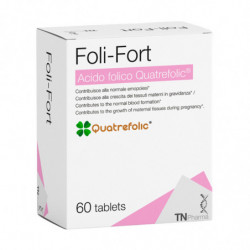
One of the forms used in supplements is also 5-MTHF (5-methyltetrahydrofolate), a biologically active form of folate. Unlike folic acid, it does not require the initial reduction step involving the enzyme dihydrofolate reductase. It is one of the forms used in certain specific formulations, such as Quaterfolic.
5-MTHF can be an alternative form of supplementation, but it cannot automatically be considered superior or necessary for everyone. Even in the presence of genetic variants of the MTHFR enzyme, the choice of formulation should be assessed according to individual needs and the advice of a healthcare professional.
Relationship Between Folate and Vitamin B12
Folate and vitamin B12 work together in several biochemical reactions, particularly in homocysteine metabolism and DNA synthesis. Both are essential for normal red blood cell formation and the proper functioning of numerous cellular processes.
One of the most important reactions is the conversion of homocysteine into methionine. In this process, 5-MTHF donates a methyl group to homocysteine with the help of vitamin B12, which acts as an enzymatic cofactor. The methionine produced is then used by the body in various metabolic reactions.
A deficiency in either vitamin can disrupt this balance and lead to changes in blood cell production. In particular, both folate deficiency and vitamin B12 deficiency can cause megaloblastic anaemia, characterised by red blood cells that are larger than normal and abnormal cell maturation.
It is important to distinguish between the two conditions: a high intake of folic acid can correct some of the blood-related manifestations of vitamin B12 deficiency without addressing the possible neurological damage associated with the latter.
Blood Folate Levels
The amount of folate in the body can be assessed through specific blood tests. The most common test measures the concentration of serum folate, meaning the amount of vitamin B9 present in the liquid part of the blood.
In some cases, folate levels in red blood cells may also be measured. This parameter provides information that is more representative of intake over a longer period.
Results should be interpreted by taking into account the method used by the laboratory, recent dietary intake, any use of supplements and other clinical parameters, such as vitamin B12 levels and a complete blood count.
As a general reference, a serum folate concentration above 3 ng/ml is commonly considered indicative of an adequate intake.
| Parameter | Indicative value | Interpretation |
|---|---|---|
| Serum folate | Below 3 ng/ml | Possible deficiency |
| Serum folate | Above 3 ng/ml | Generally indicative of adequacy |
| Red blood cell folate | Below 140 ng/ml | Possible insufficient intake over time |
| Red blood cell folate | Above 140 ng/ml | Generally indicative of adequacy |
These values are general reference points and do not replace the reference ranges provided in the laboratory report. In particular, serum folate levels may be affected by recent food or supplement intake, whereas red blood cell folate provides information that is more representative of folate status over time.
Consequences of High Folate Levels
A high blood folate level does not necessarily indicate a pathological condition or toxicity. It may often be associated with recent consumption of foods rich in vitamin B9 or the use of supplements containing folic acid or other forms of folate.
One aspect worth considering is the excessive and prolonged intake of supplemental forms of folate. High doses of folic acid can correct anaemia caused by vitamin B12 deficiency without addressing the possible neurological consequences of the deficiency itself. As a result, some blood-related signs may become less apparent, potentially delaying recognition of the problem.
For adults, EFSA has established a tolerable upper intake level of 1,000 µg per day for the combined intake of folic acid and specific supplemental forms of 5-MTHF. This limit applies to forms added to foods or taken through supplements, not to folate naturally present in foods.
The tolerable upper intake level is not a recommended dose to aim for, but a safety reference for the general population. Different doses may be prescribed by a doctor in specific clinical situations.
Foods Rich in Folate
Folate is found in many foods, particularly plant-based foods. Some of the most interesting sources include green leafy vegetables, legumes, certain vegetables, nuts and some cereals.
Including these foods regularly in your diet helps contribute to meeting your daily vitamin B9 requirements. Below are some examples of foods that provide significant amounts of folate, with indicative values for the portions listed.
| Food | Indicative serving | Folate |
|---|---|---|
| Asparagus | 200 g | Approximately 298 µg |
| Cooked lentils | 150 g | Approximately 277 µg |
| Cooked chickpeas | 150 g | Approximately 270 µg |
| Turnip greens | 200 g | Approximately 266 µg |
| Cooked beans | 150 g | Approximately 240 µg |
| Beetroot | 200 g | Approximately 206 µg |
| Spinach | 200 g | Approximately 151 µg |
| Oranges | 150 g | Approximately 63 µg |
Some of the most interesting food sources include:
- Green leafy vegetables: spinach, chard, lettuce, endive and rocket are sources of folate that can be regularly included in meals;
- Legumes: lentils, chickpeas, beans and broad beans provide vitamin B9 and are also sources of fibre and plant-based protein;
- Vegetables: asparagus, broccoli, beetroot and artichokes contribute to daily folate intake;
- Fruit: oranges, mandarins, strawberries and other fruits can contribute varying amounts of vitamin B9;
- Nuts and seeds: hazelnuts, walnuts, almonds and sunflower seeds provide folate along with other micronutrients;
- Cereals and cereal products: some whole grains, oats, quinoa and fortified products can contribute to overall intake.
The folate content of foods can vary depending on the variety, storage conditions and preparation method. Furthermore, as folates are water-soluble compounds, some may be lost in cooking water or degraded by heat. To preserve more of their content, it is useful to choose short cooking methods, such as steaming, and limit boiling times.
Frequently Asked Questions
What Is the Average Daily Folate Requirement?
Daily folate requirements vary depending on age and stage of life. According to EFSA reference values, the recommended amount for adults is 330 µg DFE per day, where DFE stands for dietary folate equivalents. Requirements increase during pregnancy and breastfeeding.
In particular, the reference values are:
- Adults: 330 µg DFE per day.
- Pregnancy: 600 µg DFE per day.
- Breastfeeding: 500 µg DFE per day.
It is important to distinguish dietary requirements from specific recommendations regarding folic acid during pregnancy. In Italy, women planning a pregnancy or who may become pregnant are generally advised to take a supplement containing 400 µg of folic acid per day, starting before conception and continuing at least until the end of the third month of pregnancy, in accordance with healthcare recommendations.
The amounts indicated are general reference values and do not replace an individual assessment. In the presence of specific conditions or a confirmed deficiency, a doctor may recommend a different intake.