- Health and wellness
- 5 views

- What folic acid does for hair
- The link between folic acid and grey hair
- Results before and after supplementation
- How to choose the best folic acid supplement
- Frequently asked questions
What folic acid does for hair
Folic acid is the synthetic form of vitamin B9, an essential nutrient involved in DNA synthesis, cell division and red blood cell formation. These functions are important for tissues characterised by continuous cell renewal, including those involved in hair growth.
The hair follicle is a metabolically active structure: during the growth phase, cells in the hair matrix multiply rapidly and require an adequate supply of nutrients. Folate participates in the cellular processes that support this activity, but this does not mean that taking more folic acid than the body needs will make hair grow faster.
A folate deficiency can impair certain bodily functions and should be corrected, but scientific evidence does not demonstrate that folic acid is an effective treatment for hair loss or thinning in everyone. Choosing a supplement should start with an assessment of individual nutritional needs and any existing deficiencies.
Stimulating hair growth
Hair growth depends on a biological cycle consisting of several phases: anagen, catagen and telogen. The anagen phase is the active growth phase, during which follicle cells multiply and contribute to the formation of the hair shaft. To support this activity, the body needs adequate amounts of energy, protein, vitamins and minerals.
Folate plays a role in DNA synthesis and normal cell division. This function is relevant to tissues that renew themselves rapidly, but it does not allow us to claim that folic acid directly stimulates hair follicles or accelerates hair growth. There is insufficient clinical evidence to recommend folic acid supplementation as a way to make hair grow faster in people who do not have a deficiency.
If the body does not receive sufficient folate, certain cellular processes may be affected, and the deficiency may contribute to broader health problems. In these cases, correcting the deficiency is important, but any effects on hair also depend on the underlying cause and the presence of other deficiencies or related conditions.
To support normal hair growth, it is therefore preferable to consider the overall diet. Adequate intake of protein, iron, zinc and vitamins, together with sufficient energy availability, contributes to normal bodily functions. However, no single nutrient can guarantee faster growth or greater hair density on its own.
Combating hair loss
Folic acid is often included in supplements designed to help combat hair loss. This is due to the role of vitamin B9 in DNA synthesis and cell division, processes that are also important for tissue renewal. However, there is no evidence that folic acid stops hair loss in the absence of a documented deficiency.
Hair loss can depend on numerous factors, including genetic predisposition, hormonal changes, physical or psychological stress, certain medical conditions, medications and nutritional deficiencies. Insufficient protein intake or a lack of specific micronutrients can also contribute to changes in the normal hair growth cycle.
Nutrients that may deserve attention in cases of diffuse hair loss include:
- Iron: a deficiency may be associated with thinning and hair loss, particularly in certain groups of people;
- Vitamin B12: it is involved in red blood cell formation and the normal functioning of the nervous system. Insufficient levels may be associated with various symptoms, including blood-related abnormalities;
- Vitamin D: it has been studied in relation to certain forms of alopecia, although the relationship between blood levels and hair loss varies depending on the condition considered;
- Zinc: it contributes to normal protein synthesis and cell division. A deficiency can affect the health of the skin and hair;
- Protein: prolonged insufficient intake can impair tissue maintenance, including the tissues involved in hair growth.
Not everyone experiencing hair loss has a nutritional deficiency. For this reason, before taking supplements, it is useful to identify the cause of the problem through a medical assessment, which may include a medical history, examination of the scalp and, when appropriate, specific blood tests.
Benefits for nails and skin
Vitamin B9 contributes to several cellular functions that also affect skin tissues and the structures involved in nail growth. Its role in DNA synthesis and cell division is important for normal tissue renewal, but this does not mean that taking folic acid necessarily improves the appearance of the skin or makes nails stronger.
The health of hair, skin and nails depends on numerous nutrients and individual factors. These include protein, iron, zinc, B vitamins and other micronutrients, as well as overall dietary quality. Some vitamins, such as biotin, are involved in energy metabolism and contribute to maintaining certain physiological functions, but the benefits of supplementation also depend on a person's initial nutritional status.
Folic acid should not be considered a specific beauty product or a treatment for strengthening skin appendages. Correcting inadequate nutritional intake can be beneficial for general health when deficiencies are present, but there is no evidence that taking vitamin B9 beyond daily requirements produces additional cosmetic benefits.
The link between folic acid and grey hair
The appearance of grey hair is mainly linked to the gradual reduction or loss of activity of melanocytes, the cells responsible for producing melanin, the pigment that determines hair colour. This process is primarily influenced by genetics and ageing, although other factors may also play a role, including certain health conditions and nutritional deficiencies.
Nutrients worth considering include vitamin B12, folate, iron, vitamin D and copper. Some observational studies have found lower folate levels in people with prematurely greying hair compared with control groups. These findings suggest a possible association, but they do not demonstrate that folic acid deficiency is the direct cause of greying.
There is insufficient evidence to claim that taking folic acid can restore the natural colour of hair that has already turned grey. If a folate deficiency is identified, correcting it is important for general health, but it does not guarantee the restoration of pigmentation. Even when vitamin B12 or other nutritional deficiencies are corrected, the response of hair colour may vary and no specific result can be guaranteed.
Managing grey hair should therefore start with understanding its possible causes, rather than relying on supplements presented as solutions for reversing greying. Genetics and the natural ageing process remain key factors and, at present, there is no proven nutritional treatment capable of reliably restoring the original colour of hair.
Results before and after supplementation
When considering folic acid for hair, it is natural to wonder what results can be expected before and after taking it. However, there is no solid clinical evidence that vitamin B9 supplementation increases hair growth, thickness or density in people who do not have a deficiency.
It is important to remember that hair grows slowly and follows a cycle consisting of several phases. Even when a nutritional factor contributing to hair loss is corrected, an immediate change should not be expected. The time needed to observe any changes can vary, and there is no single timeframe that applies to everyone.
To correctly interpret any changes before and after supplementation, it is useful to consider several factors:
- Initial condition: a documented deficiency makes a benefit from correcting it more plausible;
- Causes of hair loss: androgenetic alopecia, telogen effluvium and other conditions require different assessments and approaches;
- Overall diet: folic acid alone cannot compensate for deficiencies in other nutrients or insufficient energy intake;
- Consistency of the approach: results should be assessed over time and, when necessary, with the support of a dermatologist.
If hair loss is persistent, severe or accompanied by noticeable thinning, it is preferable to consult a dermatologist. A specialist can assess the scalp, identify any deficiencies and determine whether a specific treatment is necessary. Folic acid should be used to correct insufficient intake or for other recognised indications, not as a standalone solution for every hair problem.
How to choose the best folic acid supplement
Choosing a folic acid supplement should start with the specific need you want to address. If the aim is to correct a deficiency, it is important to establish the required amount and follow the advice of a healthcare professional. If, on the other hand, you want to support hair health without a documented deficiency, remember that there is insufficient evidence to consider folic acid a specific treatment for hair loss.
Before purchasing, it is useful to compare several aspects of the formulation:
- Form of folate: check whether the product contains traditional folic acid or another form of folate, such as 5-MTHF.
- Amount per serving: check the actual number of micrograms of folate provided by the daily serving.
- Additional ingredients: read the full ingredient list, especially if you already take multivitamins or other supplements.
- Directions for use: follow the manufacturer's instructions and do not exceed the recommended dose.
- Individual needs: discuss any deficiencies, medical conditions and medication use with a healthcare professional.
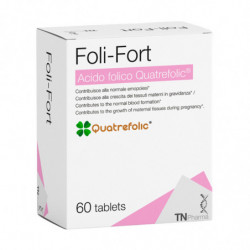
Among the products available from Tsunami Nutrition is Foli-Fort 60 tablets by TN Pharma, which uses Quatrefolic®, a form of folate identified on the product information sheet as 5-methyltetrahydrofolate (5-MTHF). The formulation provides 750 µg of Quatrefolic® per tablet, equivalent to 400 µg of folic acid, and the manufacturer recommends one tablet per day. The product is declared vegan, gluten-free and lactose-free.
The 5-MTHF form is one of the biologically active forms of folate found in the body and is also used in certain supplements containing the raw material Quatrefolic®.
It is important to remember that folate requirements can also be influenced by physiological and clinical conditions. During pregnancy, for example, folic acid is recommended to reduce the risk of neural tube defects in the foetus, according to specific guidelines that should not be confused with using a supplement for hair health. Similarly, in cases of anaemia, malabsorption or medication use, the amount to be taken should be determined by a healthcare professional.
Frequently asked questions
When do the first effects of folic acid on hair become noticeable?
There is no specific timeframe for observing possible changes in hair after taking folic acid. If hair loss is associated with a documented folate deficiency, correcting it may help restore normal bodily functions. However, the response of the hair also depends on the cause of hair loss, the hair growth cycle and the presence of other nutritional or clinical factors.
It would be incorrect to promise results after a specific number of weeks or months. If the aim is to combat persistent hair loss, it is important to identify the cause first with the help of a dermatologist or another healthcare professional. Folic acid supplementation does not guarantee faster growth or greater density in people who already have an adequate intake.
Which vitamin deficiencies can contribute to hair loss?
Hair loss can be associated with several nutritional deficiencies, but not everyone who loses hair has a vitamin deficiency.
Nutrients that may deserve attention include:
- Iron: a deficiency may be associated with thinning and diffuse hair loss, particularly in certain groups of people;
- Vitamin D: it has been studied in relation to several forms of alopecia, although its relationship with hair loss is not the same in every condition;
- Vitamin B12: insufficient levels can affect normal red blood cell formation and other physiological functions;
- Folate (vitamin B9): it is necessary for DNA synthesis and cell division, but there is insufficient evidence to recommend supplementation as a general treatment for hair loss;
- Zinc: it contributes to normal protein synthesis and cell division; a deficiency can also affect skin and hair health;
- Protein: prolonged insufficient intake can impair tissue maintenance and the normal hair growth cycle.
The presence of any of these deficiencies should be verified through an appropriate assessment. Taking high doses of vitamins or minerals without professional advice is not recommended: excessive amounts of certain nutrients can also be harmful and, in some circumstances, contribute to hair loss.
Which vitamin is most important for hair growth?
There is no single vitamin that can be considered the most important for hair growth in everyone. Hair follicles need an adequate supply of energy, protein, vitamins and minerals to function throughout the hair growth cycle. Nutrients that may be relevant when deficiencies are present include iron, vitamin D, vitamin B12, folate and zinc.
Vitamin B9 contributes to normal cell division, while other vitamins perform different functions in metabolism and tissue maintenance. This does not mean that taking more vitamins than necessary automatically promotes hair growth: supplementation is mainly useful when intake is insufficient or a deficiency has been documented.
Folic acid is important for DNA synthesis and cell division, processes that contribute to the normal functioning of tissues, including those involved in hair growth. However, the available evidence does not demonstrate that vitamin B9 supplementation makes hair grow faster, stops hair loss or restores the colour of grey hair in the absence of a deficiency.