- Health and wellness
- 17 views
- What Is Lysine
- Structure and Biological Characteristics
- What Is Lysine Used For
- Action Against the Herpes Simplex Virus
- Collagen Synthesis and Tissue Health
- Muscle Recovery and Support for Athletes
- Dietary Sources of Lysine
- Rich Animal-Based Food Sources
- Plant Sources for Vegetarian and Vegan Diets
- Types of Supplements and Formulations
- Oral L-Lysine Supplements
- Combined Supplementation with Magnesium
- Contraindications and Side Effects
- Possible Adverse Reactions
- Precautions and Contraindications
- Frequently Asked Questions
- Does Lysine Help with Weight Loss?
- What Are the Symptoms of Lysine Deficiency?
- What Is the Purpose of Taking Lysine with Vitamin C?
- When Is the Best Time of Day to Take Lysine Supplements?
What Is Lysine
Lysine is one of the nine essential amino acids for humans. Amino acids are the building blocks of proteins and are involved in numerous bodily functions, from tissue construction and repair to the production of enzymes and other biologically active molecules.
The defining characteristic of essential amino acids is that the body cannot synthesize them in sufficient quantities to meet its needs. For this reason, they must be regularly obtained through an appropriate diet or dietary supplements.
The usefulness of a supplement therefore depends on individual circumstances, overall dietary quality, and any specific needs.
Structure and Biological Characteristics
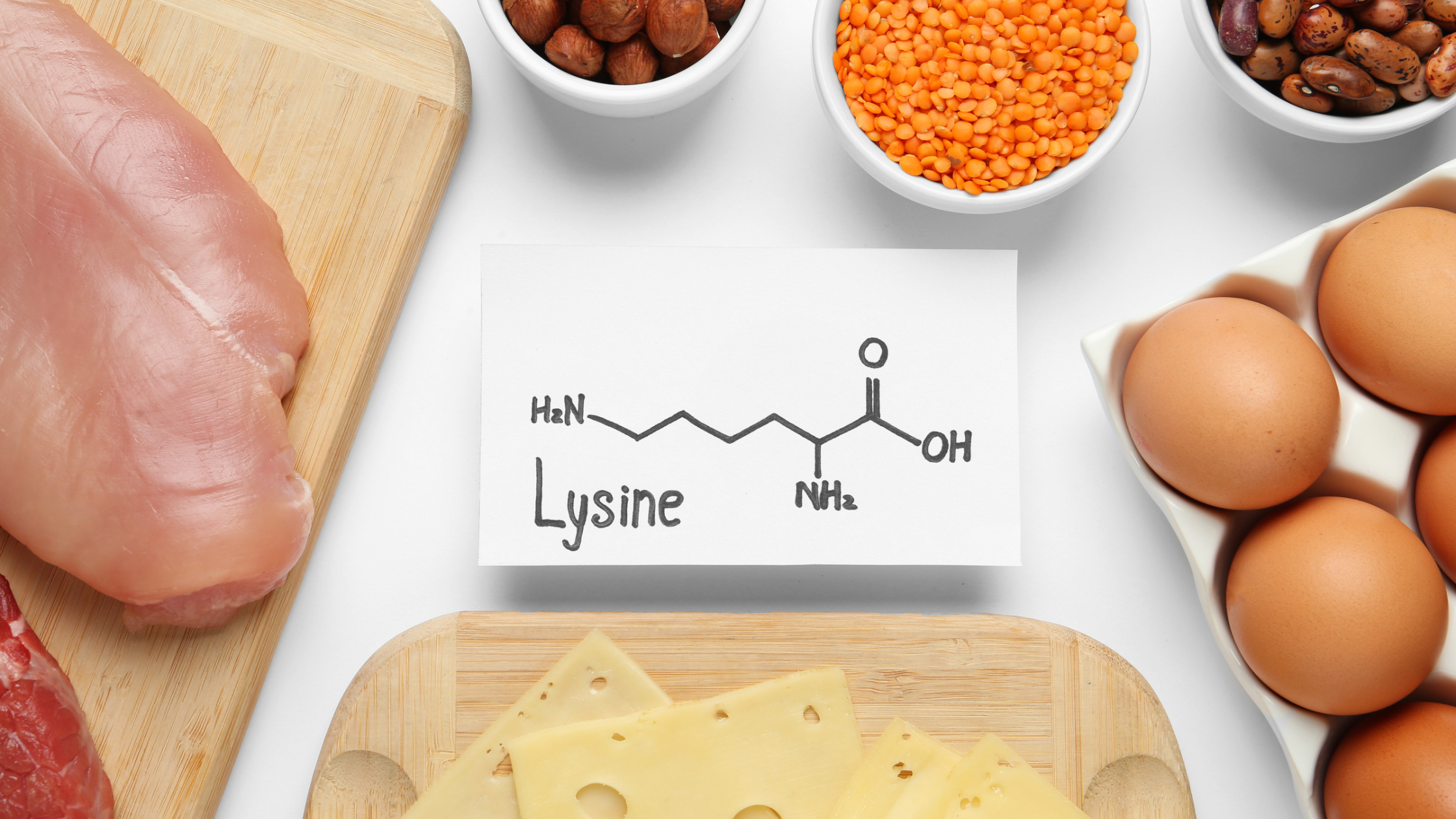
Lysine is an amino acid characterized by a side chain containing an amino group. This structure gives it basic properties and influences how it participates in protein formation and interactions between biological molecules.
The form commonly used in supplements is L-lysine, the isomer incorporated into the body's proteins. Once consumed through food and digested, lysine is absorbed and made available for metabolic processes, along with the other amino acids derived from dietary proteins.
Its main biological functions include:
- Protein synthesis: contributes to the formation of proteins required for tissue growth, maintenance, and renewal.
- Collagen structure: participates in the formation of this structural protein, which is important for the skin, bones, tendons, and other connective tissues.
- Production of other molecules: is involved in metabolic processes that lead to the formation of compounds such as carnitine.
- Nutritional balance: helps provide the amino acids needed to meet the body's protein requirements.
Lysine must be obtained alongside the other essential amino acids, because protein synthesis depends on the availability of all the necessary building blocks.
What Is Lysine Used For
Lysine plays a physiological role in protein synthesis and tissue maintenance. Its presence in the diet is therefore important for supporting normal bodily functions, particularly during periods of growth and when protein requirements are high.
It is important to distinguish lysine's biological functions from the potential additional benefits of taking it as a supplement. The fact that an amino acid is essential does not mean that consuming amounts above the body's requirements automatically produces specific effects on health, athletic performance, or recovery.
Areas in which lysine has been studied include collagen synthesis, muscle metabolism, and its potential relationship with recurrent herpes simplex infections. The available evidence differs across these areas and must be interpreted carefully.
Action Against the Herpes Simplex Virus
Lysine is often suggested as nutritional support for people who experience recurrent cold sores, an infection generally caused by herpes simplex virus type 1. The virus can remain dormant in the body and reactivate under certain circumstances, causing lesions on the lips or surrounding areas.
Interest in lysine also stems from the observation that the virus's metabolism is linked to the availability of certain amino acids, including arginine. This has led to the hypothesis that lysine may indirectly interfere with certain processes associated with viral replication. However, this possible mechanism does not prove that taking oral lysine is sufficient to prevent or treat herpes lesions.
If you experience recurrent herpes outbreaks, it is always preferable to consult a doctor or pharmacist to assess the most appropriate options. Lysine supplements do not replace antiviral treatments when these are indicated and should not be used to delay medical assessment, especially in cases of frequent outbreaks, extensive lesions, or significant symptoms.
Collagen Synthesis and Tissue Health
Lysine participates in the formation of collagen, a structural protein found in the skin, bones, tendons, ligaments, and other connective tissues. Collagen helps provide strength and organization to these structures and is continually renewed through synthesis and degradation processes.
During collagen maturation, some lysine and proline residues are modified through enzymatic reactions called hydroxylation. These transformations contribute to the stability of the collagen structure and the formation of bonds that help keep its fibers organized. Lysine is therefore important both as a component of the protein and as a precursor to modifications required for its structure.
However, collagen synthesis does not depend on lysine availability alone. It also requires other amino acids, energy, and specific cofactors, including vitamin C, as well as an adequate overall intake of nutrients. Consequently, taking additional lysine does not automatically guarantee improved skin appearance or faster tissue repair in someone who already follows an adequate diet.
Muscle Recovery and Support for Athletes
During physical activity, muscles use energy and undergo stress that requires adaptation and repair processes. The availability of essential amino acids, including lysine, contributes to muscle protein synthesis and tissue maintenance.
This physiological role is particularly relevant for people who exercise, because protein requirements may increase depending on the type of training, workout frequency, and individual goals. However, it is not accurate to attribute a direct and guaranteed effect on muscle mass gain, fatigue reduction, or recovery speed to lysine alone.
Several factors should be considered when supporting adaptation to training:
- Overall protein intake: the diet should provide adequate amounts of protein and all essential amino acids;
- Meal distribution: spreading protein intake throughout the day can help meet nutritional needs;
- Energy availability: insufficient energy intake can hinder recovery and adaptation to training;
- Rest and training planning: sleep, workload management, and recovery periods are essential for athletic progress.
If the diet is already adequate and provides all essential amino acids, there is no evidence that supplementing with lysine alone offers significant additional benefits for most athletes.
Dietary Sources of Lysine
Lysine is present in many protein-containing foods. For most people, a varied diet that includes different protein sources can help meet their requirements without necessarily needing specific supplements.
The amount of lysine varies depending on the food, serving size, and cooking method. For this reason, it is more useful to consider the overall quality of the diet rather than focusing on a single food. Total protein intake and the variety of protein sources also help determine essential amino acid intake.
Rich Animal-Based Food Sources
Dietary sources of lysine include several animal-based products, such as meat, fish, eggs, milk, and dairy products. These foods provide proteins containing all essential amino acids, although their relative amounts vary depending on the source and food composition.
Foods that can contribute to lysine intake include:
- Meat: beef, chicken, turkey, and other meats provide proteins containing lysine;
- Fish: various fish species are useful protein sources within a varied diet;
- Eggs: contain proteins of high nutritional quality and contribute to essential amino acid intake;
- Milk and dairy products: milk, yogurt, and cheese provide proteins that contain lysine, in varying amounts depending on the product.
Plant Sources for Vegetarian and Vegan Diets
Lysine is also present in various plant-based foods, particularly legumes and soy products. Beans, lentils, chickpeas, peas, tofu, and other soy derivatives can make a significant contribution to lysine intake.
Cereals such as wheat, rice, and corn generally contain less lysine than legumes relative to their protein content. For this reason, people following predominantly plant-based diets should vary their protein sources rather than relying on a single food group.
The following strategies may be useful for people following vegetarian or vegan diets:
- Include legumes regularly: lentils, chickpeas, beans, and peas help diversify protein intake.
- Use soy products: tofu, tempeh, and other soy-based products can contribute to lysine intake.
- Alternate protein sources: cereals, legumes, nuts, and seeds offer different nutritional profiles.
- Assess the diet as a whole: the quantity and balance of protein intake are more important than finding a single food considered ideal.
It is not necessary to combine cereals and legumes in the same meal: a varied diet throughout the day can provide an adequate range of amino acids. However, overall energy and protein intake must be sufficient, especially when training frequently or when nutritional requirements are specific.
Types of Supplements and Formulations
Lysine supplements are available in different formulations, generally designed to provide the amino acid in defined amounts. Before choosing one, it is important to check the composition, amount per serving, directions for use, and any warnings provided by the manufacturer.
Supplementation may be considered when there is a specific need or when dietary intake is inadequate. In the absence of deficiencies or specific indications, taking additional lysine does not guarantee benefits beyond those obtainable through a balanced diet.
Oral L-Lysine Supplements
L-lysine is marketed mainly in the form of capsules, tablets, or powders. These formulations make it possible to consume a defined amount of the amino acid, but the choice should be based on the product's actual characteristics and individual needs.
When evaluating a supplement, it is useful to check:
- Amount per serving: check how many milligrams of L-lysine are present in the stated dose;
- Added ingredients: check for other amino acids, vitamins, minerals, flavorings, or excipients;
- Directions for use: follow the label instructions without independently increasing the dose;
- Warnings: consider precautions related to individual health conditions and any medications being taken.
Free-form L-lysine is used in various supplements, but the commercial formulation alone does not guarantee a particular clinical outcome. Even when a product is promoted for tissue health or nutritional support, it is important to distinguish the amino acid's physiological role from specific benefits that have not yet been demonstrated.
Combined Supplementation with Magnesium
Some supplements combine amino acids and minerals, including lysine and magnesium. The latter is an essential mineral involved in numerous enzymatic reactions and in the normal functioning of muscles and the nervous system. Lysine participates in protein synthesis and tissue maintenance.
The presence of both nutrients in the same formulation does not, in itself, demonstrate a specific synergy capable of improving muscle function, joint health, or recovery. To assess any potential benefit, it is necessary to consider the product's complete composition, the amounts present, and the available evidence for the specific intended use.
Magnesium can help support normal muscle function when intake meets the body's needs. Lysine, on the other hand, is necessary for protein synthesis. These are distinct physiological roles and do not mean that combined supplementation is essential for everyone.
Contraindications and Side Effects
Lysine is an amino acid normally found in foods and required by the body. However, this does not mean that taking high amounts through supplements is always risk-free. Tolerability may vary depending on the dose, duration of use, and individual circumstances.
Safety studies on L-lysine have mainly reported gastrointestinal disturbances as possible adverse effects. Nevertheless, the available information does not justify considering every dose or duration of use automatically safe for everyone.
Possible Adverse Reactions
Side effects associated with lysine supplements may include:
- Gastrointestinal disturbances: nausea, abdominal pain, or diarrhea, particularly when the supplement is not well tolerated;
- Digestive discomfort: some people may experience a feeling of heaviness or discomfort after taking it;
- Individual reactions: tolerability may also depend on the other ingredients in the formulation.
It is not advisable to increase the dose independently in an attempt to obtain faster results. A higher amount does not guarantee greater benefits and may increase the likelihood of adverse effects.
Precautions and Contraindications
Before taking a lysine supplement, it is advisable to assess your individual circumstances, especially if you have medical conditions or are taking medication. People with kidney problems should consult their doctor before using supplemental lysine, because amino acid and protein management may require specific precautions in certain clinical conditions.
It is also advisable to seek medical advice during pregnancy and breastfeeding, when safety data on supplementation may be limited. The same caution applies to people taking several supplements at the same time or following a therapeutic diet.
To use these products more responsibly:
- Follow the manufacturer's recommended daily dose;
- Do not use the supplement as a substitute for a varied and balanced diet;
- Check the ingredients and any overlap with other products;
- Consult a doctor or pharmacist if you have medical conditions, are taking medication, or have questions about compatibility.
Frequently Asked Questions
Does Lysine Help with Weight Loss?
There is insufficient evidence to consider lysine a weight-loss supplement or a product that directly increases fat burning. It is an essential amino acid that contributes to protein synthesis and normal bodily functions, but this role is not equivalent to a weight-loss effect.
Weight management depends primarily on energy balance over time, dietary quality, physical activity, sleep, and other individual factors. If the diet already provides adequate amounts of protein and essential amino acids, there is no evidence that adding lysine produces a significant reduction in body fat.
When pursuing weight loss, it is preferable to focus on sustainable habits and, if necessary, seek support from a nutrition professional.
What Are the Symptoms of Lysine Deficiency?
A significant lysine deficiency may occur when protein intake is insufficient or the diet is particularly restricted and lacks variety. Since lysine is necessary for protein synthesis, an inadequate supply may contribute to impaired tissue maintenance and growth, especially when accompanied by an overall deficiency of protein or other nutrients.
However, there is no single specific symptom that allows someone to identify lysine deficiency independently. Fatigue, difficulty recovering, growth disturbances, or loss of muscle mass may have many causes and should not automatically be attributed to this amino acid.
What Is the Purpose of Taking Lysine with Vitamin C?
Lysine and vitamin C participate in different processes that are nevertheless connected to tissue maintenance. Lysine is one of the amino acids used in collagen synthesis, while vitamin C is a necessary cofactor for certain enzymatic reactions involved in the maturation of this structural protein.
In particular, vitamin C contributes to the hydroxylation of certain proline and lysine residues in collagen. These modifications are important for the stability of the collagen structure. However, this does not mean that taking lysine and vitamin C together as supplements necessarily provides additional benefits if the diet already supplies adequate amounts of both nutrients.
When Is the Best Time of Day to Take Lysine Supplements?
There is no universally recognized best time to take lysine. The time of day may depend on the formulation, the manufacturer's instructions, and individual tolerability. For this reason, it is advisable to follow the instructions on the label of the chosen product.
There is no evidence that taking lysine in the morning, before a workout, or away from meals guarantees better results in every situation.
Lysine is an essential amino acid that contributes to protein synthesis and tissue maintenance. It is found in many animal- and plant-based foods and, under normal circumstances, a varied and balanced diet can help meet the body's requirements.