- Health and wellness
- 3 views
- What Is Pantothenic Acid?
- What Does Pantothenic Acid Do?
- Food Sources of Pantothenic Acid
- How to Use Pantothenic Acid Supplements Correctly
- Side Effects and Contraindications
- Frequently Asked Questions
What Is Pantothenic Acid?
Pantothenic acid, also known as vitamin B5, is a water-soluble vitamin belonging to the B-vitamin group. It is an essential nutrient because the body cannot produce it in sufficient quantities and must therefore obtain it through the diet.
Its main function is related to the synthesis of coenzyme A (CoA), a molecule involved in numerous metabolic reactions. Coenzyme A plays a role in processes such as the metabolism of carbohydrates, fats and proteins, contributing to the reactions through which cells obtain and use energy.
Like other B vitamins, pantothenic acid therefore plays an important role in the normal functioning of the body. It is found in many foods and, precisely because it is so widely available in the diet, deficiency is considered rare in people who follow a varied diet.
Chemical Formula and Structure
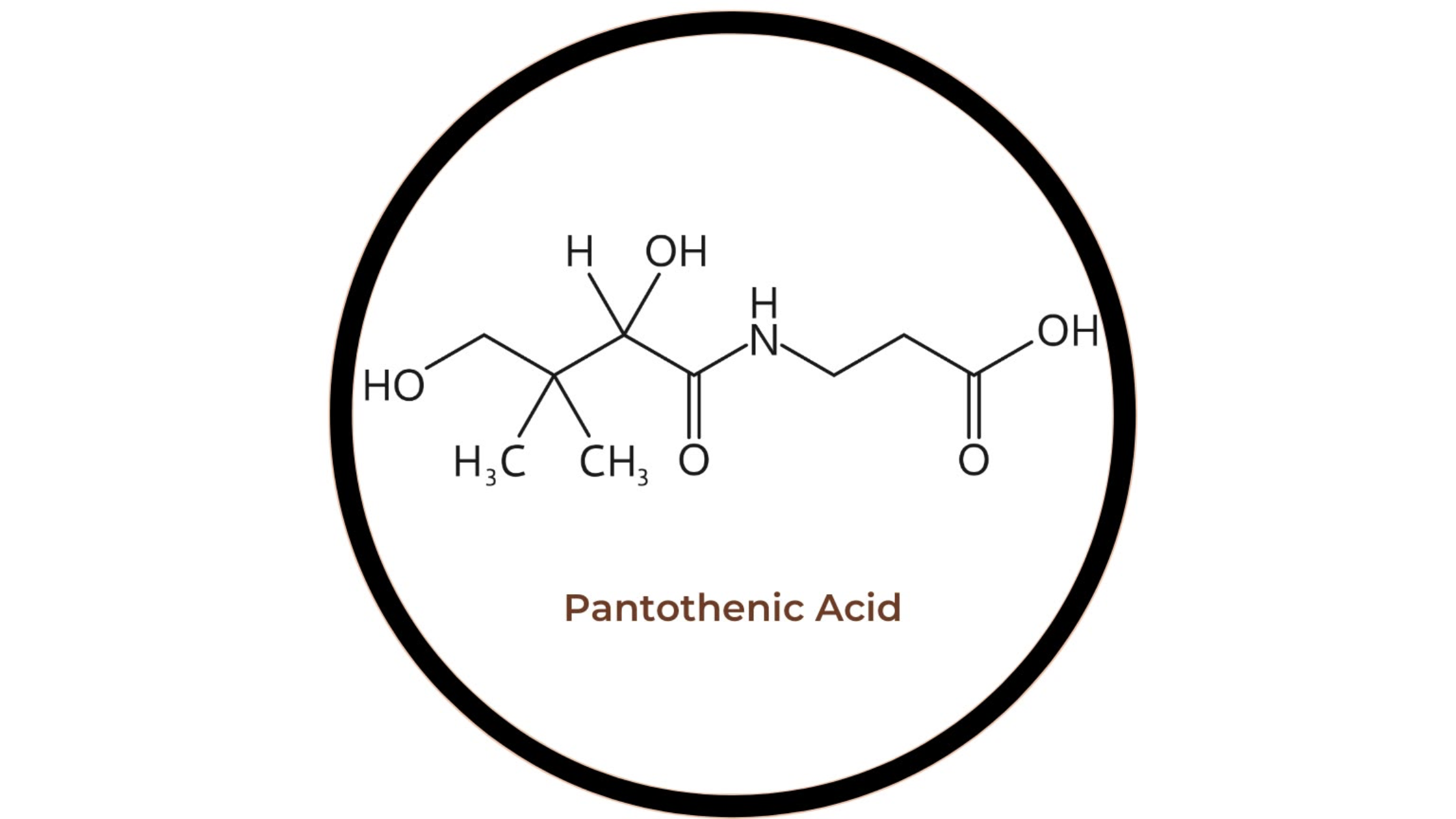
Pantothenic acid has the molecular formula C₉H₁₇NO₅. Its structure is formed by the combination of two components: pantoic acid and beta-alanine. This particular structure allows it to contribute to the formation of coenzyme A and other molecules involved in cellular metabolism.
Vitamin B5 is also required for the production of acyl carrier protein (ACP), a protein involved in fatty acid synthesis. Coenzyme A and ACP perform complementary functions in lipid metabolism and numerous biochemical reactions, making pantothenic acid important for the normal functioning of cells.
As a water-soluble vitamin, vitamin B5 dissolves in water, and excess amounts are generally eliminated through urine. However, this does not mean that it is advisable to take high doses without a specific need: water-soluble vitamins must also be consumed in appropriate amounts and supplements must be used correctly.
What Does Pantothenic Acid Do?
Pantothenic acid contributes to numerous physiological processes, primarily through its role in the production and functioning of coenzyme A. It is involved in energy metabolism and the synthesis and breakdown of fatty acids, as well as in the production of certain molecules needed by the body.
Vitamin B5 is therefore important for the normal functioning of cells and tissues. However, it is necessary to distinguish these biological functions from the benefits that may be obtained by taking a supplement: consuming more than the required amount does not automatically guarantee more energy, healthier hair or improved digestion.
Benefits for Hair
Pantothenic acid is often included in supplements intended to support hair and skin health. Its relevance in this area comes from its role in cellular metabolism and coenzyme A production, which is involved in numerous processes required for tissues to function properly.
Vitamin B5 is also present in skin cells and participates in normal metabolic activities that contribute to tissue maintenance. However, there is insufficient clinical evidence to conclude that pantothenic acid supplementation directly promotes hair growth or counteracts hair loss in people who do not have a deficiency.
Hair health depends on several factors, including genetics, hormonal conditions, nutritional status and scalp health. Other micronutrients, such as biotin, also participate in normal physiological processes related to tissue maintenance.
If you experience brittle hair, thinning or persistent hair loss, it is important not to automatically attribute the problem to a vitamin B5 deficiency. The causes may vary and require a specific assessment. A varied diet and an adequate intake of micronutrients contribute to overall well-being.
Gut Health
Pantothenic acid is also involved in metabolic processes that take place in the cells of the digestive system. As a component of coenzyme A, it participates in reactions required for nutrient metabolism and the normal functioning of intestinal cells. Vitamin B5 is also absorbed in the intestine through specific transport mechanisms.
These aspects help explain why this nutrient is also important for the metabolism of digestive system tissues. However, it is important not to attribute a direct therapeutic effect to it: there is insufficient evidence to consider pantothenic acid a treatment for intestinal disorders or a product capable of rebalancing the gut microbiota on its own.
Gut health depends on several factors, including diet, hydration, microbiota composition, physical activity and individual health conditions. An adequate intake of vitamins and minerals contributes to the normal functioning of the body, but does not replace medical assessment when persistent symptoms are present.
Food Sources of Pantothenic Acid
Pantothenic acid is found in a wide variety of foods of both animal and plant origin. Its name comes from the Greek word pantos, meaning "everywhere", precisely because vitamin B5 is widely distributed throughout the diet. Under normal circumstances, this widespread availability makes an isolated deficiency rare.
Some of the food sources that can contribute significantly to vitamin B5 intake include:
- Meat and organ meats: certain meats, particularly liver, can provide significant amounts of pantothenic acid;
- Fish and seafood: various species contribute to vitamin B5 intake alongside other nutrients;
- Eggs: egg yolks contain pantothenic acid and can contribute to daily intake;
- Milk and dairy products: milk and some dairy products provide varying amounts of vitamin B5;
- Mushrooms: certain varieties are interesting plant-based sources;
- Legumes: beans, lentils and other legumes contribute to the intake of this vitamin;
- Whole grains: oats and other whole grains can provide pantothenic acid, although processing may reduce their content;
- Nuts and seeds: peanuts, sunflower seeds and other varieties can contribute to dietary intake;
- Vegetables: broccoli, avocado and other vegetables contain varying amounts of vitamin B5.
The amount found in foods can vary depending on the variety, storage conditions and preparation method. Pantothenic acid is sensitive to certain processing and cooking conditions: some of it may be lost during food processing, especially when foods are subjected to prolonged treatments or come into contact with large amounts of water.
How to Use Pantothenic Acid Supplements Correctly
Pantothenic acid supplements may be considered when there is a specific need to increase vitamin B5 intake. Before using them, it is important to assess your usual diet and check whether the chosen product actually meets your needs.
Vitamin B5 may be available in standalone supplements or as part of formulations that combine several vitamins and minerals. In particular, some products contain the entire B-vitamin group, whose members participate in different but complementary metabolic processes.
It is important to check the amount of each vitamin, especially when already using other multivitamins or sports supplements. The aim is to avoid unnecessary overlapping intake and maintain an intake that is consistent with your nutritional needs.
Directions for Use and Amount per Serving
There is no single supplement dose that is suitable for everyone. The amount to take depends on the pantothenic acid content per serving, the product's composition and the manufacturer's instructions. It is therefore necessary to read the label carefully and not automatically apply the dosage of one product to another.
When evaluating a vitamin B5 supplement, it is useful to check:
- Amount per serving: check how many milligrams of pantothenic acid are contained in the recommended daily serving;
- Composition: check whether the product contains only vitamin B5 or also other vitamins, minerals or added ingredients;
- Directions for use: follow the instructions on the packaging, including those concerning whether to take it with meals;
- Intake from other products: consider any overlapping intake from multivitamins or B-complex supplements already in use;
- Individual needs: discuss the potential need for supplementation with a doctor or pharmacist, especially if you have a medical condition or are taking medication.
For adults, the generally accepted adequate intake is 5 mg per day. This value refers to total intake from food and supplements and does not mean that this amount must necessarily be taken as a supplement. For most people, a varied diet already helps meet their requirements.
There is no evidence that taking amounts far above the required intake improves energy metabolism, hair health or intestinal function. A supplement should therefore be used to address a specific need, not as a substitute for a balanced diet.
Side Effects and Contraindications
Pantothenic acid is generally well tolerated. Since it is found in many foods, isolated deficiency is rare in people who follow a varied diet. No tolerable upper intake level has been established for the general population because there is insufficient evidence to define a toxicity threshold.
Very high amounts of vitamin B5, particularly from concentrated supplements, may cause gastrointestinal disturbances. In some cases, diarrhoea and abdominal discomfort have been reported after taking doses in the range of several grams per day.
Precautions to consider include:
- Gastrointestinal disturbances: very high doses may cause diarrhoea, nausea or abdominal discomfort;
- Taking multiple supplements: it is important to check whether vitamin B5 is present in several products to avoid unnecessary intake;
- Medical conditions or ongoing treatments: if you have a medical condition or are taking medication, seek medical advice before starting supplementation;
- Pregnancy and breastfeeding: the use of additional doses should be assessed according to individual needs and the advice of a healthcare professional.
Vitamin B5 is not known to have clinically significant interactions with medicines at normal dietary intake levels. However, supplements may contain other ingredients that require different precautions. For this reason, it is important to consider the entire formulation, not just the presence of pantothenic acid.
If symptoms occur after taking the supplement, it is advisable to stop using the product and seek advice from a doctor or pharmacist, especially if the symptoms persist. If you have a medical condition or are undergoing drug treatment, it is preferable to check the supplement's compatibility beforehand.
Frequently Asked Questions
What Is the Recommended Daily Intake of Pantothenic Acid?
For adults, the generally accepted adequate intake for pantothenic acid is 5 mg per day. This is a reference value for total intake from food and supplements, not an amount that must necessarily be obtained through a supplement.
Requirements may vary according to age and stage of life. For example, during breastfeeding, some nutritional authorities indicate a higher adequate intake than that recommended for adults who are not breastfeeding. In any case, a varied and balanced diet generally helps provide adequate amounts of vitamin B5.
Is Pantothenic Acid Harmful When Taken in High Doses?
Pantothenic acid has a low potential for toxicity, and no tolerable upper intake level has been established. However, very high doses, particularly those in the range of several grams per day, may cause gastrointestinal disturbances such as diarrhoea and abdominal discomfort.
There is no evidence that taking more than the required amount further improves energy metabolism or provides additional benefits for hair and gut health. It is therefore preferable to follow the manufacturer's instructions and not increase the dose independently. If you have a medical condition or concerns about safety, seek advice from a healthcare professional.
Should Pantothenic Acid Supplements Be Taken Before or After Meals?
There is no specific time of day that is considered best for taking pantothenic acid. How it should be taken depends on the formulation and the instructions on the label. If the product is intended to be taken with a meal, this instruction should be followed.
For many people, taking the supplement alongside an everyday habit, such as breakfast, can make it easier to remember. However, there is insufficient evidence to conclude that taking it before or after eating significantly increases its benefits. The priority is to follow the recommended dose and assess whether supplementation is actually necessary.
Pantothenic acid is an essential nutrient involved in energy metabolism and the synthesis of coenzyme A. A varied diet generally helps meet the body's requirements, while supplements may be considered when there is a specific need. High doses do not guarantee additional benefits and may cause gastrointestinal disturbances. It is therefore important to follow the product instructions and take individual circumstances into account.