- Health and wellness
- 5 views

- What potassium chloride is used for
- Available forms and uses
- Recommended daily intake
- Risks and side effects
- Frequently asked questions
What potassium chloride is used for
Potassium chloride (KCl) is an inorganic salt that, once dissolved in the body's fluids, dissociates into two ions: potassium (K⁺) and chloride (Cl⁻). The former is the main electrolyte found inside cells, while the latter mainly contributes to fluid balance and the regulation of acid-base balance.
In medicine, potassium chloride is primarily used to prevent or correct hypokalaemia, a condition in which the concentration of potassium in the blood is below the reference range. This condition may occur, for example, following gastrointestinal losses or the use of certain medications. Its use must be assessed in light of blood test results and the individual's health, as excessive potassium levels can also be dangerous.
Main functions in the body
The functions of potassium chloride mainly depend on the potassium it provides. This mineral is essential for maintaining the electrical potential of cell membranes, a condition required for communication between cells and the normal functioning of various tissues and mineral salts.
The main physiological processes it contributes to include:
- Muscle contraction: potassium helps regulate the electrical impulses that allow muscles to contract and relax, including the heart muscle;
- Nerve transmission: it contributes to the generation and propagation of electrical signals between nerve cells;
- Fluid and electrolyte balance: together with sodium, it helps regulate the distribution of fluids inside and outside cells;
- Blood pressure regulation: an adequate potassium intake, as part of a balanced diet, contributes to maintaining normal blood pressure;
- Acid-base balance: potassium participates in the mechanisms that help maintain a stable pH in body fluids.
Chloride ions also perform important functions: they are involved in osmotic balance, pH regulation and the formation of hydrochloric acid in the stomach, which is necessary for digestion.
Available forms and uses
Potassium chloride can be used in different formulations, which vary in concentration, method of intake and intended purpose. Its main applications include food supplements and medicinal preparations, intended to provide potassium, and food products in which it is used to partially replace sodium chloride.
It is important not to confuse these uses: a low-sodium food product is not equivalent to a medicine used to treat hypokalaemia. The amount of potassium provided can also vary considerably depending on the formulation.
Food supplements
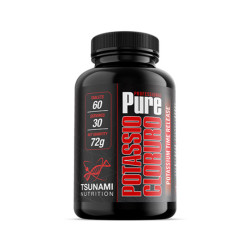
Potassium chloride may be included in products intended to supplement the intake of this mineral. Formulations may include capsules, tablets, powders or liquid preparations, providing different amounts of elemental potassium. The choice depends on the product's composition and individual nutritional needs.
It is essential to distinguish the amount of potassium chloride from the amount of potassium actually provided. The compound contains both potassium and chloride: 1 gram of potassium chloride provides approximately 524 mg of elemental potassium. For this reason, when reading a product label, it is important to check whether the stated amount refers to the compound itself or to the mineral alone.
Supplements may be considered when dietary intake is inadequate or when a healthcare professional believes that potassium intake needs to be increased. However, they are not automatically recommended for people who play sports, sweat heavily or experience cramps: these symptoms can have many different causes and do not, on their own, demonstrate a potassium deficiency.
Food use as a salt substitute
Another use of potassium chloride is in food production and salt substitutes. The compound has a salty taste and can be used to partially replace sodium chloride in certain products, helping to reduce their sodium content.
This application is relevant because excessive sodium consumption is associated with increased blood pressure. Replacing some ordinary salt with potassium-containing products may therefore be a strategy for reducing sodium intake as part of a balanced diet.
Potassium chloride may be found in:
- Salt substitutes: granulated or powdered products used instead of ordinary table salt;
- Reduced-sodium foods: some industrially prepared foods may use it to maintain a salty taste while reducing sodium chloride;
- Processed products: it may be used as an ingredient or additive in various food categories, in accordance with the permitted conditions of use.
Potassium chloride can have a slightly bitter or metallic taste, especially when used in high concentrations. For this reason, it is often combined with ordinary salt in varying proportions in food products.
However, salt substitutes are not suitable for everyone. People with kidney failure, high blood potassium levels or those taking medications that reduce potassium elimination should consult their doctor before using potassium-based salt substitutes. Even a product intended for food use can provide significant amounts of this mineral.
Recommended daily intake
There is no single daily dose of potassium chloride that is suitable for everyone. Nutritional reference values concern the total amount of potassium consumed throughout the day, regardless of its food source or the chemical form in which it is taken.
According to the European Food Safety Authority (EFSA), the adequate intake of potassium for adults is 3,500 mg per day. This value includes potassium from all foods and does not represent the amount of potassium chloride that should be taken as a supplement.
The amount required from a possible supplement depends on several factors:
- Dietary intake: fruit, vegetables, legumes, potatoes, nuts and other foods already contribute to daily potassium requirements;
- Health conditions: kidney function and any existing electrolyte imbalances affect the body's ability to regulate potassium;
- Medications: certain medicines can increase or decrease the concentration of this mineral in the blood;
- Reason for supplementation: the amount used to correct a documented deficiency may differ from that considered for nutritional supplementation.
As for the time of day, there is no universally best time to take it. Instructions depend on the formulation and individual tolerance. Some medicinal preparations for oral use must be diluted and taken with meals to reduce gastrointestinal irritation.
Anyone taking potassium chloride to treat a diagnosed deficiency should follow their doctor's instructions and should not change the dose independently. Depending on the situation, blood potassium and kidney function tests may be necessary to check that treatment is effective and safe.
Risks and side effects
Potassium chloride can be useful when it is necessary to correct an inadequate intake or a mineral deficiency, but inappropriate use may cause unwanted effects. The risks mainly depend on the amount taken, the formulation, kidney function and whether the person is taking medications that affect potassium levels.
The main concern is hyperkalaemia, which is an excessive increase in the concentration of potassium in the blood. This condition can interfere with the electrical activity of the heart and, in more severe cases, cause potentially dangerous arrhythmias.
When potassium chloride can be harmful
Potassium chloride can be particularly risky for people who have difficulty eliminating the mineral through their kidneys or who take medicines that can promote its accumulation. In these cases, even amounts that might be tolerated by a healthy person can contribute to an excessive increase in blood potassium levels.
Particular caution is needed in the presence of:
- Kidney failure: the kidneys play a central role in eliminating potassium, and reduced kidney function can lead to its accumulation;
- Pre-existing hyperkalaemia: taking additional potassium can further worsen the condition;
- Diabetes and adrenal insufficiency: certain metabolic and hormonal disorders can interfere with potassium regulation;
- Heart failure or certain liver conditions: these may be associated with a greater risk of electrolyte imbalances, particularly when certain treatments are used;
- Use of specific medications: ACE inhibitors, ARBs and potassium-sparing diuretics, such as spironolactone, amiloride and triamterene, can increase the risk of hyperkalaemia.
The most common side effects following oral potassium chloride intake involve the digestive system. Nausea, vomiting, abdominal bloating, stomach pain or discomfort and diarrhoea may occur. Taking it with meals and properly diluting liquid formulations, when required, may help reduce gastrointestinal irritation.
Risks of overdose
An overdose of potassium chloride can cause an excessive increase in blood potassium levels, resulting in hyperkalaemia. The risk is particularly high when large amounts of the compound are taken, when kidney function is impaired or when medications that reduce potassium elimination are being used.
In its early stages, hyperkalaemia may not cause any noticeable symptoms. When symptoms do occur, they may include:
- Muscle weakness: a feeling of reduced strength or difficulty moving;
- Tingling and changes in sensation: these may affect different areas of the body;
- Nausea and gastrointestinal problems: these may accompany excessive potassium levels;
- Palpitations: these may indicate an alteration in the heart's electrical activity;
- Heart rhythm disturbances: in severe cases, dangerous arrhythmias and potentially life-threatening complications may occur.
If an overdose is suspected or symptoms suggest a serious potassium imbalance, urgent medical assessment is necessary. Do not wait for all symptoms to appear or attempt to correct the situation independently by changing your diet or taking other supplements.
Frequently asked questions
How can potassium be obtained through the daily diet?
The easiest way to obtain potassium through your daily diet is to regularly include fruit, vegetables, legumes, tubers and nuts as part of a varied diet. These foods provide the mineral together with other nutrients, such as fibre, vitamins and plant compounds.
The main dietary sources include:
- Fruit: bananas, kiwis, apricots, melon, avocado and dried fruit;
- Vegetables: spinach, Swiss chard, tomatoes, broccoli and other leafy green vegetables;
- Legumes: lentils, chickpeas, beans and soy;
- Tubers: potatoes and sweet potatoes;
- Nuts and seeds: almonds, pistachios, pumpkin seeds and other oilseeds;
- Animal-based foods: milk, yoghurt, fish and meat also contribute to daily intake.
To achieve an adequate intake, it is preferable to distribute these sources across different meals, alternating foods and portion sizes. There is no need to focus on a single product or consume large quantities of a specific food: variety is important to ensure a balanced intake of micronutrients.
Under normal conditions, a varied diet generally provides enough potassium without the need for potassium chloride supplements. When there are documented deficiencies, significant losses or conditions that affect electrolyte balance, a healthcare professional can assess whether specific support is necessary.
Potassium chloride is a concentrated source of potassium, used in nutrition as well as for specific medical and food-related purposes. It can help correct a deficiency or partially replace ordinary salt in certain products, but it is not suitable for everyone and should not be taken without considering one's health. A balanced diet remains the main starting point for meeting potassium requirements, while supplementation should be assessed according to individual needs and the advice of a healthcare professional.