- Health and wellness
- 2 views
- What Is Tyrosine?
- Difference Between L-Tyrosine and Acetyl Tyrosine
- What Is Tyrosine Used For?
- Dopamine Synthesis and the Stress Response
- Role in Weight Loss
- Contraindications and Side Effects
- Frequently Asked Questions
- Which Foods Contain Tyrosine?
- When Should You Take Tyrosine Supplements?
- What Is the Difference Between L-Tyrosine and Eutirox?
- What Does Tyrosine in Cheese Represent?
What Is Tyrosine?
Tyrosine is an amino acid involved in several physiological processes, including the production of certain substances that participate in communication between nerve cells and the synthesis of thyroid hormones. The body can produce it from phenylalanine, an essential amino acid obtained through the diet. For this reason, under normal conditions, tyrosine is classified as a non-essential amino acid.
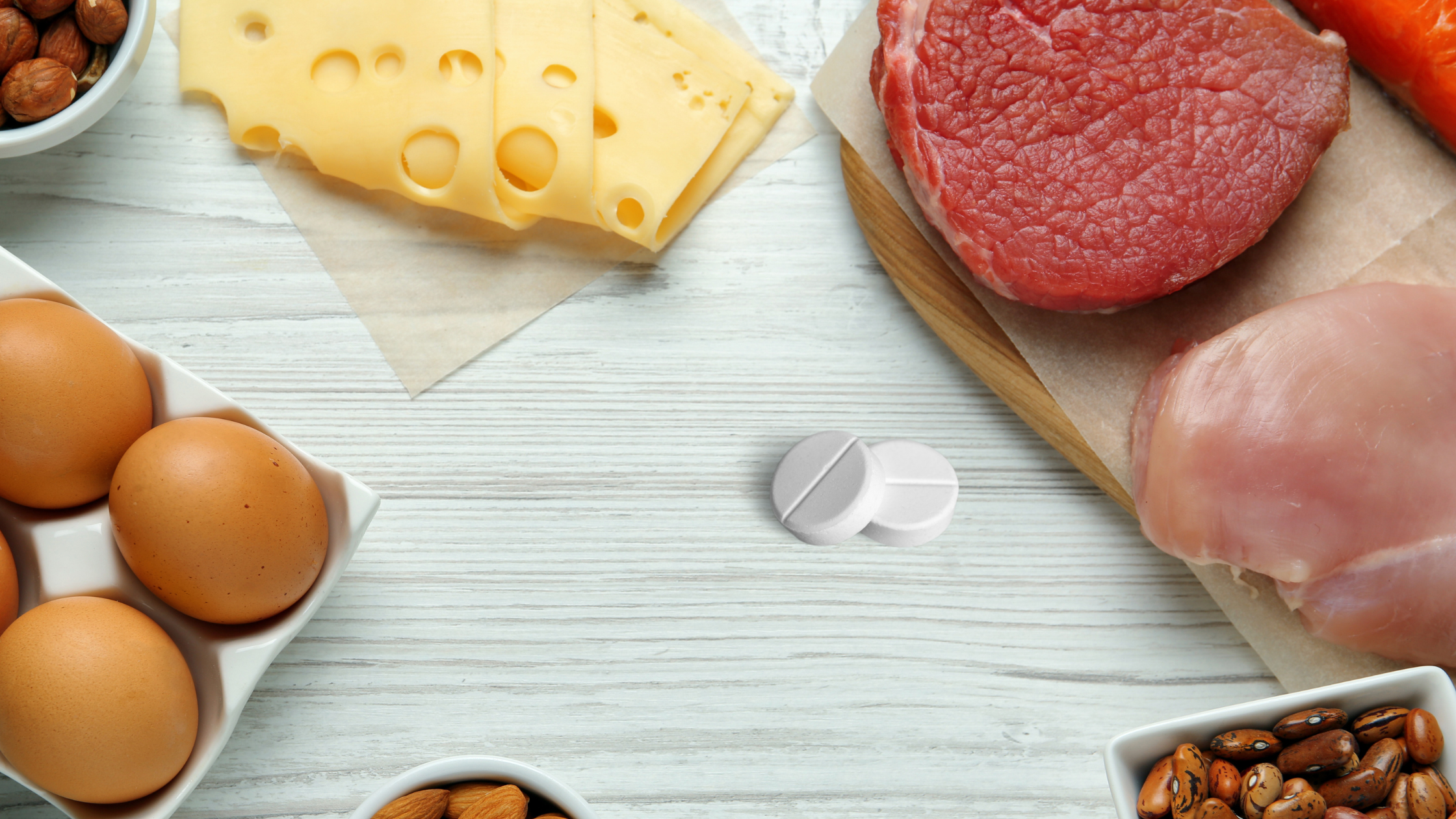
Tyrosine occurs naturally in protein-rich foods such as meat, fish, eggs, dairy products, legumes and nuts. It is also available as a supplement, often marketed as L-tyrosine and promoted to support certain cognitive functions in demanding situations. However, the fact that it participates in important bodily processes does not mean that taking a supplement will automatically produce noticeable benefits.
Difference Between L-Tyrosine and Acetyl Tyrosine
L-tyrosine is the form of the amino acid commonly used in supplements. It contributes to the synthesis of catecholamines, a family of substances that includes dopamine, noradrenaline and adrenaline, and is also involved in thyroid hormone production.
Acetyl tyrosine, also known as N-acetyl-L-tyrosine or NALT, is a chemically modified form of tyrosine with an acetyl group added to its structure. This structural difference may affect the molecule's properties, but it does not, by itself, demonstrate that the acetylated form is better absorbed or reaches the brain in greater amounts than conventional L-tyrosine.
Claims about greater solubility or the presumed superiority of NALT should be interpreted cautiously: comparative evidence in humans is limited and does not support the claim that acetyl tyrosine is always more bioavailable or more effective. The two formulations should therefore not automatically be considered equivalent or assume that one is superior to the other in every context.
What Is Tyrosine Used For?
Tyrosine performs several biological functions, mainly because it is a precursor of molecules involved in the nervous system and thyroid function. In nutrition, attention often focuses on its potential role in the response to stressful situations and on formulations that include it as an ingredient.
However, it is important to distinguish the amino acid's physiological function from the effects of supplementation. A diet that provides adequate amounts of protein normally supplies tyrosine and phenylalanine; taking additional amounts does not necessarily increase neurotransmitter concentrations or improve mental performance.
Dopamine Synthesis and the Stress Response
Tyrosine is a precursor of dopamine, noradrenaline and adrenaline, substances involved in numerous processes, including attention, motivation, alertness and the body's response to demanding situations. Dopamine participates in communication between neurons, while noradrenaline and adrenaline contribute to the physiological response to stressful stimuli.
Tyrosine is not an anti-anxiety supplement and does not guarantee improvements in mood or concentration. Its effects may depend on several factors, including the context, nutritional status, individual circumstances and level of stress. It is also inaccurate to describe it as a substance that always prevents catecholamine depletion or necessarily counteracts cognitive decline.
In any case, supplements do not replace rest, a balanced diet or professional support when stress and concentration difficulties become persistent.
Role in Weight Loss
Tyrosine is sometimes included in formulations intended to support metabolism or weight management. This association is partly related to its role in the production of catecholamines and thyroid hormones, which are involved in physiological processes that contribute to regulating the body's activity.
However, this biological connection does not mean that taking tyrosine significantly increases energy expenditure or accelerates fat loss. There is no strong evidence that tyrosine alone is a weight-loss supplement. Thyroid hormone synthesis is regulated by several mechanisms and does not depend solely on the availability of this amino acid.
Reducing body fat depends primarily on energy balance over time, diet quality, physical activity, sleep and other individual factors. Using a product containing tyrosine does not compensate for an inadequate diet and does not guarantee changes in body composition.
Contraindications and Side Effects
Tyrosine occurs naturally in protein-rich foods and is used by the body for several functions. However, taking a concentrated supplement requires greater caution, particularly in the presence of medical conditions, medication use or circumstances in which the safety of supplementation has not been adequately established.
Possible adverse effects reported with tyrosine supplements include:
- Gastrointestinal problems, such as nausea or abdominal discomfort;
- Headaches, which may occur in some people;
- Individual tolerability issues, the likelihood of which may depend on the amount taken and the formulation.
Available information on the long-term safety of concentrated tyrosine supplementation is limited. It is therefore advisable to follow the instructions on the label and avoid independently increasing the dose or combining several supplements containing similar ingredients.
Particular caution is needed in cases of hyperthyroidism or Graves' disease, because tyrosine participates in thyroid hormone synthesis. This does not mean that the amino acid necessarily increases hormone levels, but people with thyroid disorders should avoid taking supplements without medical advice.
Compatibility should be assessed in relation to the specific treatment being used. It is not prudent to assume that a supplement is safe simply because it contains an amino acid found in food. During pregnancy and breastfeeding, supplementation should be avoided unless otherwise advised by a healthcare professional.
Frequently Asked Questions
Which Foods Contain Tyrosine?
Tyrosine is found mainly in foods that provide protein. Dietary sources include meat, fish, eggs, milk, yoghurt, cheese and certain plant-based foods, such as soy, legumes, seeds and nuts. The amount varies according to the type of food and its protein composition.
Since the body can synthesise tyrosine from phenylalanine, a varied diet that provides adequate amounts of protein normally helps meet physiological needs. It is therefore not automatically necessary to take a supplement to obtain this amino acid.
When Should You Take Tyrosine Supplements?
There is no single time of day that is suitable for everyone taking tyrosine supplements. Recommendations may vary according to the formulation and the manufacturer's instructions. Some products recommend taking them between meals, but it is not accurate to claim that taking tyrosine on an empty stomach always ensures greater passage across the blood-brain barrier or better results.
What Is the Difference Between L-Tyrosine and Eutirox?
L-tyrosine and Eutirox are completely different substances and are not interchangeable. L-tyrosine is an amino acid that the body uses, among other things, to synthesise thyroid hormones. Eutirox, on the other hand, is a medicine containing levothyroxine sodium, a synthetic form of the thyroid hormone T4, prescribed to treat conditions such as hypothyroidism.
Tyrosine does not replace levothyroxine and must not be used to change or discontinue thyroid treatment. Furthermore, taking more tyrosine does not necessarily mean that the body will produce more thyroid hormones: their synthesis is regulated by complex mechanisms and depends on the function of the thyroid gland.
Anyone taking Eutirox should consult their doctor or pharmacist before adding supplements to their routine, to check compatibility with their treatment and receive appropriate advice. The medication dose must not be changed without medical guidance.
What Does Tyrosine in Cheese Represent?
In cheese, tyrosine is an amino acid found in milk proteins. During maturation, proteins are progressively broken down into peptides and free amino acids. This process can promote the formation of small tyrosine crystals, which are particularly visible in some aged cheeses.
Small, pale, hard granules in some aged cheeses may be tyrosine crystals, but not every visible spot or particle necessarily has this composition. The presence of tyrosine crystals may be a feature of the maturation process and does not automatically indicate that the cheese is spoiled or unsafe.
Tyrosine is a non-essential amino acid involved in the production of dopamine, noradrenaline, adrenaline and thyroid hormones. Its physiological role is important, but this does not prove that supplementation always improves concentration, reduces stress or promotes weight loss.
In particular, people with thyroid disorders or those taking medication should consult a healthcare professional before using tyrosine supplements. A varied, adequate diet remains the foundation for providing the body with the amino acids it needs.
