- Health and wellness
- 62032 views
What is vitamin B12 and what is it used for?
Vitamin B12, also known as cobalamin, is an essential vitamin for the human body; it plays a vital role in maintaining the body’s general health. As it is water-soluble, *it cannot be stored by the body for long periods, highlighting the importance of a regular intake, whether through diet or, if necessary, through supplementation.
This micronutrient is essential for the body to function properly, playing an active role in amino acid metabolism, the synthesis of nucleic acids (important for the creation of RNA and DNA) and fatty acid metabolism. It also plays a key role in the optimal functioning of the nervous system and the formation of red blood cells, and helps to reduce feelings of tiredness, thereby boosting vitality and general well-being.
Found mainly in animal-based foods such as meat, fish, eggs and milk, vitamin B12 can be obtained even in small quantities through a varied and balanced diet. In certain situations, such as a vegan diet or in cases of malabsorption, it may be necessary to take dietary supplements to ensure an adequate intake.
The forms of vitamin B12 available on the market include cyanocobalamin, methylcobalamin, hydroxocobalamin and adenosylcobalamin. Each of these forms has its own advantages and can be chosen according to an individual’s specific needs, their ability to absorb the vitamin, and their health goals. Vitamin B12 supplements are available in various forms, such as tablets, capsules and even injections, allowing for flexibility in how they are taken depending on personal preferences and medical advice.
It is crucial to monitor one’s vitamin B12 intake, particularly for those following a vegan or vegetarian diet, as plant-based sources of this vitamin are limited.
A vitamin B12 deficiency can lead to various health problems, including anaemia, neurological disorders and increased fatigue. Consequently, particular attention should be paid to diet and, where necessary, supplementation, to ensure that daily requirements for this essential vitamin are met.
As you will have realised, vitamin B12 is a vital nutrient that supports numerous bodily functions, from nervous system health to energy production. Whether through a rich and varied diet or the judicious use of high-quality supplements, maintaining adequate levels of vitamin B12 is fundamental to preserving optimal health and preventing the risks of deficiency.

What are the benefits of vitamin B12?
Vitamin B12, a crucial micronutrient, plays an indispensable role in many essential bodily functions. Its contribution to the health and wellbeing of the human body is essential; the body requires a daily intake of 2.4 micrograms of vitamin B12 to meet its needs.
There are numerous benefits to maintaining your vitamin B12 levels:
- Preventing cardiovascular risks: Vitamin B12 plays a key role in reducing the risk of cardiovascular disease. By regulating homocysteine levels, a known risk factor for heart conditions such as atherosclerosis, heart attacks andstrokes
- Contributing to bone health: reducing the risk of osteoporosis, particularly in women with a vitamin B12 deficiency
- For the formation of red blood cells: Vitamin B12 plays a crucial role in the production of red blood cells, thereby preventing the risk of megaloblastic anaemia, a type of anaemia that occurs when red blood cells are larger than normal and less effective at carrying oxygen.
- Energy support: Vitamin B12 is essential for converting food into glucose, which is then used by the body as a source of energy. This helps to reduce fatigue and exhaustion, thereby enabling better physical and mental performance.
- Improved mood: Vitamin B12 plays a role in the synthesis of serotonin, a neurotransmitter responsible for regulating mood. An adequate intake of vitamin B12 can therefore help prevent mood disorders such as depression.
- Supports nervous system health: Vitamin B12 helps prevent neuronal degeneration
- Promotes the wellbeing and health of the skin, scalp and nails.
Tn Pharma Methylated Vitamin B12
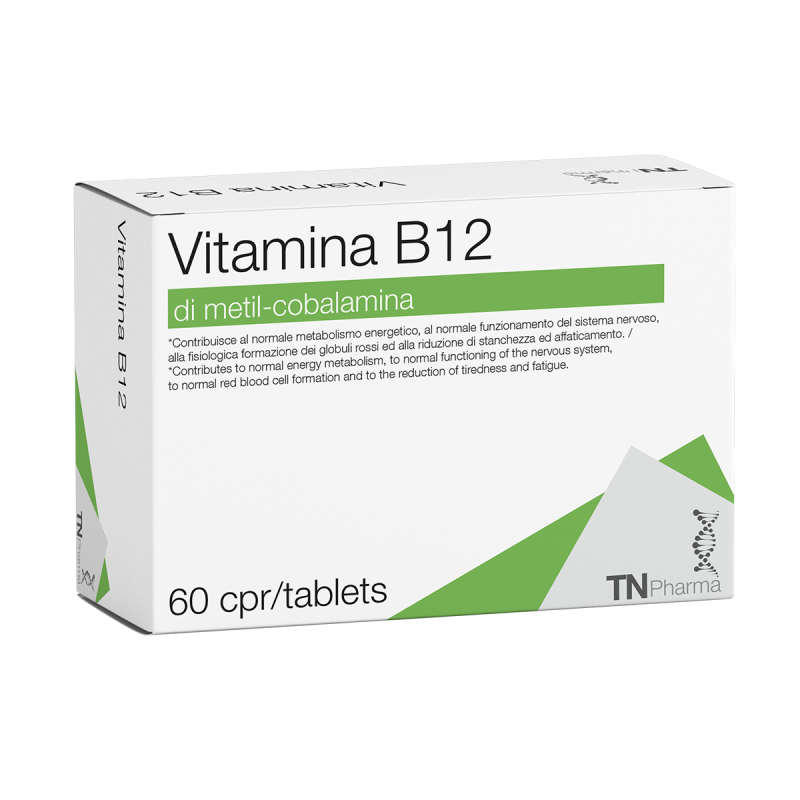
Tn Pharma’s Vitamin B12 is a supplement containing methylcobalamin, a methylated form of vitamin B12 with high bioavailability for the body. Tn Pharma’s Vitamin B12 uses a special technology that converts cobalamin, i.e. vitamin B12, into a methylated form, which facilitates its absorption by the body.
Essential for the body’s wellbeing, cobalamin B12 contributes to energy production, supports the nervous system, aids in the formation of red blood cells, reduces fatigue, helps prevent cognitive decline and supports cell division. A dietary supplement certified as vegan, gluten-free and lactose-free.
Frequently Asked Questions
What is the recommended daily dose of vitamin B12?
The recommended daily intake of vitamin B12 may vary depending on age, gender and other specific conditions such as pregnancy or breastfeeding. Generally, for adults, the recommended daily intake is around 2.4 micrograms. For pregnant women, this intake is slightly higher at around 2.6 micrograms per day, and for those who are breastfeeding, it rises to 2.8 micrograms.
It is important to consult a healthcare professional for advice tailored to your personal circumstances.
What are the side effects of vitamin B12?
Side effects of vitamin B12 are rare and mainly take the form of allergic reactions, gastrointestinal disturbances, anxiety or a feeling of bloating. These effects may occur at high doses or in sensitive individuals. You therefore need not worry if you wish to buy vitamin B12 supplements.
What are the long-term benefits of vitamin B12 supplements?
There are numerous long-term benefits to ensuring an adequate intake of vitamin B12; it is particularly beneficial for the heart, the nervous system, energy metabolism and the immune system. The human body cannot produce this vitamin itself, so it is essential to make up for any deficiencies by taking cobalamin B12 supplements.
How can I tell if I’m deficient in vitamin B12?
Signs of a vitamin B12 deficiency may include tiredness, weakness, constipation, loss of appetite, weight loss, and neurological problems such as numbness and tingling in the hands and feet.
Blood tests can confirm a vitamin B12 deficiency and should be carried out under the supervision of a healthcare professional.