- Lifestyle
- 9532 views

When discussing sport, we always refer to both the health aspect and performance. It is well known that taking part in physical activity brings health benefits:
- Increased muscle tone
- Reduced body fat
- Improved blood circulation
- Increased VO₂max
- Cardio-protective effects
- Reduction in osteoporosis
The list of examples could go on indefinitely. Indeed, physical exertion generates a whole series of signals that trigger physiological responses, which in turn lead to general and/or specific improvements. However, in some cases, sport can become less healthy, or even harmful to health.
This is particularly true of athletes competing at world-class level. In such cases, the physical activity required to achieve extreme performance gains places too great a strain on the body. To keep up with the pace of gruelling training – perhaps twice or three times a day – the body will be in a constant state of inflammation and the production of free radicals will increase. This is why it is rare to find athletes who remain at the top of the rankings for long: as this pace is unsustainable for the body, it becomes necessary at some point to slow down.
The kidneys and sport
Without necessarily referring to elite athletes, even in the case of an amateur’s intensive training, the immune system is significantly weakened (even after a run at moderate speed, the immune defences are low) and, as a result, certain organs are also affected. For example, during sporting activity, the kidneys divert some of the blood and oxygen normally allocated to them to the muscles.
This can sometimes result in discomfort, manifesting as the loss of small amounts of albumin and red blood cells in the urine. However, this is entirely normal. There are, however, cases where the renal system is overworked. Physical activity, particularly in hot weather, leads to fluid loss through sweating. When the body’s compensatory mechanisms are insufficient and there is no replenishment of fluids, systemic and renal blood pressure may drop; if the intense activity continues, this mechanism ceases to function and renal function deteriorates. Furthermore, during intense and prolonged physical activity (such as a marathon), excessive muscular stress leads to cell destruction and, consequently, the release of myoglobin into the blood. This protein is filtered by the kidneys and acts as a toxin. The person’s urine turns reddish and they experience muscle pain.
Cystitis and sport
As already mentioned, in endurance sports, or in any sport practised outdoors in summer in high temperatures, sweating is profuse and continuous. This results in dehydration which, if not properly (and promptly) corrected, leads to concentrated urine.
The components of concentrated urine irritate the mucous membranes of the bladder walls and can lead to urinary tract infections such as cystitis. Sports that can be particularly irritating to the pelvic floor and urinary tract are those that exert prolonged pressure on these areas, for example, saddle sports: cycling and motorcycling first and foremost, but also horse riding. People who are particularly sensitive should use special seats to absorb the impact and reduce pressure on the pelvic floor.
Protecting the urinary tract with dietary supplements
Often, during competitions – especially in summer – athletes are forced to reduce the intensity and frequency of their training due to troublesome cystitis. This is a problem that occurs more frequently in women, due to the shape of their genital tract, which is more exposed than in men.
Urinary tract infections can be prevented by staying well hydrated throughout the day and during training, i.e. before, during and after exercise. However, a sudden increase in fluid intake can also lead to an electrolyte imbalance, which is even more pronounced in cases of excessive sweating. It is essential to tackle urinary tract infections as soon as the first symptoms appear.
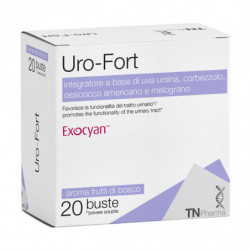
Dietary supplement for the urinary tract: Uro-Fort
For those suffering from such conditions, there are natural substances that can both prevent and significantly alleviate urinary tract infections. Products such as Uro-Fort from TN Pharma are useful for restoring urinary tract health without resorting to antibiotic treatments, which often cause unpleasant side effects for athletes. Thanks to this product, whose ingredients have been clinically proven to be effective, you can immediately address the problem and prevent unwanted recurrences.
Let’s take a closer look at the ingredients in this dietary supplement for the urinary tract:
- Mannose: attracts the bacteria responsible for causing urinary tract infections and directs them into the urine so they can be excreted.
- Methionine: an essential amino acid responsible for normalising urinary pH.
- Bearberry: its active ingredient, arbutin, is the natural antibacterial agent par excellence for the urinary tract and can immediately relieve the urge to urinate.
- Pomegranate: helps combat urinary tract infections and bladder problems.
Added to these ingredients is a key patented ingredient: Exocyan™. This is an extract of cranberry (Vaccinium macrocarpon), a small, tart berry grown exclusively in North and South America, also known as the cranberry. It is a powerful antioxidant, as it is naturally rich in polyphenols and proanthocyanidins (PACs), and can protect the urinary tract from infections and, if infections are present, relieve them and often resolve them.